

Key Findings
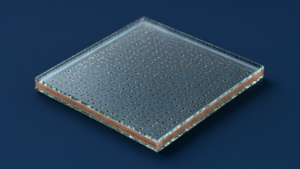
The University of Surrey has demonstrated flexible perovskite solar mini-modules with an active area of 11.5 square centimeters that reach power conversion efficiencies over 18.2 percent. These modules maintain stability under continuous illumination and are produced using a “Significantly Reduced-Toxicity” (SRT) ink system. This approach eliminates the need for hazardous industrial chemicals and anti-solvent processing steps, reducing energy consumption and raw material waste.
Technical Details
The SRT ink system utilizes a quick-drying formulation combining ethanol and 2-methyltetrahydrofuran, a bio-derived solvent sourced from forestry and agricultural waste. The manufacturing process employs a roll-to-roll compatible bar-coating method operated at room temperature and dried with a quick gas jet. Key technical specifications include:
- Architecture: Inverted structure utilizing bar-coated, self-assembled monolayers as hole-transport layers, removing the need for additional interlayers.
- Patterning: A laser-based P1-to-P4 scribing process is used to monolithically link individual solar cells.
- Compatibility: While tested via gas-blown bar-coating, the process is verified to work with standard industrial slot-die coating machines.
Background and Context
Traditional printable perovskite inks rely on toxic solvents such as dimethylformamide and acetonitrile, which pose risks to factory workers and the environment. The scale of this issue is significant; a single gigawatt-scale manufacturing line can consume over 90,000 liters of these toxic solvents. By shifting to bio-derived ingredients, the University of Surrey aims to remove the chemical barriers that have previously hindered the commercial potential of flexible perovskite cells compared to silicon panels.
Significance and Outlook
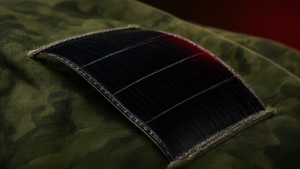
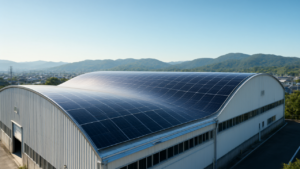
The integration of green chemistry into high-speed, high-throughput printing makes the large-scale production of flexible solar cells a practical near-term reality. This innovation reduces the need for complex solvent handling, waste treatment, and safety infrastructure. Potential applications for these lightweight, flexible arrays include portable consumer electronics, building-integrated windows, and ultra-lightweight solar arrays for space deployment.
Get our weekly technology intelligence — free
Receive an infographic that lets you judge at a glance whether each field’s analysis report is worth reading.
Subscribe Free — Weekly Tech Intelligence
By subscribing, you’ll receive Troy-Technical’s weekly technology intelligence newsletter.
- Your email and selected fields are used only to deliver the newsletter.
- We never share your information with third parties.
- You can unsubscribe anytime via the link in each email.
See our Privacy Policy for details.
Takes about a minute · Unsubscribe anytime