Key Findings
A recent weekly tech newsletter reported that perovskite-silicon tandem solar cells are pushing photovoltaic efficiency beyond 30%. This stacked architecture significantly reduces energy losses, enabling conversion efficiencies far surpassing conventional silicon modules. Specifically, LONGi announced research findings on silicon-perovskite tandem solar cells utilizing double-layer interface passivation in Nature, and EPFL and CSEM jointly achieved 31.25% efficiency with a perovskite-on-silicon tandem solar cell. These reports indicate that next-generation solar cell technology is rapidly evolving and establishing new standards for high efficiency.
Technical Details and Efficiency Records
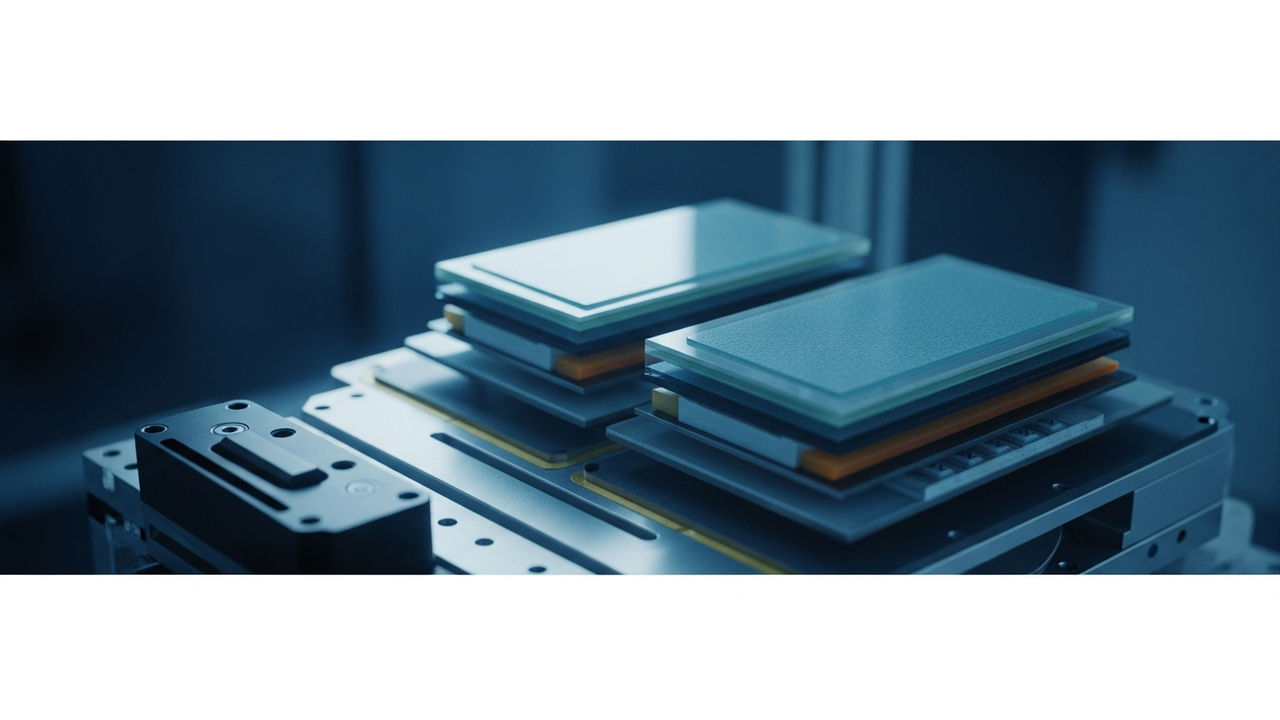
The core finding is that perovskite-silicon tandem solar cells are consistently achieving efficiencies above 30%, representing a significant leap over single-junction cells. This is primarily due to their stacked architecture, which effectively minimizes energy losses by utilizing different spectral absorption ranges. LONGi’s research, published in the prestigious journal Nature, highlights the success of a double-layer interface passivation technique for silicon-perovskite tandem solar cells. This advanced interface engineering is crucial for reducing recombination losses at critical interfaces, thereby boosting overall efficiency. Concurrently, a joint effort by EPFL (Swiss Federal Institute of Technology Lausanne) and CSEM (Swiss Center for Electronics and Microtechnology) has achieved a verified 31.25% efficiency for a perovskite-on-silicon tandem solar cell. These technologies capitalize on the ability of the perovskite layer to absorb short-wavelength light efficiently and the silicon layer to capture longer-wavelength light, maximizing the utilization of the solar spectrum.
Background & Industry Context
The solar photovoltaic industry is relentlessly pursuing efficiency improvements as a cornerstone of addressing climate change and achieving energy sustainability. With conventional silicon solar cells nearing their physical efficiency limits, new technologies are imperative for further breakthroughs. Perovskite-silicon tandem solar cells have emerged as one of the most promising solutions to this challenge, with numerous research institutions and companies fiercely competing to enhance their efficiency. Publications in prestigious scientific journals like Nature and record-breaking achievements by top-tier research institutions such as EPFL and CSEM signify that this technology is scientifically well-validated and making steady progress towards practical application. The focus on detailed technical innovations, such as double-layer interface passivation, is critical for reducing charge carrier recombination losses and further pushing efficiency boundaries.
Strategic Significance & Outlook
The consistent achievement of over 30% efficiency by perovskite-silicon tandem solar cells, coupled with reports from leading scientific journals and research institutions, signals a very bright future for solar power. As these technologies scale up to commercial production, the cost-effectiveness of solar electricity is expected to dramatically improve, accelerating widespread adoption globally. Maximizing power generation per unit area will become feasible across residential, commercial, and utility-scale solar farms, significantly contributing to the expansion of renewable energy. Investors should keenly observe the commercialization and market rollout of these high-efficiency technologies, while engineers will be crucial in designing and optimizing manufacturing processes to integrate these cutting-edge advancements into real-world products. This evolution is key to making a sustainable energy future a tangible reality.
Get our weekly technology intelligence — free
Receive an infographic that lets you judge at a glance whether each field’s analysis report is worth reading.
Subscribe Free — Weekly Tech Intelligence
By subscribing, you’ll receive Troy-Technical’s weekly technology intelligence newsletter.
- Your email and selected fields are used only to deliver the newsletter.
- We never share your information with third parties.
- You can unsubscribe anytime via the link in each email.
See our Privacy Policy for details.
Takes about a minute · Unsubscribe anytime