

Key Findings
Researchers at The University of Texas at Austin have engineered artificial nano-channels that increase lithium extraction selectivity by two to five times compared to other recent artificial transporters. This biological shortcut allows lithium to pass through while excluding sodium, potassium, magnesium, and calcium. The goal is to establish a continuous membrane process that replaces chemical-heavy methods with precise physical filtering.
Technical Details
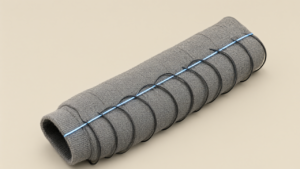
The channels are constructed using supramolecular chemistry rather than biological proteins. The structure consists of a ring-shaped pillar[5]arene molecule, a symmetrical hoop approximately one nanometer in diameter. To ensure selectivity, the team added chemical handles based on diphenyl phosphine oxide at the entrance.
The selection process relies on the interaction between ions and their hydration shells under an electric field:
- Lithium ions shed their water shells relatively easily, allowing them to enter the channel.
- Magnesium and calcium ions grip their water shells nearly four times more tightly, making the energy cost of stripping them too high for entry.
- Ions that are too large or wrongly coordinated are stalled outside the pore.
Background and Context
Lithium is typically extracted from brine, hard rock, or spent batteries. Conventional evaporation ponds are slow, recovering only 30 to 50 percent of lithium and causing significant water loss; for example, 89 percent of water extraction in the Atacama Salt Flat basin is linked to mining. While direct lithium extraction (DLE) is faster, many DLE methods still require acids, bases, or complex pretreatment. High selectivity is critical because ions like magnesium act as chemical twins to lithium, often ruining purity.
Significance and Outlook
The research provides a “toolkit” for mineral separation. By adjusting the entrance chemistry of the pillar scaffold, the team believes they can design selective channels for other critical minerals such as cobalt and nickel. While current results are based on clean salt mixes, the team notes that further testing in real brines at a larger scale is required.
Source: https://www.intelligentliving.co/tiny-pores-lithium-extraction-selective/
Get our weekly technology intelligence — free
Receive an infographic that lets you judge at a glance whether each field’s analysis report is worth reading.
Subscribe Free — Weekly Tech Intelligence
By subscribing, you’ll receive Troy-Technical’s weekly technology intelligence newsletter.
- Your email and selected fields are used only to deliver the newsletter.
- We never share your information with third parties.
- You can unsubscribe anytime via the link in each email.
See our Privacy Policy for details.
Takes about a minute · Unsubscribe anytime