

Key Findings
The implementation of an ultratrace sulfosuccinic acid (SUSA) strategy significantly enhances the performance of aqueous zinc metal batteries. In zinc–copper half cells, the optimized electrolyte delivered an average Coulombic efficiency of 99.48% for more than 1,600 cycles at 2 mA cm−2 and 1 mAh cm−2. Symmetric zinc cells demonstrated stability for over 1,600 hours at 5 mA cm−2 and 2 mAh cm−2, and more than 675 hours at 10 mA cm−2 and 10 mAh cm−2. Furthermore, a system with a 30 μm zinc electrode reached 3,500 mAh cm−2 of cumulative plated capacity with 56.93% zinc utilization.
Technical Details
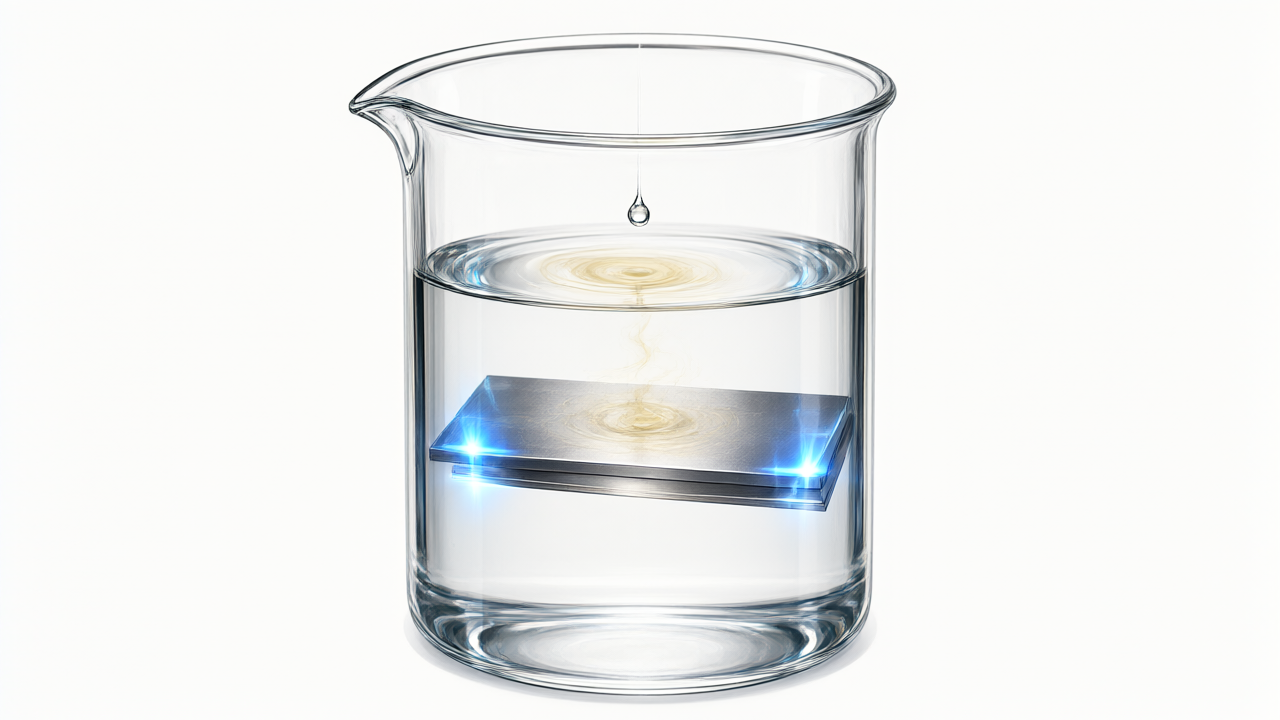
SUSA utilizes zincophilic carboxyl groups to preferentially adsorb onto the zinc anode, displacing water and sulfate ions from the inner Helmholtz plane. This creates a water-poor environment that optimizes ion distribution and electric fields. Density functional theory calculations show SUSA binds more strongly to zinc than water on Zn(101) and Zn(002) surfaces, with preferential adsorption on Zn(101) promoting the Zn(002) orientation for more uniform deposition. Electrochemical improvements include:
- Zn²⁺ transference number increase: from 0.26 to 0.41
- Apparent activation energy reduction: from 21.36 to 9.57 kJ mol−1
- Zinc nucleation overpotential reduction: by 23 mV
Background & Context
Conventional aqueous zinc sulfate electrolytes suffer from slow desolvation and charge transfer of strongly hydrated Zn²⁺ ions. Local electric-field variations often lead to nonuniform zinc nucleation, which encourages corrosion, hydrogen evolution, and dendrite growth. While aqueous zinc batteries offer low cost and safety, these interfacial limitations have historically hindered rapid charging and extensive anode utilization.
Significance & Outlook
The strategy was validated in iodine-based full cells, where a cell with a 10 μm zinc electrode (N/P ratio 2.31) completed over 1,490 cycles at 1 A g−1 with 77.13% capacity retention. A pouch cell (N/P ratio 2.04) completed over 680 cycles with 70.17% retention. The system also operated from −20 to 60 °C, including over 300 hours at 60 °C, demonstrating that ultratrace organic additives can simultaneously resolve multiple obstacles regarding current density, cycle life, and temperature range.
Source: https://bioengineer.org/ultratrace-susa-strategy-boosts-fast-charging-aqueous-zinc-battery-cells/
Get our weekly technology intelligence — free
Receive an infographic that lets you judge at a glance whether each field’s analysis report is worth reading.
Subscribe Free — Weekly Tech Intelligence
By subscribing, you’ll receive Troy-Technical’s weekly technology intelligence newsletter.
- Your email and selected fields are used only to deliver the newsletter.
- We never share your information with third parties.
- You can unsubscribe anytime via the link in each email.
See our Privacy Policy for details.
Takes about a minute · Unsubscribe anytime