


Key Findings
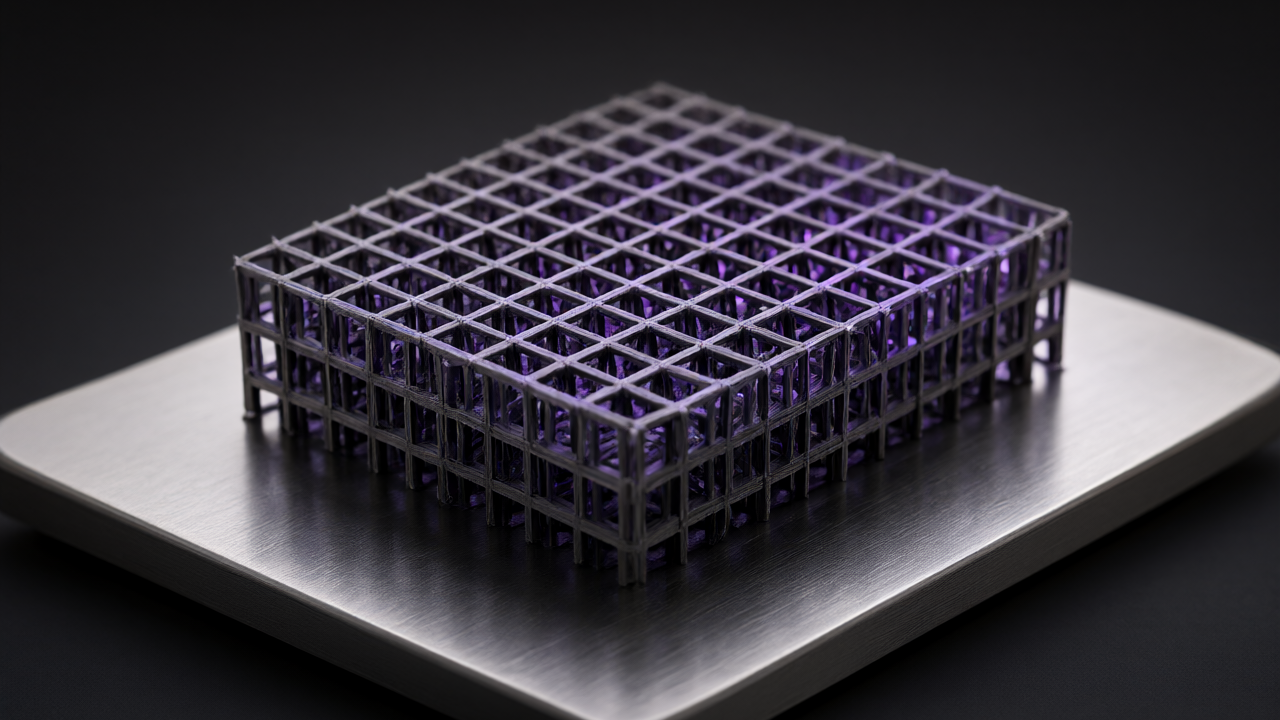
The 3D-printed anode, designated 3DP-WTCN, achieved significant gains in lithium storage capacity. The WTCN anode delivered a reversible capacity of 697.1 mAh g⁻¹ at 0.2 A g⁻¹ with 80.2 percent capacity retention, representing improvements of approximately 248 percent over pristine WS2 and 365 percent over Ti3C2Tx MXene. Furthermore, the 3D-printed version provided an additional average increase of approximately 50 percent in specific capacity compared to the non-printed WTCN anode.
Technical Details
The material utilizes a WS2/TiO2@C heterostructure where a carbon-coated composite is integrated into a 3D-printed architecture. The synthesis involves in-situ interphase engineering where Ti3C2Tx MXene partially transforms into a defect-rich TiO2 interphase. This process creates Ti–S-related interfacial interactions that facilitate efficient electron transport and rapid lithium-ion diffusion. To enhance performance, the researchers implemented two primary strategies:
- Atomic-scale engineering: Sulfur vacancies in the WS2 provide abundant lithium-ion adsorption sites and accelerate reaction kinetics, while the TiO2 interphase acts as a bridge to create a conductive, mechanically resilient network.
- Architectural engineering: 3D printing creates interconnected conductive pathways and shortens ion diffusion distances, allowing the electrode to support high mass loading.
Background & Context
Tungsten disulfide is a promising anode material due to its high theoretical capacity. However, its practical application has been hindered by poor intrinsic electrical conductivity and severe volume changes during repeated charging and discharging cycles. The WS2/TiO2@C design addresses these limitations by using the interphase to mitigate structural degradation during cycling.
Significance & Outlook
The results, published in Advanced Composites and Hybrid Materials on 28 October 2026, suggest that combining vacancy and interfacial bonding with additive manufacturing allows anodes to store more lithium while resisting mechanical stress. These findings are based on laboratory-scale electrochemical measurements.
Get our weekly technology intelligence — free
Receive an infographic that lets you judge at a glance whether each field’s analysis report is worth reading.
Subscribe Free — Weekly Tech Intelligence
By subscribing, you’ll receive Troy-Technical’s weekly technology intelligence newsletter.
- Your email and selected fields are used only to deliver the newsletter.
- We never share your information with third parties.
- You can unsubscribe anytime via the link in each email.
See our Privacy Policy for details.
Takes about a minute · Unsubscribe anytime