
Key Findings
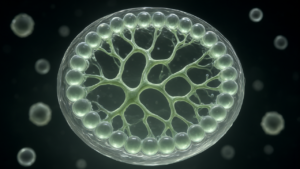
The study establishes a method to reprogram human induced pluripotent stem cells (hiPSCs) into functional mammary organoids (MGOs). These organoids reproducibly form a polarized structure consisting of basal layers (KRT14+, TP63+) and luminal layers (KRT8+, GATA3+). Notably, approximately 25% of the luminal cells express the oestrogen receptor (ERα). The MGOs demonstrate functional maturity by accumulating lipids and expressing β-casein when stimulated with prolactin.
Technical Details
The differentiation process follows a stepwise protocol in a defined medium, directing hiPSCs through the following stages:
- Induction of non-neural ectoderm
- Formation of mammary placodes
- Lineage maturation
Single-cell transcriptomics analysis confirms the presence of basal, luminal hormone-sensing, luminal secretory, and stromal populations. These populations align transcriptionally with adult human breast epithelium. Furthermore, the MGOs maintain lineage fidelity after serial passaging and are responsive to endocrine disruption. In vivo validation was conducted by transplanting MGOs into cleared mouse mammary fat pads, where they generated branched mammary ductal networks.
Background & Context
The human mammary gland develops through sequential lineage restrictions, moving from surface ectoderm to a hormone-responsive bilayered epithelium. Despite this known biological pathway, a tractable in vitro model capable of capturing these specific developmental events had previously remained elusive.
Significance & Outlook
The ability to generate functional mammary epithelium from hiPSCs provides a scalable platform for biomedical research. This model allows researchers to dissect the complexities of mammary development and endocrine signaling. Additionally, it offers a controlled environment to study the mechanisms underlying breast cancer pathogenesis.
Source: https://doi.org/10.64898/2026.10.28.762519
Get our weekly technology intelligence — free
Receive an infographic that lets you judge at a glance whether each field’s analysis report is worth reading.
Subscribe Free — Weekly Tech Intelligence
By subscribing, you’ll receive Troy-Technical’s weekly technology intelligence newsletter.
- Your email and selected fields are used only to deliver the newsletter.
- We never share your information with third parties.
- You can unsubscribe anytime via the link in each email.
See our Privacy Policy for details.
Takes about a minute · Unsubscribe anytime