

Key Findings
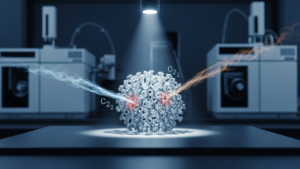
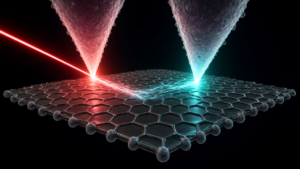
The study demonstrates the use of ptychographic atomic electron tomography (pAET) to achieve the 3D localization of 6,648 individual carbon atoms. The researchers achieved a localization precision of 0.12<0xE2><0x80><0x89>Å using twisted bilayer graphene as a model moiré system. The resulting 3D structure reveals corrugation across the moiré supercell and stacking-dependent interlayer spacing.
Technical Details
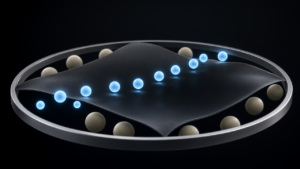
The research identifies chiral lattice distortions characterized by anti-skyrmion-like, meron-like, and anti-meron-like textures. To validate the experimental results, the team employed density functional theory (DFT) calculations based on the derived structure. These calculations predict a gap at the K point and electronic band narrowing when compared to a relaxed model. Additionally, multislice pAET simulations indicate that this imaging method can be extended to amorphous carbon and diamond containing a nitrogen–vacancy centre.
Background & Context
Ptychography is a computational microscopy method that combines iterative phase retrieval with coherent diffraction to unify microscopy and crystallography. While multislice electron ptychography can achieve deep-sub-ångström lateral resolution, its depth resolution has typically been limited to the nanometre scale. pAET was developed to enable 3D atomic structure determination in nanomaterials, addressing the specific challenge of reliably resolving individual light atoms.
Significance & Outlook
By establishing pAET for the 3D imaging of individual carbon atoms, this work provides a methodology to connect the 3D atomic arrangement of light-element materials directly to their properties. The ability to resolve light atoms in three dimensions opens new possibilities for analyzing the structural nuances of carbon-based nanomaterials and other light-element systems.
Source: https://doi.org/10.1038/s41565-026-02316-9
Get our weekly technology intelligence — free
Receive an infographic that lets you judge at a glance whether each field’s analysis report is worth reading.
Subscribe Free — Weekly Tech Intelligence
By subscribing, you’ll receive Troy-Technical’s weekly technology intelligence newsletter.
- Your email and selected fields are used only to deliver the newsletter.
- We never share your information with third parties.
- You can unsubscribe anytime via the link in each email.
See our Privacy Policy for details.
Takes about a minute · Unsubscribe anytime