

Key Findings
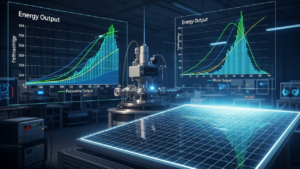
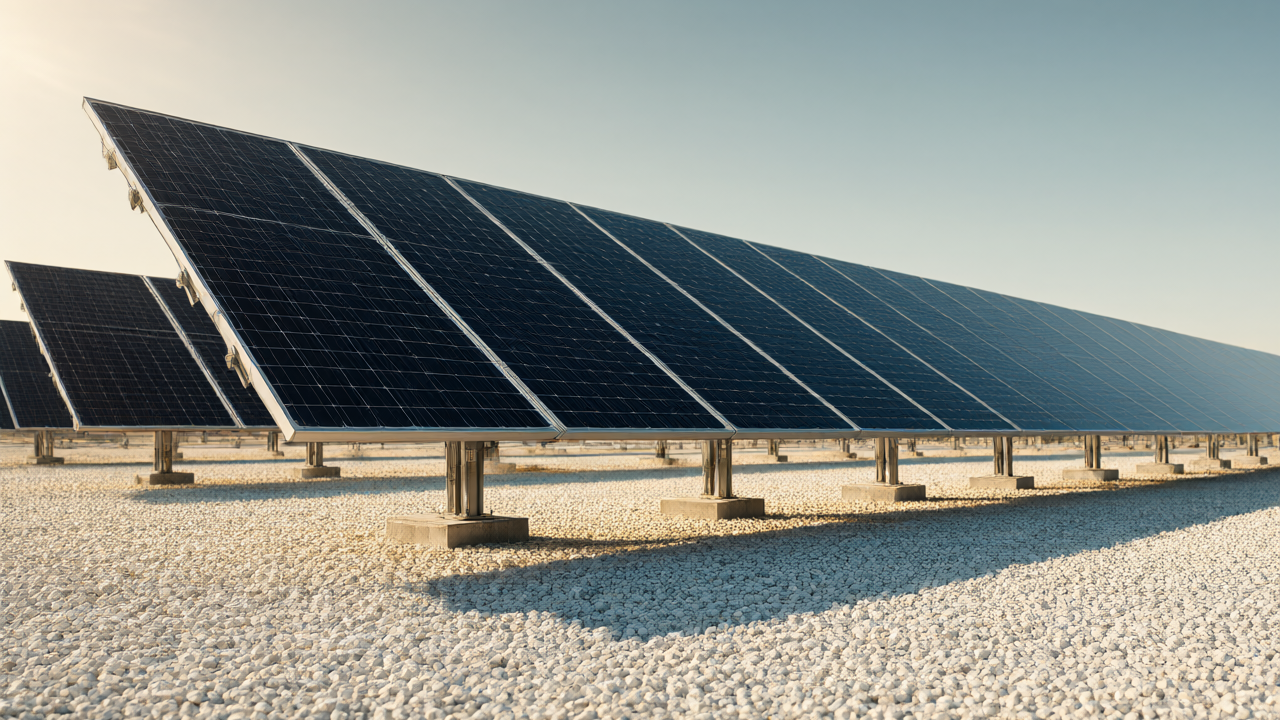
Bifacial monolithic perovskite/silicon tandem solar cells have demonstrated a power-generation density of 36.2 mW cm−2 under 0.20 albedo-equivalent illumination. These devices exhibit high stability, retaining 90% of their initial efficiency after more than 1,000 hours of ISOS-L-2 testing, conducted at 65 °C under 1-sun illumination.
Technical Details
The study identifies “perovskite lattice compliance”—the ability of the crystal lattice to elastically accommodate stress—as the governing factor for photothermal stability. The researchers utilized perovskite absorbers with a bandgap of approximately 1.55 eV. This specific composition reduces the reliance on bromide, which largely mitigates light-induced halide segregation.
Higher lattice compliance enhances stability through several mechanisms:
- Suppression of thermally induced microstrain accumulation.
- Shifting of deep-level defects toward shallower states.
- Reduction of band-edge energetic disorder.
Background & Context
Bifacial tandem configurations are pursued to increase area-normalized power output. While reducing bromide content addresses halide segregation, it shifts the primary stability challenge to the intrinsic photothermal resilience of bromide-lean absorbers. This research establishes a physically testable framework to address these resilience issues at the absorber level.
Significance & Outlook
The establishment of lattice compliance as a materials descriptor provides a design principle for creating more stable perovskite absorbers. By focusing on the elastic properties of the crystal lattice to mitigate thermal stress, this approach offers a pathway toward more durable and efficient bifacial perovskite/silicon tandem photovoltaics.
Source: https://www.nature.com/articles/s41560-026-02162-y
Get our weekly technology intelligence — free
Receive an infographic that lets you judge at a glance whether each field’s analysis report is worth reading.
Subscribe Free — Weekly Tech Intelligence
By subscribing, you’ll receive Troy-Technical’s weekly technology intelligence newsletter.
- Your email and selected fields are used only to deliver the newsletter.
- We never share your information with third parties.
- You can unsubscribe anytime via the link in each email.
See our Privacy Policy for details.
Takes about a minute · Unsubscribe anytime