
Key Findings
The investigation into indium-based thermal interface bonding identifies two primary intermetallic compounds (IMCs) at the interface: AuIn 2 and (Ni,Au) 3 In 7. The study finds that the evolution of these compounds is temperature-dependent. While AuIn 2 grain area increases with reflow time at lower temperatures, higher temperatures and longer durations lead to a reduction in AuIn 2 and the growth of a continuous (Ni,Au) 3 In 7 layer.
Technical Details
Interfacial reactions were analyzed during reflow processes at 165 °C, 185 °C, and 205 °C. To determine the growth kinetics of the (Ni,Au) 3 In 7 layer, researchers employed a parabolic growth model. By applying a single-step global fitting approach across all temperature and time conditions, the following kinetic parameters were established:
- Apparent activation energy: 77.45 kJ/mol (0.80 eV)
- Pre-exponential factor: 1.60 × 10 6 μm 2 /s
Furthermore, a paired Monte Carlo sensitivity analysis was used to compare fitting methods. The results indicate that the single-step global method is substantially less sensitive to measured thickness variation compared to the traditional two-step Arrhenius procedure.
Background and Context
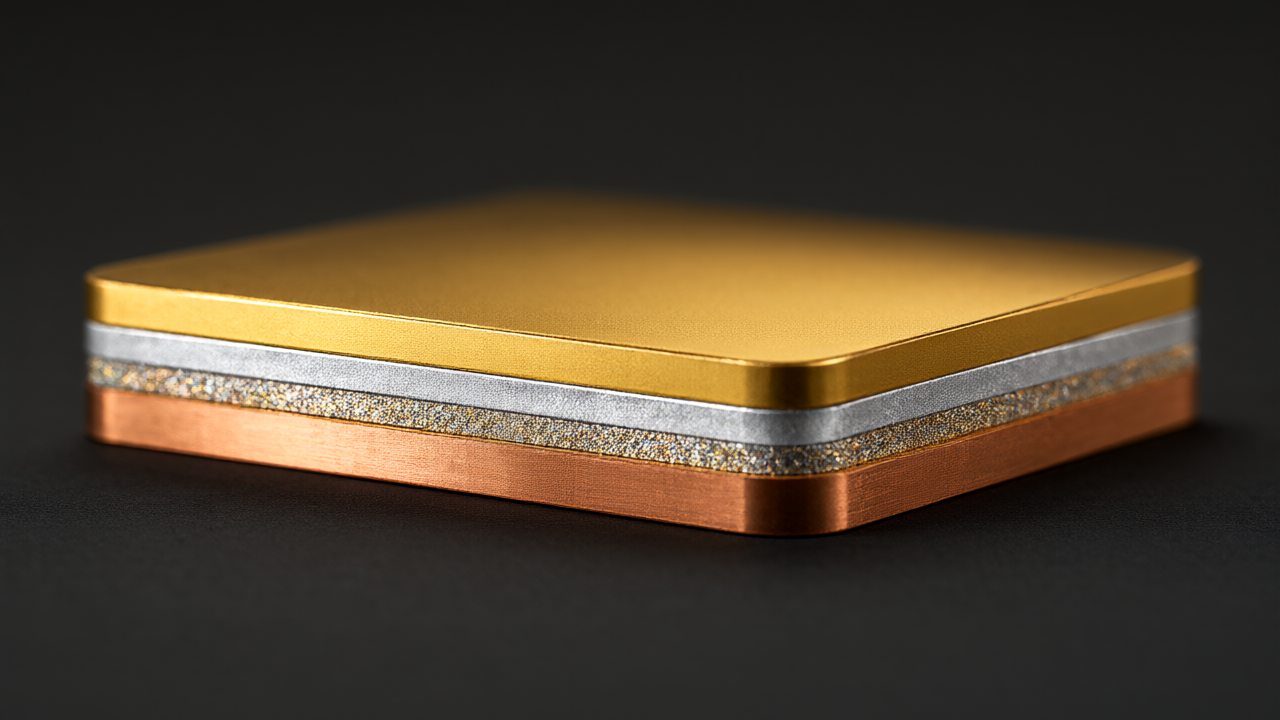
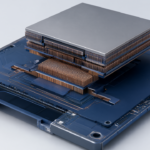
The study focuses on the bonding interface between indium TIM and Au/Ni-plated copper heat spreaders. Understanding the phase evolution of IMCs is critical for low-temperature reflow processes, as the transition from discrete grains to continuous layers affects the structural integrity of the thermal bond.
Significance and Outlook
These results clarify the correlated evolution of AuIn 2 and (Ni,Au) 3 In 7 during the bonding process. Beyond the material science findings, the research demonstrates the utility of single-step global fitting for kinetic analysis, particularly when working with limited temperature–time datasets, providing a more robust analytical framework for engineers and researchers.
Source: https://www.jstage.jst.go.jp/article/matertrans/advpub/0/advpub_MT-M2026110/_article
Get our weekly technology intelligence — free
Receive an infographic that lets you judge at a glance whether each field’s analysis report is worth reading.
Subscribe Free — Weekly Tech Intelligence
By subscribing, you’ll receive Troy-Technical’s weekly technology intelligence newsletter.
- Your email and selected fields are used only to deliver the newsletter.
- We never share your information with third parties.
- You can unsubscribe anytime via the link in each email.
See our Privacy Policy for details.
Takes about a minute · Unsubscribe anytime