

Key Findings
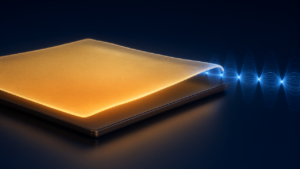
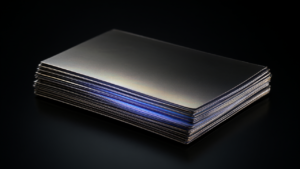
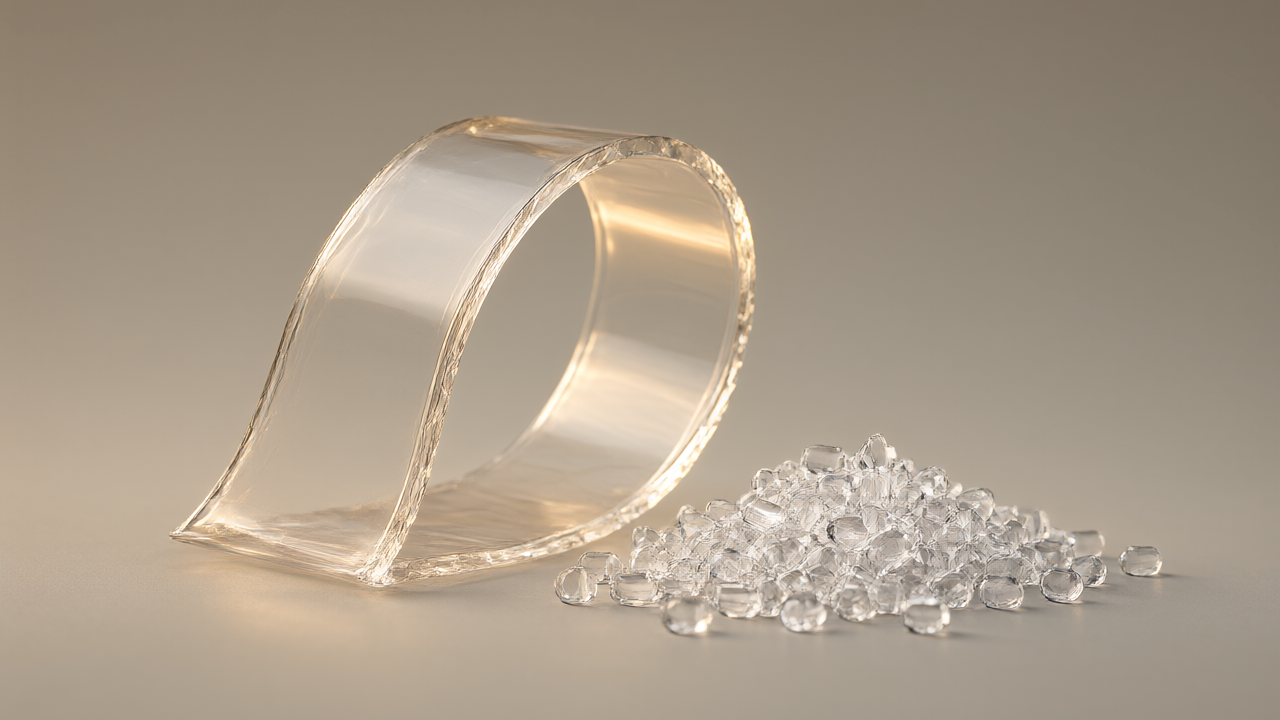
The study establishes a direct correlation between ionic association modes, network organization, and macroscopic mechanical properties. Specifically, “fork-like bridging” creates a more compact and entangled network compared to “ribbon-like” single-point pairing, resulting in significantly higher strength and modulus. The materials exhibit high transparency (92–93% light transmittance), humidity-responsive sensing capabilities, and the ability to be processed and reshaped in mild aqueous phases.
Technical Details
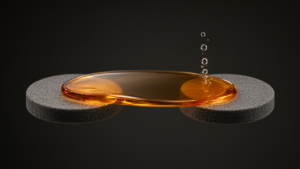
The researchers designed two primary ionic association units using poly(diallyldimethylammonium chloride) (PDAD) combined with carboxylate, sulfonate, or phosphonate anion components. These were processed via liquid-liquid phase separation to create wet precursors, followed by controlled drying.
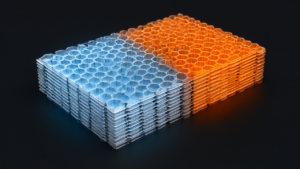
- Association Modes: IA-1 and IA-2 utilize 1:1 single-point pairing (ribbon-like), while IA-3 utilizes 2:1 bridging (fork-like).
- Mechanical Performance: IA-1 and IA-2 showed tensile strengths of 64.20±4.78 MPa and 60.39±2.30 MPa, respectively. IA-3 reached a tensile strength of 96.56±4.73 MPa.
- Adhesion: IA-3 demonstrated a lap shear strength of 31.6±3.9 MPa on ceramics, capable of supporting a 60 kg volunteer with a 2.5 cm² adhesion area.
- Molecular Structure: Molecular dynamics simulations showed that IA-3 maintains lower radius of gyration and inter-chain distances, with PDAD chains wrapping around PVPS chains.
Background and Context
The research utilized NMR spectroscopy to confirm association ratios and in-situ variable-temperature FTIR to track structural evolution and dehydration between 30–200 °C. Thermal degradation was monitored up to 800 °C using 3D TG-IR. Biocompatibility was evaluated through CCK-8 and hemolysis experiments.
Significance and Outlook
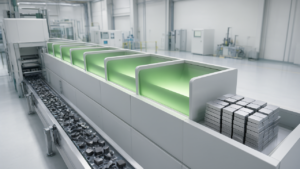
By utilizing reversible ionic associations, these plastics avoid irreversible chain degradation during recycling. The framework was extended to natural polymers like sodium hyaluronate, demonstrating a closed-loop system of physical reshaping and chemical recovery. This approach provides a molecular design framework for sustainable plastics that integrate high mechanical robustness with functional versatility.
Source: https://news.qq.com/rain/a/20261105A02XH500
Get our weekly technology intelligence — free
Receive an infographic that lets you judge at a glance whether each field’s analysis report is worth reading.
Subscribe Free — Weekly Tech Intelligence
By subscribing, you’ll receive Troy-Technical’s weekly technology intelligence newsletter.
- Your email and selected fields are used only to deliver the newsletter.
- We never share your information with third parties.
- You can unsubscribe anytime via the link in each email.
See our Privacy Policy for details.
Takes about a minute · Unsubscribe anytime