
Key Findings
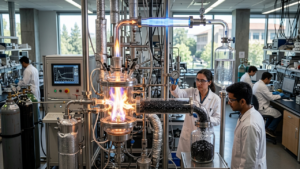
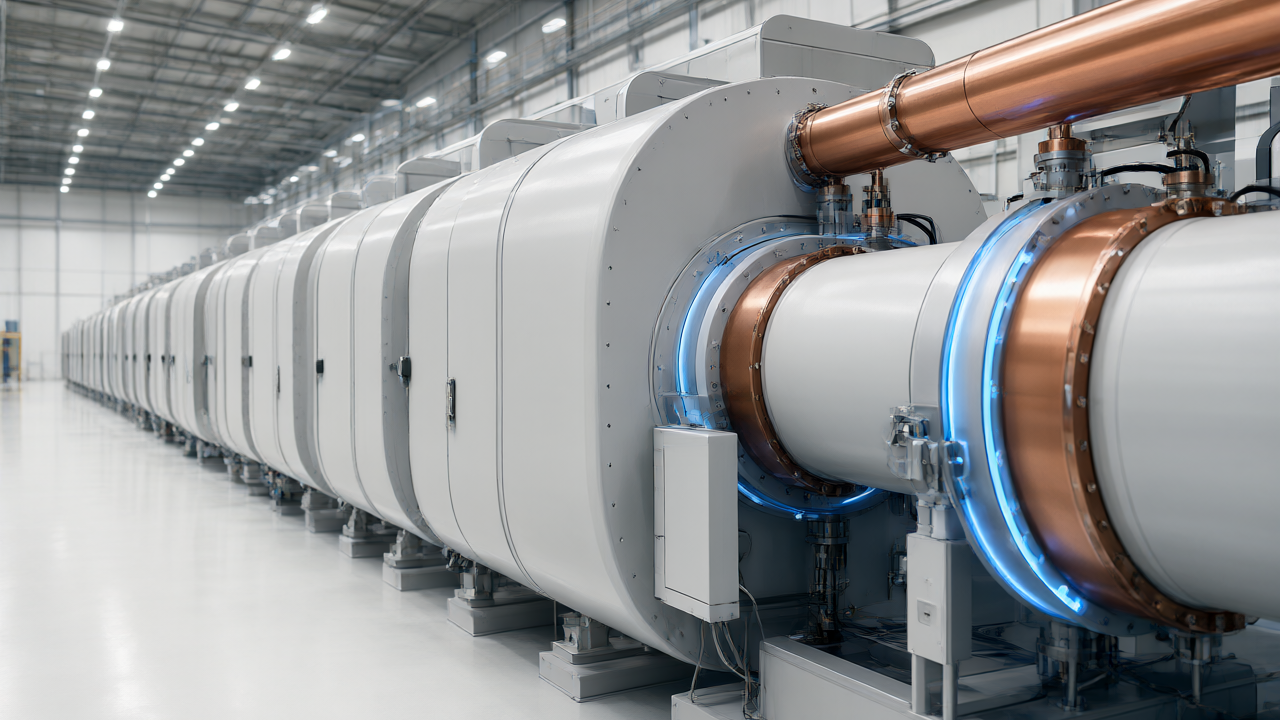
LUT University researchers have demonstrated a record voltage of 1,000 V in a series-connected alkaline electrolysis system. This increase in voltage is designed to reduce current requirements and electrical losses, thereby lowering the costs associated with power supply and power electronics. Because power electronics account for approximately one-quarter of a hydrogen plant’s investment costs, halving these specific expenses could reduce total system investment by 10% to 15%.
Technical Details
The research utilized ABB power electronics and electrolyser stacks provided by Stargate Hydrogen, an Estonia-based company. This high-voltage approach contrasts with industrial alkaline electrolysers, which typically operate within a voltage range of 200–400 V. Future research will focus on the following areas to enable the scale-up of high-voltage electrolysis:
- Optimising system design and modelling.
- Minimising stray currents.
Global Hydrogen and Ammonia Infrastructure
Parallel developments in the hydrogen economy include a binding agreement between Japan’s Jera and India’s AM Green for the annual supply of approximately 70,000 metric tons of green ammonia over five years. Production is expected to begin in 2028-2029 at AM Green’s Kakinada facility, with the fuel intended for ammonia-powered car carriers. Additionally, the European Commission has launched the T-MED Investment Platform with up to €4.5 billion in guarantee capacity, supporting projects such as the Niat and Rasgha Wind Projects in Egypt to provide 500 MW of onshore wind for future hydrogen production.
Economic and Environmental Trade-offs
A study from the University of Trieste compared PEM water electrolysis (PEMWE) supply chains between Italy and Oman. The analysis found that importing hydrogen from Oman is more cost-effective, with a levelized cost of hydrogen (LCOH) of €7.84/kg compared to €10.22/kg for domestic Italian production. However, domestic production offers a lower carbon footprint (2.26 kg of CO₂ equivalent per kg) than imports (2.62 kg). Electrolysis was identified as the primary driver for both costs (74.4% of LCOH) and emissions (81% of the carbon footprint).
Get our weekly technology intelligence — free
Receive an infographic that lets you judge at a glance whether each field’s analysis report is worth reading.
Subscribe Free — Weekly Tech Intelligence
By subscribing, you’ll receive Troy-Technical’s weekly technology intelligence newsletter.
- Your email and selected fields are used only to deliver the newsletter.
- We never share your information with third parties.
- You can unsubscribe anytime via the link in each email.
See our Privacy Policy for details.
Takes about a minute · Unsubscribe anytime