

Key Findings
The Maximal-Matching-Mixture (MMM) decoder achieves a reduction in logical error rates of up to 25x when applied to the [[144,12,12]] Gross code compared to decoders that do not account for atom losses. This performance represents a roughly twofold improvement over previous state-of-the-art loss-aware techniques, such as those developed by Baranes et al.
Technical Details
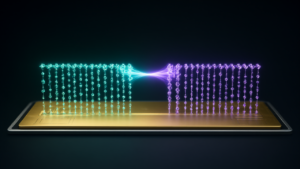
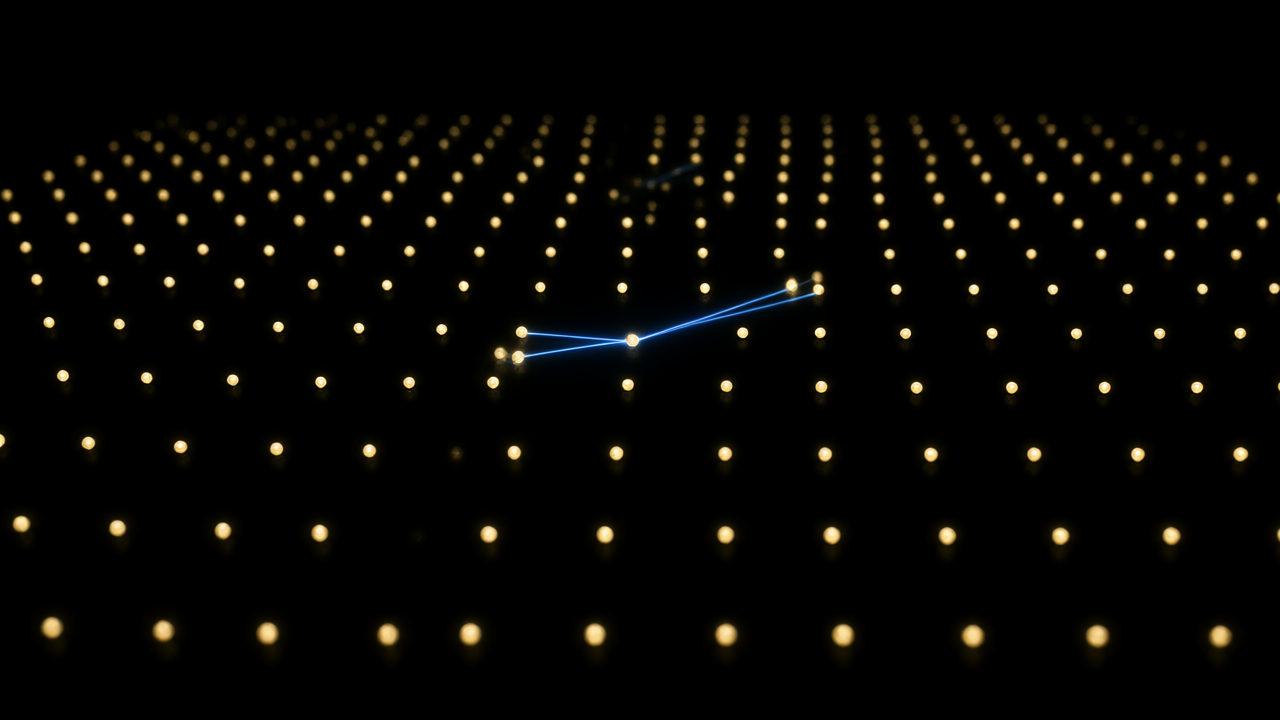
The MMM decoder is designed to address a specific vulnerability in neutral atom quantum computers: the tendency for qubit failures to occur in pairs. When one entangled “gate partner” atom is lost during computation, its connected partner frequently fails as well. The MMM decoder exploits these correlations through the following mechanism:
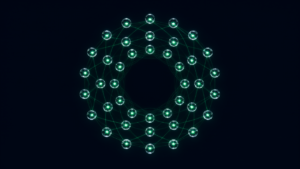
- Weighted Mapping: The decoder constructs a complex, weighted map of potential error scenarios based on likely correlated loss events.
- Belief Propagation: It utilizes standard belief propagation—an algorithm similar to how rumors spread—to analyze the map and identify the most probable cause of the error.
- Hypergraph Mixtures: The process creates weighted mixtures of decoding hypergraphs focused on syndrome extraction circuits within the Gross code framework.
Background & Context
Neutral atom quantum computers offer potential scalability, but they are highly susceptible to qubit losses. Previous error correction methods often treated these losses as random or simply acknowledged that they occurred together without fully exploiting the correlation. The research conducted by UCLA and University of California scientists demonstrates that treating these linked failures as a predictable pattern rather than random noise significantly boosts performance.
Significance & Outlook
By accounting for correlated qubit loss, the MMM decoder provides a substantial gain in error correction efficiency. However, the researchers note that these results were demonstrated specifically within the Gross code structure. A primary remaining question for future work is whether these performance benefits can scale effectively as quantum computers grow in complexity and whether the benefits extend beyond the specific code structure used in these experiments.
Source: https://quantumzeitgeist.com/neutral-atom-quantum-computing-loss-decoder/
Get our weekly technology intelligence — free
Receive an infographic that lets you judge at a glance whether each field’s analysis report is worth reading.
Subscribe Free — Weekly Tech Intelligence
By subscribing, you’ll receive Troy-Technical’s weekly technology intelligence newsletter.
- Your email and selected fields are used only to deliver the newsletter.
- We never share your information with third parties.
- You can unsubscribe anytime via the link in each email.
See our Privacy Policy for details.
Takes about a minute · Unsubscribe anytime