
Key Findings
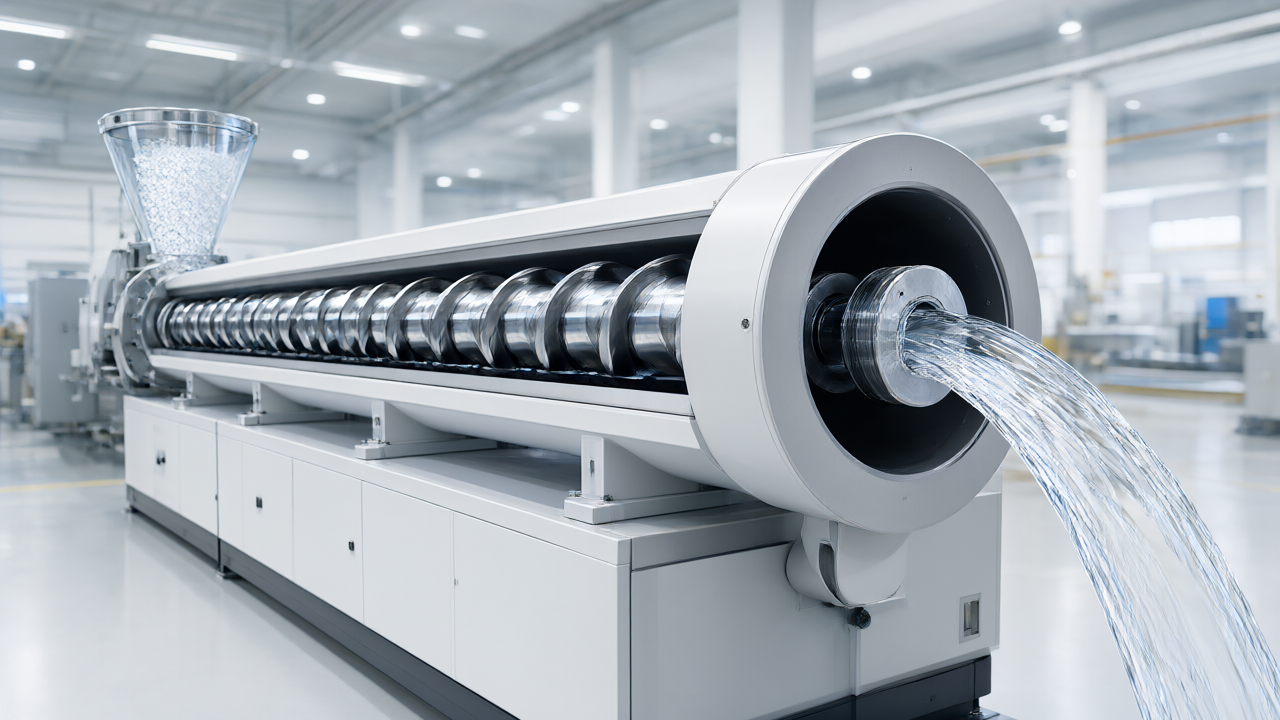
Kirin HD has successfully accelerated the depolymerization of polyethylene terephthalate (PET), reducing the processing time from 4 hours to less than 10 minutes. This was achieved by employing a twin-screw kneading extruder developed by Japan Steel Works. The process enables chemical recycling (CR), which breaks plastic down to the molecular level to produce recycled resins equivalent in quality to virgin raw materials.
Technical Details
The system utilizes “alkaline depolymerization” using a sodium hydroxide aqueous solution as a solvent. While traditional methods rely on high temperature and high pressure over long durations, Kirin HD applied “mechanochemical reactions.” By using the extruder’s twin screws to rub, crush, and mix the PET with the sodium hydroxide solution, the chemical reaction is triggered mechanically.
- Energy Efficiency: The heat generated by the mechanochemical reaction is utilized for the depolymerization process, reducing the external thermal energy required.
- Capacity: A single unit, measuring several meters in length, can process 10,000 tons of PET products per year.
- Footprint: The equipment allows for significant downsizing compared to existing chemical recycling facilities.
Background and Context
Chemical recycling of PET has existed since the 2000s, but high energy consumption and associated costs have hindered widespread adoption. Kirin HD’s R&D Package Innovation Institute sought to overcome these cost barriers by pursuing a “high-speed, short-time” concept to minimize energy expenditure.
Significance and Outlook
The current output of the process consists of disodium terephthalate and ethylene glycol. The next research phase focuses on refining these materials by removing sodium and impurities to return them to PET raw materials, as existing purification technologies remain cost-prohibitive.
Once commercialized, the technology will not be limited to beverage bottles; it is intended to process all PET products, including films and fibers, creating a large-scale resource circulation loop.
Source: https://newswitch.jp/p/50688
Get our weekly technology intelligence — free
Receive an infographic that lets you judge at a glance whether each field’s analysis report is worth reading.
Subscribe Free — Weekly Tech Intelligence
By subscribing, you’ll receive Troy-Technical’s weekly technology intelligence newsletter.
- Your email and selected fields are used only to deliver the newsletter.
- We never share your information with third parties.
- You can unsubscribe anytime via the link in each email.
See our Privacy Policy for details.
Takes about a minute · Unsubscribe anytime