

Key Findings
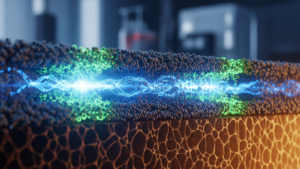
A research team led by Yukiya Kitayama at Osaka Metropolitan University (OMU) has developed a method to incorporate 3-Phenylthionophthalid (PTP) into polymer chains to create degradable plastics. By conducting the reaction within an aqueous miniemulsion, the team increased the conversion rate of PTP from 37% in standard solutions to 92%. This process results in vinyl copolymer particles containing thioester bonds that act as chemical breaking points.
Technical Details
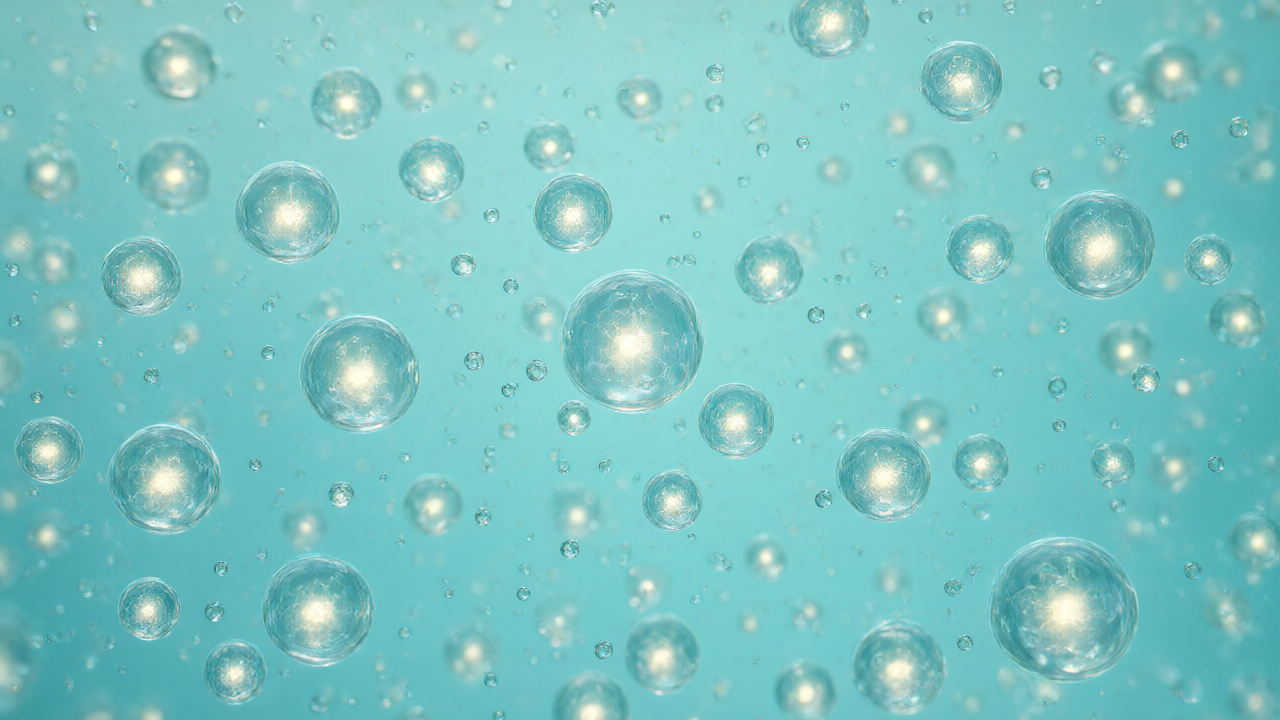
The increase in PTP incorporation is driven by Laplace pressure, where surface tension compresses the contents of a droplet. The effect is inversely proportional to the droplet radius:
- Droplets with a diameter of approximately 130 nanometers generated an additional pressure of about 77 kilopascal, favoring the opening of the PTP ring.
- Droplets with a diameter of five micrometers generated only about 7.3 kilopascal.
Control tests in a pressure reactor showed that while additional pressure above 40 kilopascal increased PTP conversion to over 60%, it simultaneously hindered the reaction of n-butylacrylate. The miniemulsion approach overcomes this by providing a second effect: the spatial separation of reactive chain ends within droplets, which reduces the frequency of chain termination. The combination of Laplace pressure and spatial separation enables the efficient incorporation of both monomers.
Background & Context
Conventional plastics are durable due to carbon-carbon backbone bonds that resist heat, moisture, and mechanical stress, leading to the persistence of microplastics in the environment. To counter this, chemists use ring-shaped molecules to create splittable bonds. PTP is a candidate for providing these thioester bonds, but it is typically inert under standard conditions.
Significance & Outlook
Laboratory tests confirmed that particles containing PTP showed a decrease in average molecular mass when treated with amines or a base, whereas particles without PTP remained largely unchanged. However, the study did not demonstrate complete degradation, nor were tests conducted in soil, seawater, or with microorganisms. Kitayama notes that the method avoids complex special procedures, potentially easing industrial adoption, provided further tests on material performance and large-scale production are successful.
Get our weekly technology intelligence — free
Receive an infographic that lets you judge at a glance whether each field’s analysis report is worth reading.
Subscribe Free — Weekly Tech Intelligence
By subscribing, you’ll receive Troy-Technical’s weekly technology intelligence newsletter.
- Your email and selected fields are used only to deliver the newsletter.
- We never share your information with third parties.
- You can unsubscribe anytime via the link in each email.
See our Privacy Policy for details.
Takes about a minute · Unsubscribe anytime