Background
Medical devices, by their very nature, demand exceptionally high precision, reliability, and safety. In precision-molded plastic components, ‘warpage’ – deformation that occurs during the cooling phase after molding – can severely compromise dimensional accuracy, significantly impacting the assembly and functionality of the entire product. This issue is particularly pronounced in parts with intricate geometries or those requiring precise mating with other components. Mitigating warpage necessitates a comprehensive optimization strategy encompassing material selection, part design, and molding processes.
Key Findings / Results
Several key approaches are being advanced to reduce the impact of warpage in precision-molded medical devices:
- Adoption of Advanced Materials:
- Liquid Crystal Polymers (LCPs): LCPs exhibit low warpage and high dimensional stability due to molecular orientation in the molten state, making them ideal for precise micro-components and thin-walled parts.
- High-Performance Thermoplastics: Materials like PEEK (Polyetheretherketone) offer superior mechanical strength, heat resistance, and chemical resistance. Their relatively low coefficient of linear thermal expansion also helps to suppress warpage.
- Bioabsorbable Polymers: Even for bioabsorbable polymers used in temporary implants or medical devices, warpage control is critical. Research focuses on optimizing material design and molding conditions to maintain stable shapes during and after processing.
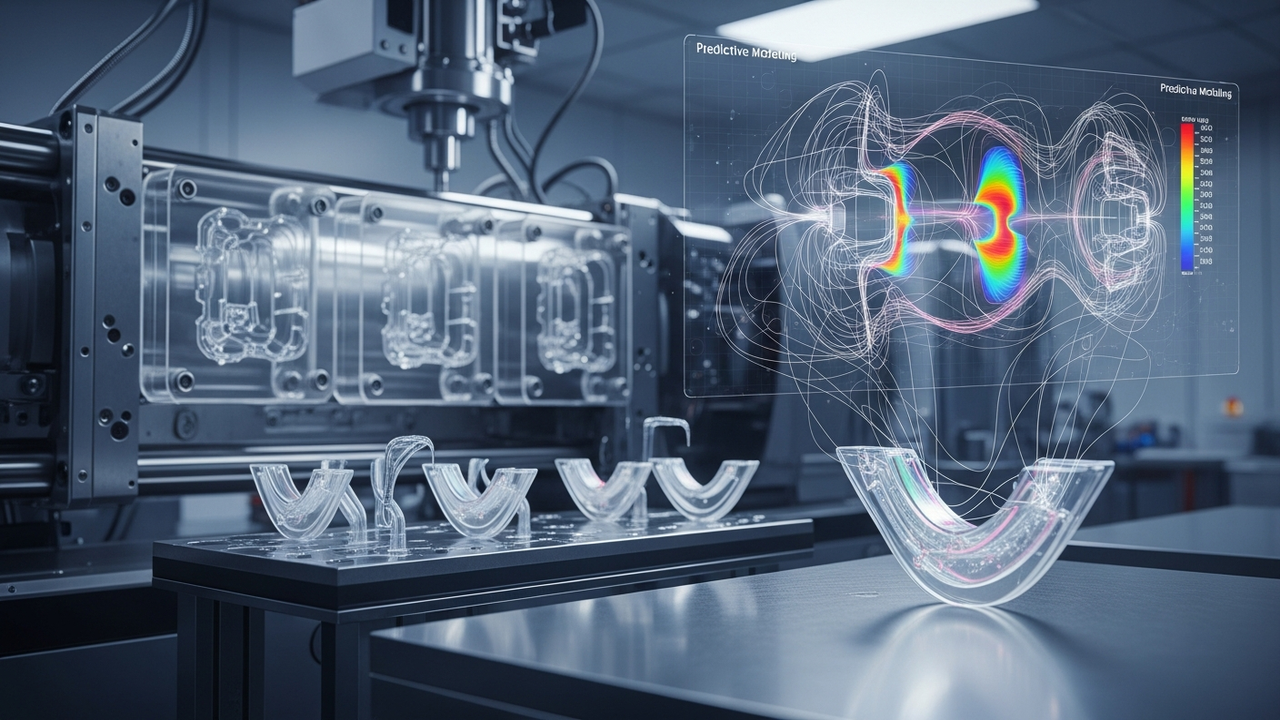
- Predictive Modeling in Design: Developing robust modeling capabilities to accurately predict warpage behavior during the part design phase, using molding simulation software, is paramount. These simulations consider thermal history, filling patterns, and material anisotropy. By identifying potential warpage issues before mold fabrication, engineers can implement design changes or adjust molding conditions proactively, significantly reducing the number of prototyping iterations and overall development time.
These initiatives, combining materials science with digital technology, enable the production of higher quality and more reliable medical devices.
Technical Significance & Outlook
Advances in warpage reduction technologies for precision-molded medical devices promise substantial benefits for the industry. Firstly, they directly enhance product quality and reliability, which is critical for patient safety. Secondly, predictive modeling of warpage during the design phase dramatically streamlines the development process, reducing significant development costs by minimizing the need for expensive mold modifications or re-fabrications. Furthermore, a shortened time-to-market enhances corporate competitiveness. This technology will enable the manufacture of medical devices with complex geometries and intricate microstructures, particularly in fields like personalized medicine and regenerative medicine, thereby fostering the development of new therapeutic approaches. In the future, the integration of AI with automated design and simulation systems is expected to achieve even more sophisticated warpage control and accelerate product development, serving as a crucial driver for continuous innovation in the medical device industry.
Source: https://eureka.patsnap.com/report-reducing-warpage-impact-on-precision-molded-medical-devices







Comments