Key Findings
BriefGlance has published a detailed analysis of the potential for the Artificial Intelligence (AI) market to undergo a trillion-dollar economic transition in the coming years, with its foundational technology fundamentally shifting from traditional GPU-centric architectures to optical computing. This shift aims to resolve the pressing challenges related to power efficiency and processing speed, which are crucial for sustaining AI’s exponential growth.
Technical / Clinical Details
- Limitations of GPUs: Current AI models heavily rely on GPUs, but electrical interconnects between GPU clusters are reaching their limits in terms of bandwidth, latency, and especially power consumption. This restricts the speed of AI training and increases data center operational costs.
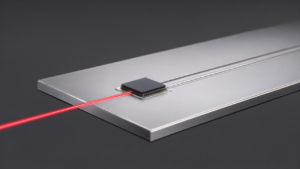
- Advantages of Optical Computing: Optical computing uses photons to perform calculations, allowing for much faster and more parallel data processing compared to electrons. This enables ultra-low-latency processing of massive data volumes and dramatic reductions in power consumption.
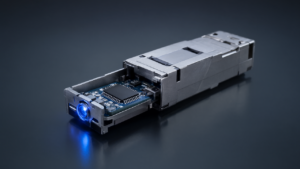
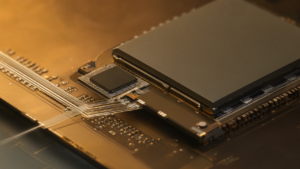
- Evolution of Optical Interconnects: The transition to optical computing will accelerate the adoption of advanced optical communication technologies such as Co-Packaged Optics (CPO) and on-chip optical interconnects. These technologies integrate optical engines directly with processors, minimizing electrical signal paths and maximizing performance.
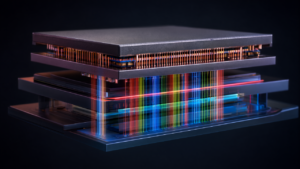
- New AI Chip Architectures: Optical computing paves the way for entirely new AI chip architectures that perform neural network computations directly with optical circuits. This has the potential to dramatically improve the speed and efficiency of AI processing.
Background & Context
The evolution of AI is revolutionizing data center infrastructure design, but the associated immense power consumption and thermal management challenges remain major concerns for sustainability and scalability. Optical computing is drawing industry attention as a fundamental solution to these issues.
Get our weekly technology intelligence — free
Receive an infographic that lets you judge at a glance whether each field’s analysis report is worth reading.
Subscribe Free — Weekly Tech Intelligence
By subscribing, you’ll receive Troy-Technical’s weekly technology intelligence newsletter.
- Your email and selected fields are used only to deliver the newsletter.
- We never share your information with third parties.
- You can unsubscribe anytime via the link in each email.
See our Privacy Policy for details.
Takes about a minute · Unsubscribe anytime