
Key Findings
QuantumScape’s new Osprey architecture achieves a milestone of 1,000 full charge and discharge cycles at room temperature under one atmosphere of pressure, retaining approximately 80% capacity. This was demonstrated using a two-layer pouch with a 50 mm by 65 mm cathode. In contrast, the company’s first commercial product, the QSE-5 cell, is identified as a semi-solid hybrid because its cathode relies on a liquid catholyte, despite using a solid ceramic separator and an anode-free design.
Technical Details
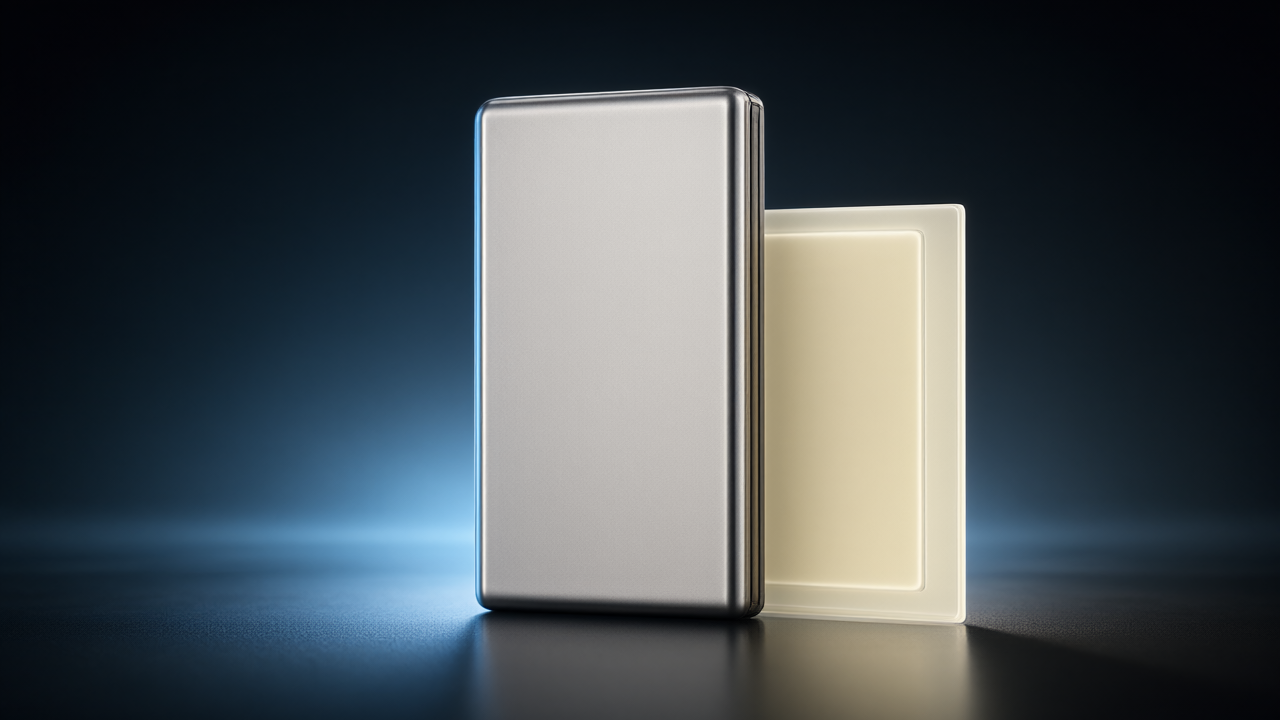
The Osprey architecture combines a solid sulfide electrolyte in the cathode with a stiff ceramic separator to manage the lithium-metal anode. This configuration aims to solve the “clamping pressure” issue prevalent in sulfide-based cells. While some sulfide cells require 20 to 100 atmospheres—equivalent to roughly 5,000 kg of force for a 100 mm by 242 mm patch—Osprey operates at one atmosphere, potentially removing the need for heavy steel battery casings.
However, technical white papers indicate that headline performance figures were achieved under specific laboratory conditions:
- Fast Charging: A 10% to 80% charge in five minutes required heating a two-layer cell to 80ºC.
- Cold Weather: Operation at -20ºC was tested on a 21 mm by 21 mm single-layer square at a gentle discharge rate, resulting in a loss of nearly half its total energy.
- Energy Density: A projected 1,100 Wh/L (surpassing the QSE-5’s 844 Wh/L and 301 Wh/kg) was derived from an 11 mm coin cell squeezed at three atmospheres for 100 cycles.
Background and Outlook
QuantumScape previously criticized sulfide electrolytes used by Toyota, Samsung SDI, BYD, and Factorial due to dendrite growth and high pressure requirements. The shift toward a sulfide-integrated cathode in Osprey suggests a change in corporate strategy to position the technology as an open platform for former rivals.
Scaling remains a significant hurdle. The 1,000-cycle test used a cell with 0.3 to 0.4 Ah capacity, whereas the QSE-5 sample holds about 5 Ah. Mass manufacturing for Osprey is still in development, and the 100 MWh pilot line for the QSE-5 is not targeted for production until 2028.
]]
Get our weekly technology intelligence — free
Receive an infographic that lets you judge at a glance whether each field’s analysis report is worth reading.
Subscribe Free — Weekly Tech Intelligence
By subscribing, you’ll receive Troy-Technical’s weekly technology intelligence newsletter.
- Your email and selected fields are used only to deliver the newsletter.
- We never share your information with third parties.
- You can unsubscribe anytime via the link in each email.
See our Privacy Policy for details.
Takes about a minute · Unsubscribe anytime