

Key Findings
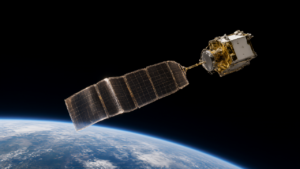
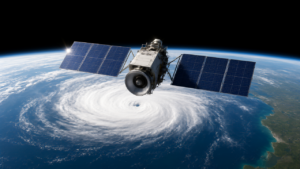
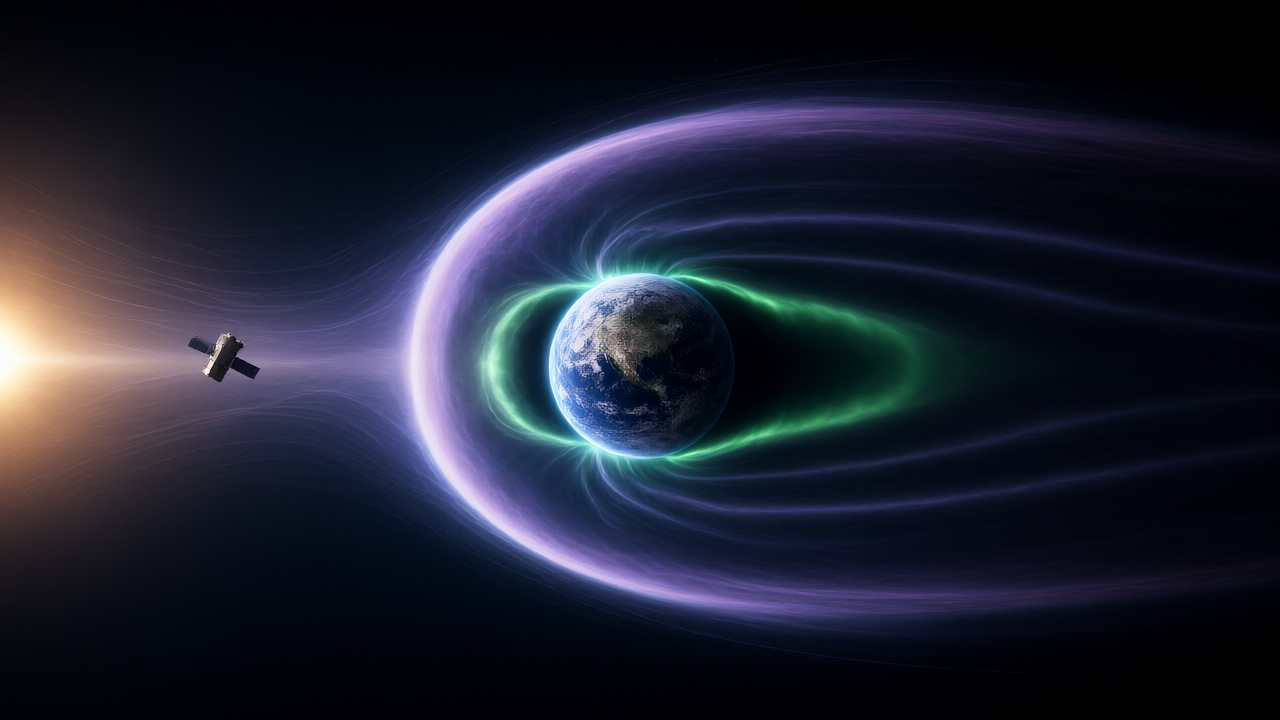
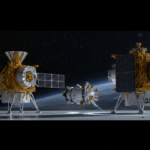
The SMILE (Solar wind Magnetosphere Ionosphere Link Explorer) satellite has successfully captured the first set of panoramic observation images and detection data of the Earth’s magnetosphere. Unlike previous missions that relied on “in-situ” point measurements, SMILE provides a dynamic, wide-angle view of how solar wind impacts the Earth’s magnetic shield and how the magnetosphere responds.
Technical Details
SMILE operates on a large elliptical orbit to observe the Earth’s space environment from a distance. The satellite utilizes three primary instrument types to create a complete physical picture:
- Soft X-ray Imager: Captures the “outer defense line” by detecting soft X-ray photons emitted during charge exchange, where high-valence heavy ions in the solar wind capture electrons from neutral atoms in Earth’s exosphere.
- Ultraviolet Auroral Imager: Monitors the morphology, brightness, and position of ultraviolet auroras in the North Pole region to track energy injection into the ionosphere.
- In-situ Sensors: Includes a solar wind ion analyzer and a magnetometer to provide the physical coordinates and background parameters necessary to interpret the imaging data.
Background and Context
The Earth’s magnetosphere protects the atmosphere and human infrastructure from high-energy charged particles in the solar wind. Solar activity, such as flares and coronal mass ejections, can compress the magnetosphere and trigger magnetic storms, affecting satellite orbits, communication, navigation, and power grids in high-latitude regions. Previously, scientists relied on a few satellites acting as “fixed camera positions,” which limited their ability to see the full scale of these interactions.
Significance and Outlook
By establishing a causal chain between solar wind input, magnetosphere boundary changes, and ionospheric coupling, SMILE aims to refine space weather models. This capability is critical for the safety of modern technical infrastructure, including communication satellites, manned spacecraft, and space stations, by improving early warning systems for space weather events.
Source: https://finance.sina.com.cn/jjxw/2026-11-12/doc-iniynawz1137473.shtml
Get our weekly technology intelligence — free
Receive an infographic that lets you judge at a glance whether each field’s analysis report is worth reading.
Subscribe Free — Weekly Tech Intelligence
By subscribing, you’ll receive Troy-Technical’s weekly technology intelligence newsletter.
- Your email and selected fields are used only to deliver the newsletter.
- We never share your information with third parties.
- You can unsubscribe anytime via the link in each email.
See our Privacy Policy for details.
Takes about a minute · Unsubscribe anytime