


Key Findings
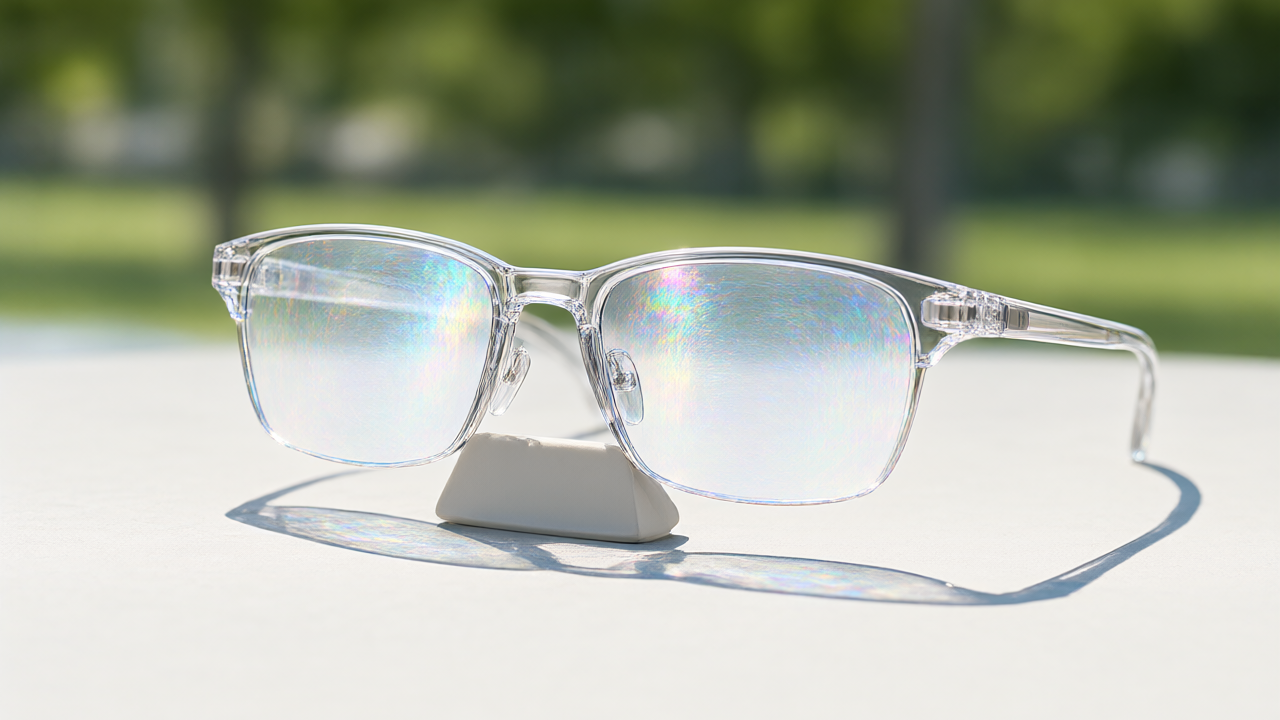
The developed meta-WG prototype achieves a 30° field of view (FoV) and an 8<0xE2><0x80><0x89>×<0xE2><0x80><0x89>8-mm 2 two-dimensional (2D) eyebox. In terms of optical performance, the system maintains an average luminance efficiency of 1,938<0xE2><0x80><0x89>nits<0xE2><0x80><0x89>lm −1, reaching peaks of up to 4,225<0xE2><0x80><0x89>nits<0xE2><0x80><0x89>lm −1. These results are achieved within a compact 1.5-mm-thick form factor, allowing the device to produce stable and bright virtual images even under outdoor ambient illumination.
Technical Details
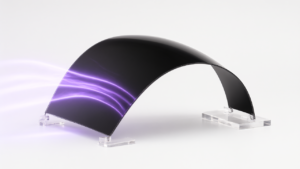
The system utilizes spatially varying, interwoven metasurfaces to provide several grating vectors, which allows for multidirectional light control. By employing a dual-layer metasurface-based waveguide architecture, the design expands the degrees of freedom for light routing compared to conventional diffractive waveguides. This increased control allows the system to balance efficiency, viewing range, and form factor more effectively than previous optical solutions.
Background & Context
Augmented reality (AR) displays have evolved from early optical see-through head-mounted systems toward lightweight glasses. While diffractive waveguides (WGs) have been a promising path for lightweight designs, they suffer from inherent trade-offs between the field of view, optical efficiency, and eyebox size. These limitations stem from the restricted degrees of freedom available for light control in standard diffractive systems.
Significance & Outlook
By overcoming the limitations of conventional diffractive WGs, this metasurface approach provides a scalable framework for developing wearable displays that meet practical consumer requirements. The ability to maintain high brightness and a wide eyebox in a thin profile suggests a viable path toward all-day-wearable AR glasses that seamlessly integrate digital information with the physical world.
Source: https://doi.org/10.1038/s41586-026-11277-x
Get our weekly technology intelligence — free
Receive an infographic that lets you judge at a glance whether each field’s analysis report is worth reading.
Subscribe Free — Weekly Tech Intelligence
By subscribing, you’ll receive Troy-Technical’s weekly technology intelligence newsletter.
- Your email and selected fields are used only to deliver the newsletter.
- We never share your information with third parties.
- You can unsubscribe anytime via the link in each email.
See our Privacy Policy for details.
Takes about a minute · Unsubscribe anytime