

Key Findings
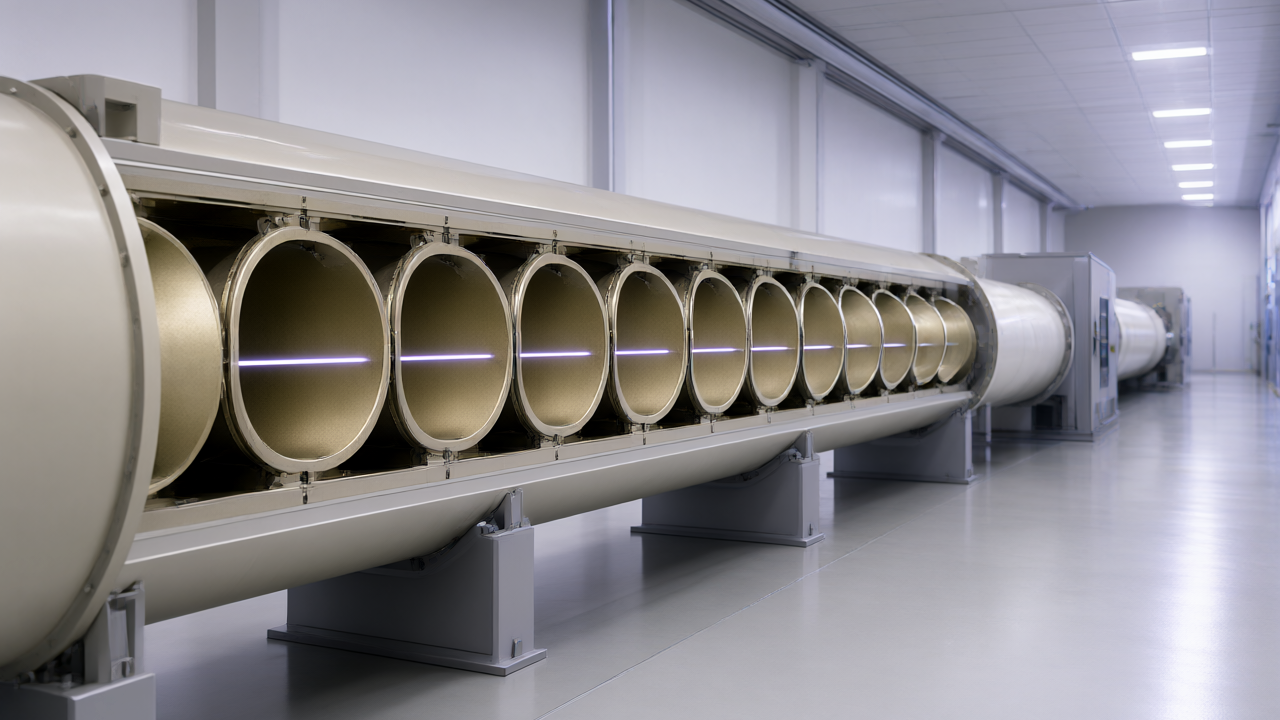
Researchers have successfully developed and demonstrated stable beam loading in the first liquid-helium-free Nb3Sn thin-film radio-frequency (RF) superconducting electron accelerator. This achievement, resulting from nearly ten years of research, was recognized as one of the “2026 Top Ten Advances in China Surface Technology” by the Surface Engineering Branch of the Chinese Mechanical Engineering Society.
Technical Details
The project focused on the intersection of accelerator physics, superconducting materials, and surface engineering. The team addressed core challenges related to surface interface preparation and system integration under RF superconducting conditions. Key technical breakthroughs include:
- Systematic research on niobium (Nb) substrate pretreatment and thin-film growth control.
- Identification of the intrinsic mechanism of non-uniform tin (Sn) nucleation.
- Development of processes for high-quality thin-film growth within complex cavity internal surfaces and the nanometer-scale removal of surface impurities.
The team has secured over ten invention patents and published findings in professional academic journals. The Chinese Nuclear Society’s evaluation stated that the prototype provides a principle-based model for engineering applications and reaches international advanced or leading levels in the field of Nb3Sn superconducting accelerators.
Background and Context
Nb3Sn is a focal point of RF superconducting research because it can increase the operating temperature of superconducting cavities. By raising this temperature, the accelerator can move away from a reliance on liquid helium, thereby altering the traditional operational mode of superconducting linear accelerators.
Significance and Outlook
The liquid-helium-free design offers a technical path distinct from traditional routes, providing high beam output potential for high-power continuous beam applications. Potential industrial applications include:
- Environmental Protection: Using high-energy electron beam irradiation to break down hard-to-degrade molecules.
- National Security: Non-destructive testing of large components and irradiation testing of special materials.
- Medical Health: Large-scale production of medical isotopes for nuclear medicine diagnostics and targeted radiotherapy.
- Agriculture and Biology: Irradiation for food preservation, pest control, and cold sterilization of medical consumables to avoid the risks associated with traditional cobalt source irradiation.
Source: https://finance.sina.com.cn/roll/2026-11-10/doc-iniyfuyz2644380.shtml
Get our weekly technology intelligence — free
Receive an infographic that lets you judge at a glance whether each field’s analysis report is worth reading.
Subscribe Free — Weekly Tech Intelligence
By subscribing, you’ll receive Troy-Technical’s weekly technology intelligence newsletter.
- Your email and selected fields are used only to deliver the newsletter.
- We never share your information with third parties.
- You can unsubscribe anytime via the link in each email.
See our Privacy Policy for details.
Takes about a minute · Unsubscribe anytime