Key Findings
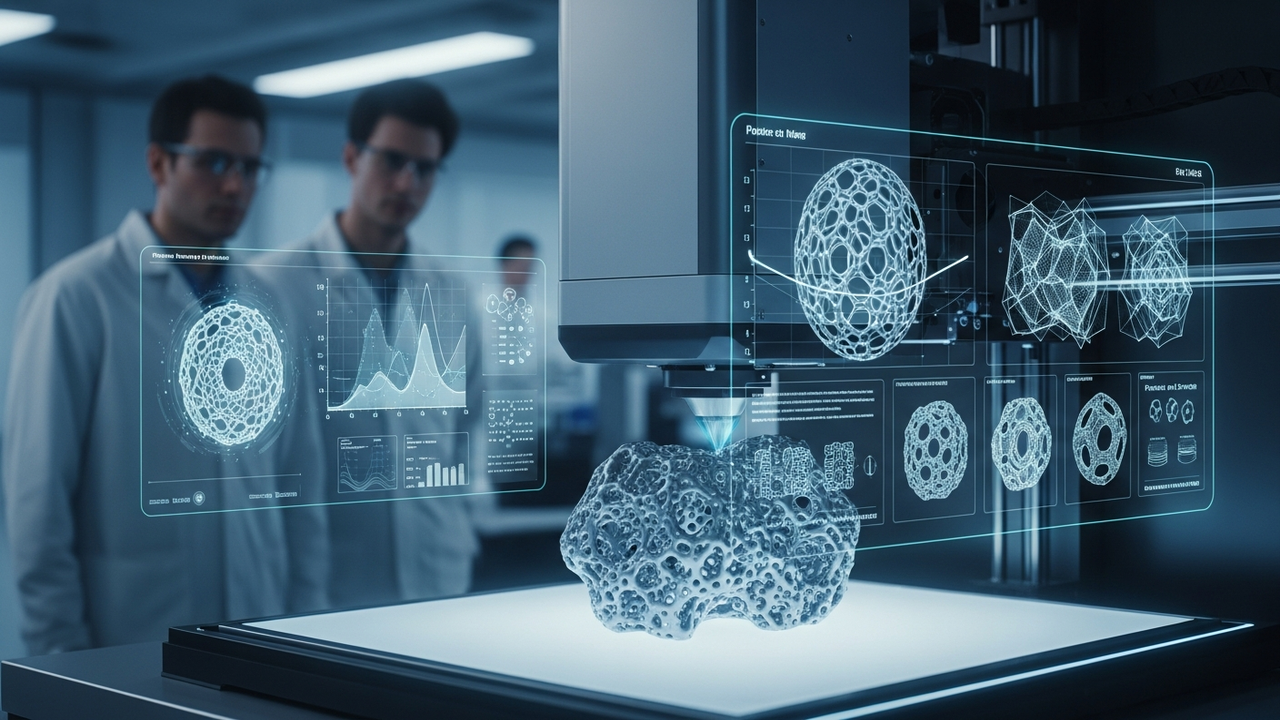
The Fraunhofer Institute for Mechanics of Materials (Fraunhofer IWM) has announced a significant advancement in the development and manufacturing of porous functional materials using capillary suspensions. This technology enables the precise creation of materials with customized porosity and strength via 3D printing.
Technical / Clinical Details
The technology developed by Fraunhofer IWM is based on a unique material preparation method called ‘capillary suspensions.’ This allows for extremely precise control over the porosity and mechanical strength of materials during the manufacturing process. Specifically, it enables the free design and 3D printing of pore size, distribution, interconnectivity, as well as overall material gradients and complex geometric shapes. This fine structural control optimizes mass transport (movement of fluids or gases) for specific applications, thereby significantly improving chemical reaction efficiency and energy conversion efficiency. For example, in energy conversion generators such as fuel cells, catalytic converters, and batteries, optimizing the transport pathways for ions and molecules can maximize device performance. Fraunhofer IWM provides an integrated development chain, from the production of capillary suspensions to 3D printing of porous functional materials, functional verification of energy conversion generators, and eventual transition to various application fields.
Background & Context
Porous materials, due to their high surface area and internal structural properties, play indispensable roles in a wide range of fields, including catalysts, filters, sensors, medical implants, and energy storage/conversion devices. However, conventional manufacturing methods have faced difficulties in precisely controlling complex internal structures or introducing gradient structures tailored for specific functions. The evolution of 3D printing technology offers the potential to overcome these challenges, significantly enhancing design freedom for materials. Fraunhofer IWM’s approach demonstrates the ability to manufacture high-performance porous materials on demand, paving the way for tailored material solutions that meet specific industrial needs.
Strategic Significance & Outlook
The development of porous functional materials by Fraunhofer IWM will have a substantial impact, particularly in the areas of energy efficiency, chemical processes, and medical applications. Improved efficiency in energy conversion devices will contribute to the creation of more sustainable energy systems, while enhanced performance in catalysts and filters will lead to more efficient industrial processes and reduced environmental impact. The technology is also applicable to the manufacturing of customized implants and biocompatible devices, promoting advancements in personalized medicine. This comprehensive development chain is expected to accelerate the rapid commercialization of research findings, creating new innovations and opportunities in the high-performance porous materials market.
Get our weekly technology intelligence — free
Receive an infographic that lets you judge at a glance whether each field’s analysis report is worth reading.
Subscribe Free — Weekly Tech Intelligence
By subscribing, you’ll receive Troy-Technical’s weekly technology intelligence newsletter.
- Your email and selected fields are used only to deliver the newsletter.
- We never share your information with third parties.
- You can unsubscribe anytime via the link in each email.
See our Privacy Policy for details.
Takes about a minute · Unsubscribe anytime








Comments