


Key Findings
The developed electroactive fiber-optic device enables the real-time, multi-scale tracking of interfacial physicochemical changes by integrating plasmonic sensing with electrochemical functionality. Using gold-coated tilted fiber Bragg gratings (TFBGs), the system serves a dual purpose: acting simultaneously as working electrodes and optical probes. This approach allows for the discrimination of charge transfer phenomena across multiple regimes, including double-layer formation, ionic and molecular adsorption, and faradaic reactions involving both immobilized thin solid films and soluble redox species.
Technical Details
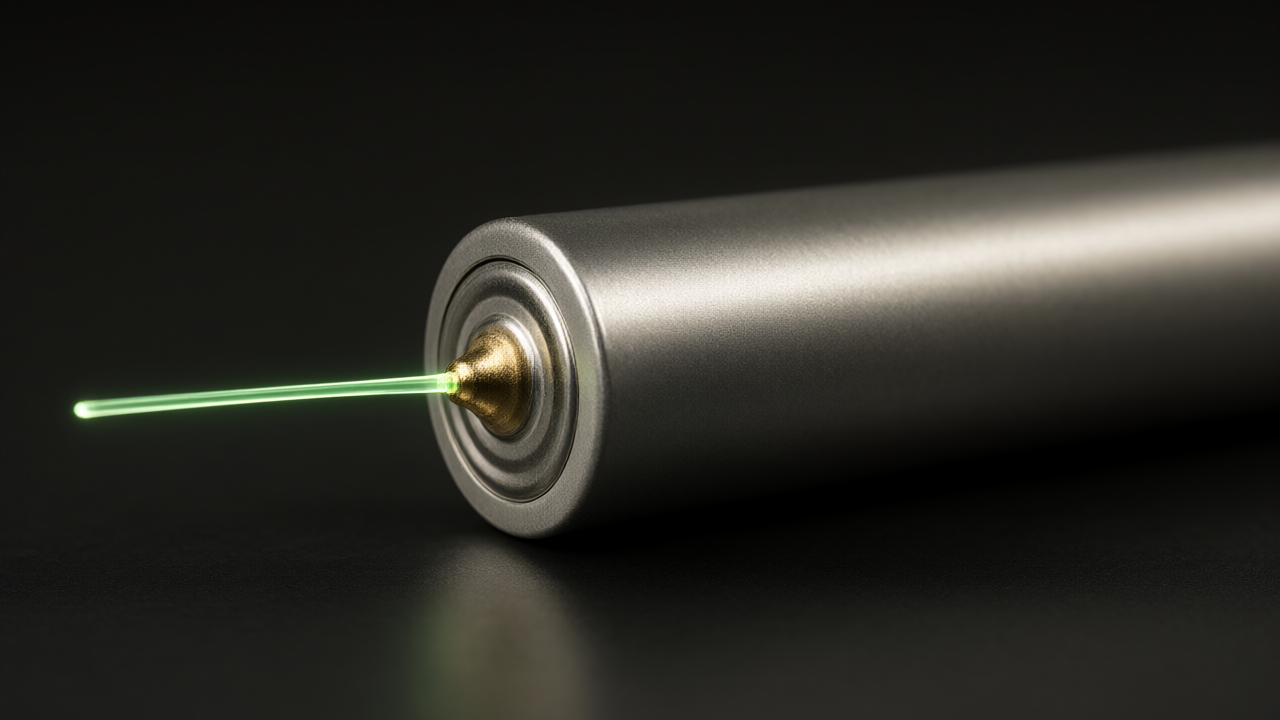
The device utilizes a novel “optical-mass” sensitivity concept to facilitate comprehensive operando monitoring in organic and aqueous electrolytes. By coating TFBGs with thin gold layers, the system leverages surface plasmon resonance (SPR), which enhances sensitivity ten-fold compared to standard TFBGs. This configuration confines the plasmonic field at the metal/electrolyte boundary (sub-µm penetration), ensuring the optical response is predominantly sensitive to interfacial refractive index changes, charge accumulation, and adsorption rather than bulk variations. To demonstrate practical deployment, the SPR-TFBG sensor was embedded within a sealed 18650 Na-ion cell to perform simultaneous electrochemical and optical interrogation of parasitic redox processes during formation.
Background & Context
Understanding charge dynamics at electrochemical interfaces is critical for improving the safety, longevity, and performance of energy storage devices. While techniques such as NMR, cryo-electron microscopy, and IR spectroscopy provide insights, they often require complex sample preparation that limits real-time monitoring. Optical fibers with diameters below 200<0xE2><0x80><0x89>µm offer a non-invasive alternative. While standard FBG sensors can track temperature and pressure, they cannot access direct chemical or electrochemical information regarding ion movements. TFBGs improve upon this by using evanescent wave sensing, though they typically lack the intrinsic selectivity required for quantitative chemical specificity.
Significance & Outlook
This technology provides a non-invasive foundation for mechanistic studies essential to electrocatalysis, advanced materials technologies, and energy storage. By overcoming the limitation of passive sensor positioning, this electroactive fiber-optic approach allows for the resolution of localized electrode phenomena within sealed battery environments.
Source: https://doi.org/10.1038/s41377-026-02521-0
Get our weekly technology intelligence — free
Receive an infographic that lets you judge at a glance whether each field’s analysis report is worth reading.
Subscribe Free — Weekly Tech Intelligence
By subscribing, you’ll receive Troy-Technical’s weekly technology intelligence newsletter.
- Your email and selected fields are used only to deliver the newsletter.
- We never share your information with third parties.
- You can unsubscribe anytime via the link in each email.
See our Privacy Policy for details.
Takes about a minute · Unsubscribe anytime