
Key Findings
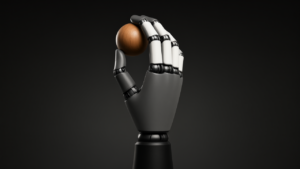
Researchers at the University of Pennsylvania have created an artificial muscle fiber capable of maintaining precise positions without drifting back to a resting shape. In laboratory tests, this technology allowed a robotic hand to strike piano keys with varying force and enabled robotic eyes to hold a steady gaze, overcoming a common limitation in soft robotics where materials typically creep back to their original length as they cool.
Technical Details
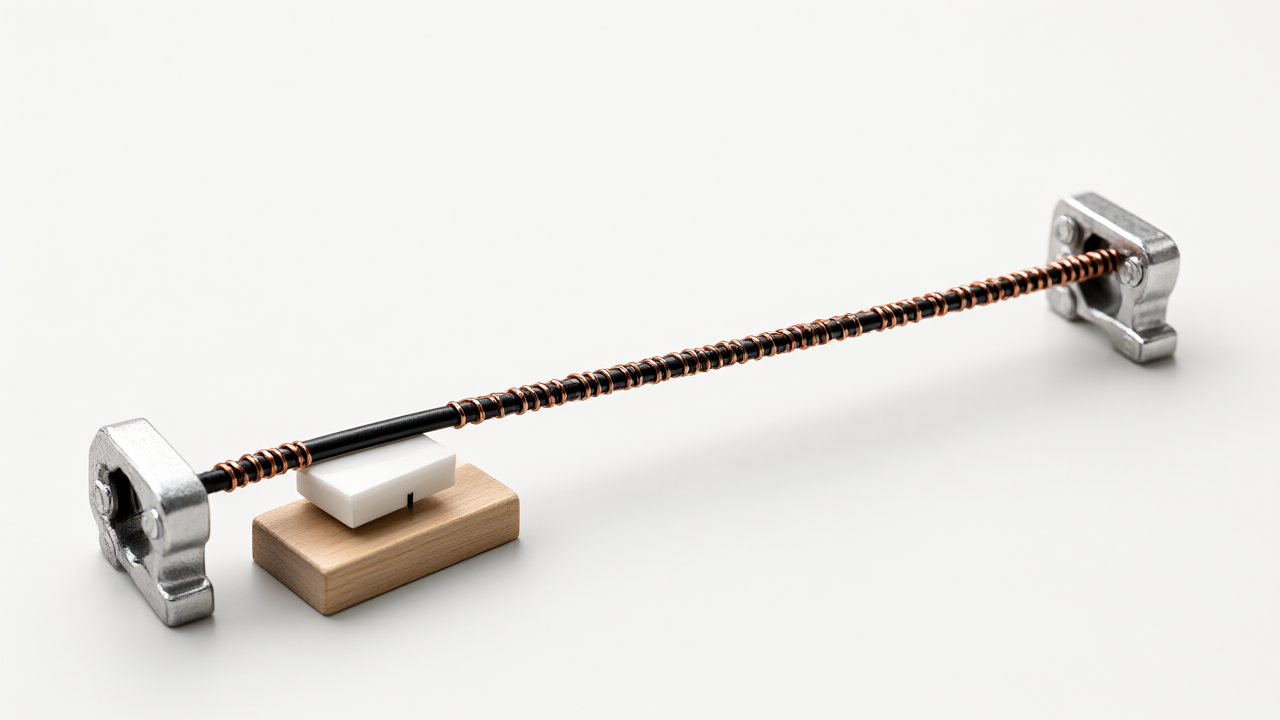
The fiber is a composite material where each component serves a specific function:
- Liquid Crystal Elastomer (LCE): Acts as the primary actuator, contracting and stretching when heated.
- Graphene: Mixed into the elastomer to increase softness and toughness, allowing the fiber to withstand tension when working in opposing muscle pairs.
- Copper Coil: An ultrathin coil that functions simultaneously as a heater and a temperature sensor.
To solve the problem of positional drift, the system uses the electrical resistance of the embedded copper coil as a feedback signal. By monitoring this resistance in real time, the system adjusts heating power to keep the fiber at a target value, removing the need for separate external sensors.
Background & Context
Traditional humanoid robots rely on rigid motors and mechanical parts, which are effective for lifting and walking but struggle with subtle movements like folding laundry. While soft materials offer a more human-like alternative, they often lack the necessary combination of strength and flexibility. This project is part of a broader trend toward muscle-like actuators, alongside other developments such as synthetic hydrogel skin and the “musculoskeletal android” released by Polish startup Clone Robotics in 2025.
Significance & Outlook
The integration of the sensor and heater into a single component allows for a simpler design that can be scaled down and packed densely. The team intends to combine these fibers into larger systems to create natural-looking facial expressions and plans to explore the use of AI computer vision to coordinate these muscle groups for more human-like movement.
Source: https://www.techspot.com/news/114610-robots-can-do-backflips-but-cant-hold-gaze.html
Get our weekly technology intelligence — free
Receive an infographic that lets you judge at a glance whether each field’s analysis report is worth reading.
Subscribe Free — Weekly Tech Intelligence
By subscribing, you’ll receive Troy-Technical’s weekly technology intelligence newsletter.
- Your email and selected fields are used only to deliver the newsletter.
- We never share your information with third parties.
- You can unsubscribe anytime via the link in each email.
See our Privacy Policy for details.
Takes about a minute · Unsubscribe anytime