


Key Findings
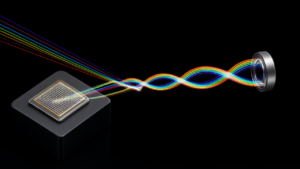
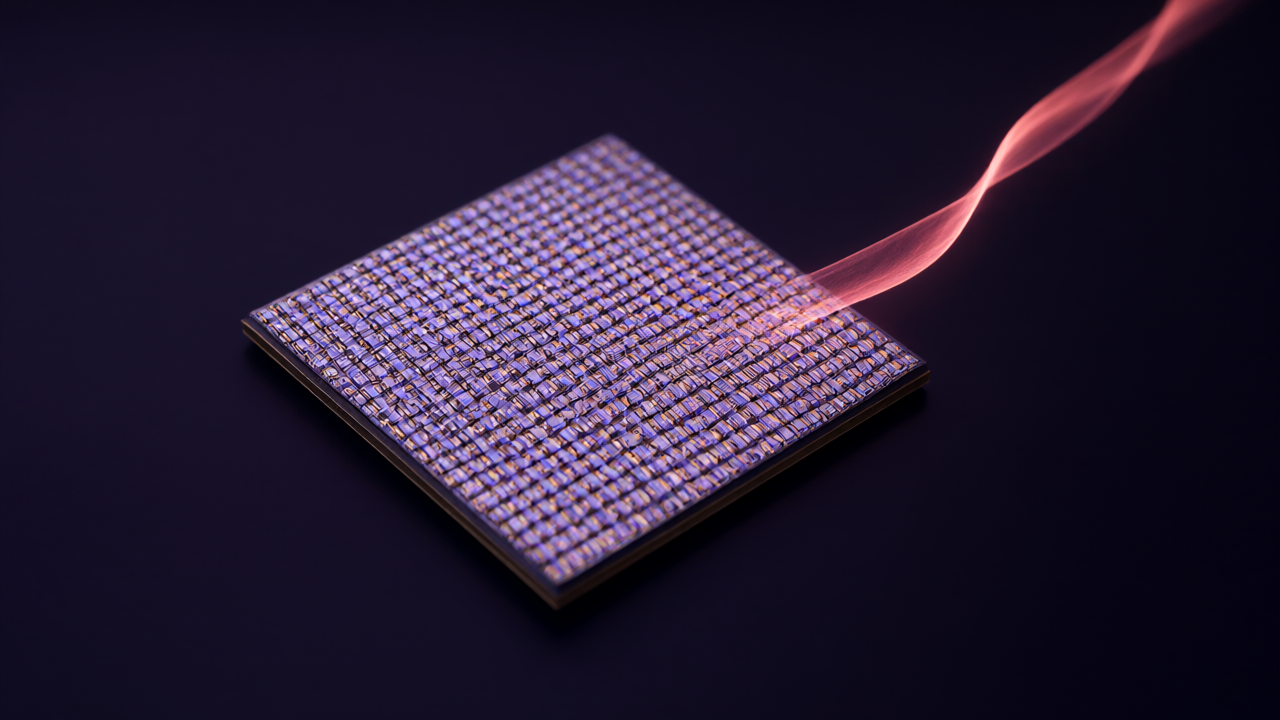
The proposed hybrid quasi-bound states in the continuum (quasi-BIC) active metasurface achieves significant circular dichroism (CD) modulation ranging from -0.3 to -1 within the 6–8 µm mid-infrared spectrum. By utilizing the phase-change properties of Ge2Sb2Se4Te (GSST), the system facilitates a resonance wavelength shift of Δλ = 1.2 µm, allowing for continuous polarization evolution across the Poincaré sphere.
Technical Details
The structure consists of Ge and GSST elliptical dimers. Technical specifications include:
- Resonance Quality: A quasi-BIC resonance with Q ≈ 8390, dominated by magnetic dipole resonances to ensure strong near-field enhancement.
- Refractive Index Contrast: A substantial and near-lossless refractive index contrast of Δn ≈ 1.5 provided by the GSST.
- Tuning Mechanism: Polarization states are controlled by dynamically tuning the crystallization ratio (C) from 0 to 1.
- Polarization Conversion: The system enables a continuous transition from elliptical toward near-circular polarization states.
Background and Context
The research addresses the demand for dynamic polarization state manipulation at the nanoscale for photonic applications. The integration of GSST as a chalcogenide phase-change material allows the metasurface to be reconfigurable and non-volatile, leveraging the material’s ability to shift its optical properties based on its crystallization state.
Significance and Outlook
This high-performance platform establishes a paradigm for active infrared meta-optics. The ability to continuously tune polarization and achieve high Q-factor resonances suggests potential applications in several advanced fields, specifically polarization-encoded computing, dynamic holography, and tunable lenses.
Source: https://doi.org/10.21203/rs.3.rs-11498824/v1
Get our weekly technology intelligence — free
Receive an infographic that lets you judge at a glance whether each field’s analysis report is worth reading.
Subscribe Free — Weekly Tech Intelligence
By subscribing, you’ll receive Troy-Technical’s weekly technology intelligence newsletter.
- Your email and selected fields are used only to deliver the newsletter.
- We never share your information with third parties.
- You can unsubscribe anytime via the link in each email.
See our Privacy Policy for details.
Takes about a minute · Unsubscribe anytime