
Key Findings
The research team led by Professor Il-Kwon Oh at the Korea Advanced Institute of Science and Technology (KAIST) has successfully fabricated a structural lithium-sulfur battery cathode that conforms to non-planar geometries. In mechanical deformation tests, the electrode withstood 1,000 bending cycles at a curvature radius of 2.5 millimeters without structural collapse, cracking, or material detachment. Furthermore, when installed in a cylindrical housing, the battery retained 99.8 percent of its initial operational voltage even under external mechanical forces sufficient to fracture the surrounding structural frame.
Technical Details
To address the limitations of conventional slurry coatings—which are prone to delamination under stress—the team grew nickel cobalt selenide nanowires directly onto woven carbon fiber surfaces. This monolithic integration provides several technical advantages:
- Chemical Stability: The nickel cobalt selenide compound catalyzes sulfur-related redox reactions and anchors lithium polysulfides, limiting their dissolution and migration into the electrolyte.
- Electrical Continuity: Direct growth of nanowires ensures firmly anchored, continuous electrical conduction pathways.
- Geometric Versatility: The material was successfully integrated into oval, square, and drone-leg structural components, powering light-emitting diodes in each configuration.
Background and Context
Conventional drone and robotic architectures separate the structural airframe from rigid battery packs, which limits weight reduction. While lithium-sulfur systems offer high theoretical energy capacity at low weight, they typically suffer from poor electrical conductivity of elemental sulfur and the migration of lithium polysulfides. Additionally, standard flat battery configurations cannot be integrated into the curved or tubular surfaces common in robotic support frames and landing gear.
Significance and Outlook
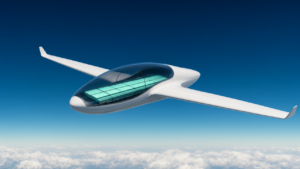
This architecture allows load-bearing parts, such as robotic limbs or landing gear, to function as energy storage components. The researchers suggest that this electrode design could be paired with carbon fiber and resin matrices to build multifunctional airframes. Future research is required to quantify the exact reduction in structural weight and the resulting extension of flight or mission durations.
Get our weekly technology intelligence — free
Receive an infographic that lets you judge at a glance whether each field’s analysis report is worth reading.
Subscribe Free — Weekly Tech Intelligence
By subscribing, you’ll receive Troy-Technical’s weekly technology intelligence newsletter.
- Your email and selected fields are used only to deliver the newsletter.
- We never share your information with third parties.
- You can unsubscribe anytime via the link in each email.
See our Privacy Policy for details.
Takes about a minute · Unsubscribe anytime