Key Findings
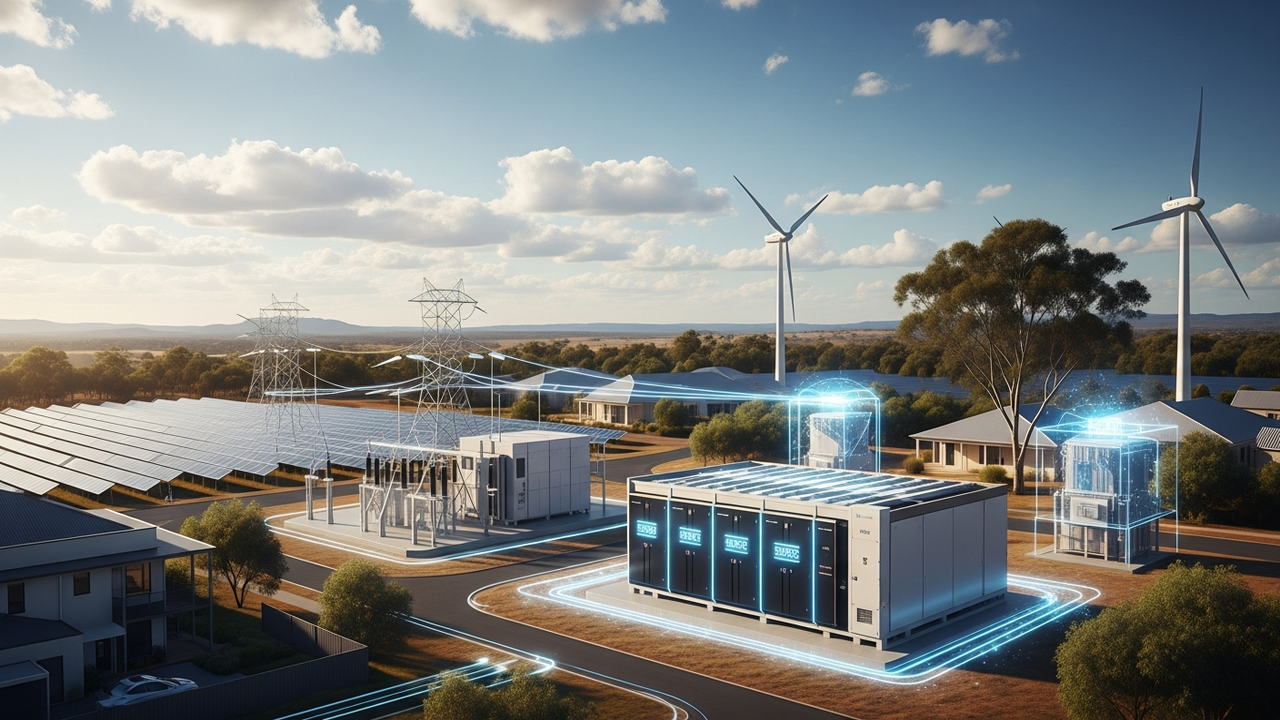
Australia is seeing an acceleration in the deployment of community-level energy storage systems, with numerous community battery projects rolling out across the nation. These projects are delivering groundbreaking results, strengthening local power grids and dramatically enhancing the energy independence of individual communities. Specifically, by integrating with local solar generation, they store surplus electricity and supply it when needed, thereby improving power quality and reliability while helping residents reduce their electricity costs.
Technical / Clinical Details
Community batteries are large-scale battery storage systems installed in areas with high penetration of residential solar PV. Typically ranging from hundreds of kilowatt-hours (kWh) to several megawatt-hours (MWh) in size, lithium-ion batteries are currently predominant, though long-duration storage technologies like flow batteries are also beginning to be introduced. These batteries are controlled by intelligent Energy Management Systems (EMS) that store surplus electricity generated by rooftop solar panels during the day and discharge it during evening peak demand periods. This helps flatten the load on the power grid and alleviate transmission network congestion. Furthermore, by functioning as part of a microgrid, they offer resilience capabilities to maintain power supply to local communities during outages.
Background & Context
Australia boasts one of the highest solar irradiance levels globally and a high penetration rate of residential solar PV. However, it also faces the challenge of increasing distributed energy resources complicating grid operations. Community batteries are gaining attention as an effective solution to this challenge, promoting renewable energy integration. Federal and state governments are actively supporting these types of projects through funding and policy incentives, bolstering regional energy transitions. These initiatives also address residents’ concerns regarding rising electricity prices and the vulnerability of centralized power grids.
Strategic Significance & Outlook
The expansion of community battery projects will be a crucial factor in transforming Australia’s energy landscape. This will further accelerate renewable energy deployment and foster the development of more distributed and resilient power grids. In the future, these battery systems are expected to function as part of Virtual Power Plants (VPPs), offering a broader range of electricity market services. Moreover, by allowing community members to directly benefit from battery storage, it will empower local societies and promote active participation in the clean energy transition. Australia’s success story has the potential to serve as a model for other countries developing distributed energy storage strategies.
Source: #
Get our weekly technology intelligence — free
Receive an infographic that lets you judge at a glance whether each field’s analysis report is worth reading.
Subscribe Free — Weekly Tech Intelligence
By subscribing, you’ll receive Troy-Technical’s weekly technology intelligence newsletter.
- Your email and selected fields are used only to deliver the newsletter.
- We never share your information with third parties.
- You can unsubscribe anytime via the link in each email.
See our Privacy Policy for details.
Takes about a minute · Unsubscribe anytime









Comments