Key Findings
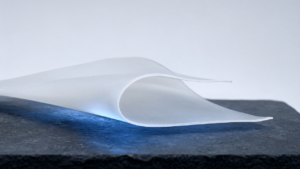
Researchers at the Dalian Institute of Chemical Physics, Chinese Academy of Sciences, have achieved a significant breakthrough in solid-state battery (SSB) technology by developing a novel polyvinylidene fluoride (PVDF)-based gel composite electrolyte. This innovation substantially improves both ionic conductivity and durability, with a battery incorporating the new electrolyte demonstrating excellent performance by retaining over 84% of its capacity after 350 cycles. This advancement is poised to address critical manufacturing challenges, such as poor interfacial contact and reduced conductivity, commonly associated with rigid and brittle sulfide-based electrolytes in large-scale production.
Technical / Clinical Details
The newly developed gel composite electrolyte primarily leverages a PVDF polymer matrix, strategically designed to overcome the limitations of existing solid electrolytes. While sulfide-based solid electrolytes boast high ionic conductivity, their inherent hardness and brittleness make it challenging to form stable, low-resistance interfaces with electrodes, posing a significant bottleneck for mass production. Furthermore, their rigidity makes them susceptible to mechanical stress and cracking during battery operation. The PVDF-based gel composite electrolyte offers a multifaceted solution:
- Hybrid Electrolyte Architecture: By combining a polymer matrix with components that facilitate ion transport, the electrolyte achieves a gel-like consistency, offering both high ionic conductivity and mechanical flexibility.
- Improved Interfacial Contact: The pliable nature of the gel composite allows for intimate contact with electrode surfaces, drastically reducing interfacial resistance compared to rigid solid-solid interfaces. This ensures efficient lithium-ion transport and lower internal battery resistance, enhancing power delivery.
- Exceptional Durability and Cycle Life: The prototype battery featuring this electrolyte maintained over 84% of its initial capacity after 350 charge-discharge cycles. This demonstrates robust long-term stability and durability, which are crucial for practical applications.
- Addressing Sulfide Electrolyte Limitations: The flexible gel composite effectively bypasses manufacturing difficulties such as the high-pressure pressing required for rigid sulfide electrolytes, and mitigates interfacial degradation issues that typically plague solid-solid interfaces during prolonged cycling.
This technology holds immense potential for reducing the manufacturing cost and enhancing the overall performance of all-solid-state batteries.
Background & Context
All-solid-state batteries are at the forefront of global research and development, envisioned as the key technology for electric vehicles (EVs) and next-generation electronic devices due to their promise of higher energy density and superior safety. However, the path to commercialization has been hindered by several challenges, including high interfacial resistance between the solid electrolyte and electrodes, manufacturing costs, and scalability. Sulfide-based solid electrolytes have attracted considerable attention for their high ionic conductivity, but their physical properties (hardness, brittleness) have impeded their transition to mass production. China’s strategic drive for global leadership in battery technology makes this breakthrough particularly significant, as it enhances domestic technological capabilities and strengthens international competitiveness.
Strategic Significance & Outlook
The PVDF-based gel composite electrolyte presents a highly promising approach for the commercialization of solid-state batteries. Future research will focus on evaluating its long-term stability over even more cycles, testing compatibility with various cathode materials, and demonstrating performance in larger-format cells. Optimizing manufacturing processes and reducing costs will also be critical for widespread adoption. If successfully scaled, this technology could significantly extend EV range, accelerate charging times, and drastically reduce fire risks, thereby playing a pivotal role in accelerating the transition to a sustainable energy society.
Get our weekly technology intelligence — free
Receive an infographic that lets you judge at a glance whether each field’s analysis report is worth reading.
Subscribe Free — Weekly Tech Intelligence
By subscribing, you’ll receive Troy-Technical’s weekly technology intelligence newsletter.
- Your email and selected fields are used only to deliver the newsletter.
- We never share your information with third parties.
- You can unsubscribe anytime via the link in each email.
See our Privacy Policy for details.
Takes about a minute · Unsubscribe anytime