Background
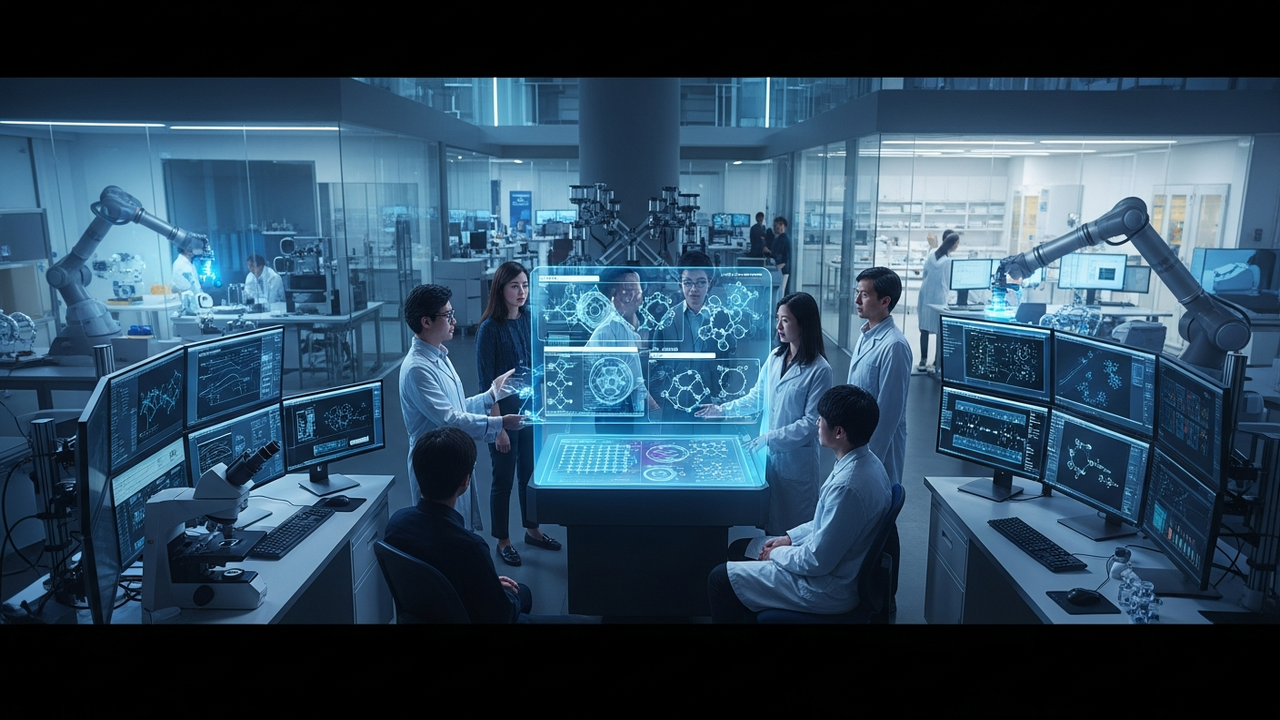
The development of clean energy technologies is vital for addressing climate change and achieving a sustainable society. However, the discovery and development of high-performance energy materials remain a time-consuming and costly process. Materials informatics and artificial intelligence (AI) are emerging as powerful tools for efficiently exploring vast candidate material spaces and rapidly identifying promising materials. The Southeast Asian region, in particular, holds significant potential for renewable energy adoption and clean technology innovation, making such workshops crucial for strengthening regional R&D capabilities.
Overview and Key Topics
The National University of Singapore (NUS) is hosting an “AI for Energy Materials” workshop on July 10, 2026, in conjunction with the Solid State Ionics Conference 2026 (SSI-25). This event will bring together leading researchers in materials informatics and AI to discuss cutting-edge technologies and challenges in accelerating energy materials discovery. Key discussions will center on machine learning force field development for electrolytes, graph neural network design for property prediction, and active learning for experimental workflow optimization, marking a significant opportunity to advance AI applications in materials science in the Asian region.
Technical Focus Areas
The workshop program focuses on several key themes concerning the application of AI in energy materials science:
- Machine Learning Force Field Development for Electrolytes: Electrolytes are critical components determining the performance of batteries and fuel cells. Accurate force fields are essential for their molecular dynamics simulations. Developing force fields using machine learning (ML) enables simulations to achieve accuracy comparable to first-principles calculations but at significantly higher speeds, accelerating the search for new electrolyte candidates.
- Graph Neural Network (GNN) Design for Property Prediction: GNNs are powerful tools that can represent materials’ atomic structures as graphs and predict properties directly from these structures. The workshop will feature discussions primarily on designing GNN architectures to accurately predict properties such as band gap, ionic conductivity, and stability for various energy materials (e.g., electrode materials, catalysts).
- Experimental Workflow Optimization via Active Learning: Active learning is a method where AI proposes the most informative experiments and learns from their results, maximizing the efficiency of materials exploration. This approach minimizes the number of experimental trials while rapidly identifying optimal energy material compositions and synthesis conditions.
This workshop will serve as a platform to explore how these cutting-edge technologies can transform the processes of energy material design, synthesis, and characterization, contributing to the realization of next-generation clean energy technologies.
Strategic Impact and Outlook
The NUS workshop is expected to be an important platform for further advancing the application of AI in the energy materials sector. The research outcomes and technological advancements discussed are anticipated to accelerate the development of a wide range of energy materials, including batteries, fuel cells, solar cells, and thermoelectric materials. Through international cooperation and knowledge sharing, pathways for more efficient and sustainable energy solutions will be envisioned. This will enable industries to bring more competitive products to market and contribute to the global energy transition.
Get our weekly technology intelligence — free
Receive an infographic that lets you judge at a glance whether each field’s analysis report is worth reading.
Subscribe Free — Weekly Tech Intelligence
By subscribing, you’ll receive Troy-Technical’s weekly technology intelligence newsletter.
- Your email and selected fields are used only to deliver the newsletter.
- We never share your information with third parties.
- You can unsubscribe anytime via the link in each email.
See our Privacy Policy for details.
Takes about a minute · Unsubscribe anytime






Comments