Key Findings
Pioneering research has unveiled a novel optical interconnect technology that achieves a dramatic 40% reduction in power consumption for GPU-to-GPU links within AI/HPC data centers, simultaneously boosting data transmission efficiency by a factor of two compared to conventional electrical connections. This breakthrough is paramount for overcoming the scalability and operational cost challenges inherent in deploying and managing large-scale AI clusters.
Technical / Clinical Details
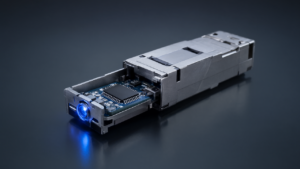
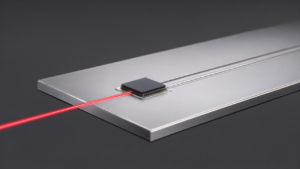
- The new optical interconnect solution leverages advanced silicon photonics coupled with ultra-low-power modulation schemes to fundamentally eliminate bottlenecks in data transfer between GPUs and between GPUs and memory.
- Specifically, it achieves a remarkable reduction in power consumption per bit, even while sustaining data rates exceeding 100Gbps per lane, surpassing the performance of traditional copper cables and current optical modules. This paves the way for terabit-scale interconnects operating within a few watts.
- Furthermore, the utilization of optical signals mitigates issues such as signal attenuation and electromagnetic interference prevalent in electrical signaling, enabling high-speed data transmission over longer distances and significantly reducing data transfer latency between AI accelerators and CPUs.
Background & Context
The exponential growth in the scale of contemporary AI models has led to a surge in power consumption within AI data center computing and networking infrastructure. High-speed, high-capacity data transfer between GPUs, in particular, has emerged as one of the most significant challenges in terms of overall power budget and thermal management. Traditional electrical interconnects struggle with increasing power consumption and latency as data rates rise, thereby limiting the scalability of large clusters. Consequently, the development of power-efficient optical interconnect technology has become an urgent imperative.
Strategic Significance & Outlook
This innovative optical interconnect technology provides an indispensable foundation for constructing next-generation AI supercomputers and exascale HPC systems. The enhanced power efficiency directly translates into substantial reductions in data center operational costs, contributing significantly to the realization of sustainable AI infrastructure. Moreover, accelerated and lower-latency data transfer will enable the training and inference of more complex and larger AI models, thereby opening new frontiers in AI research and industrial applications. Commercialization efforts are anticipated to intensify towards 2027, with collaborations expected to grow among leading semiconductor vendors and data center operators.
Get our weekly technology intelligence — free
Receive an infographic that lets you judge at a glance whether each field’s analysis report is worth reading.
Subscribe Free — Weekly Tech Intelligence
By subscribing, you’ll receive Troy-Technical’s weekly technology intelligence newsletter.
- Your email and selected fields are used only to deliver the newsletter.
- We never share your information with third parties.
- You can unsubscribe anytime via the link in each email.
See our Privacy Policy for details.
Takes about a minute · Unsubscribe anytime