Key Findings
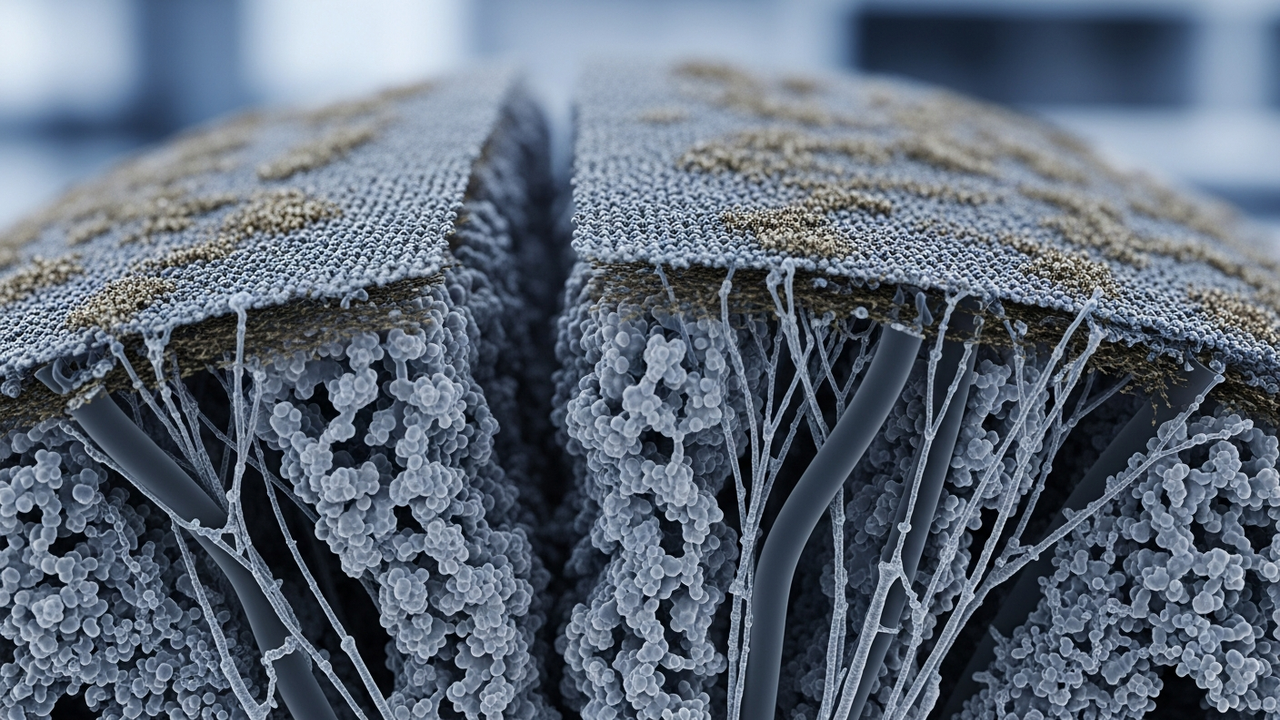
Silicon-based high-capacity anode materials hold immense promise for significantly boosting the energy density of lithium-ion batteries. However, substantial volume strain during charge-discharge cycles remains a major hurdle to their practical application. In response, cutting-edge research focuses on integrating carbon materials and high-modulus (stiffness) additives into electrodes to effectively manage volumetric changes and enhance the mechanical stability of the electrode structure.
Technical/Clinical Details
Silicon, with a theoretically very high specific capacity of approximately 4200 mAh/g, is a highly anticipated anode material for next-generation lithium-ion and all-solid-state batteries. Nevertheless, it undergoes up to 300% volume expansion when alloying with lithium. This expansion leads to electrode structure pulverization, destabilization of the solid electrolyte interphase (SEI) layer, delamination from the current collector, and accelerated lithium dendrite formation. These phenomena contribute to battery capacity fade and shortened cycle life.
Key strategies to mitigate this volume strain include:
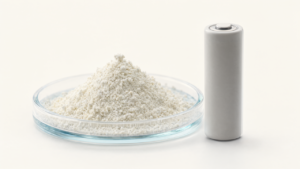
- Incorporation of Carbon Materials: Nano-scaling silicon particles and compounding them with carbon materials (such as graphene, carbon nanotubes, or amorphous carbon) helps to alleviate expansion stress, improve electrical conductivity, and stabilize the SEI layer. The flexible carbon matrix acts as a cushioning material that absorbs silicon’s volume changes.
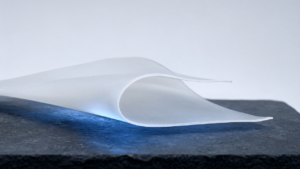
- Utilization of High-Modulus Additives: Introducing high-modulus polymers or ceramic particles as electrode binders or within the active material enhances the overall mechanical strength of the electrode. This suppresses fracture caused by volume expansion, improving electrode morphological stability and enabling stable long-term operation.
These strategies are critical for distributing internal stress within the electrode and maintaining the stability of the electrode-electrolyte interface.
Background & Context
Maximizing battery energy density is essential for improving the performance of electric vehicles (EVs) and portable electronic devices. Silicon anodes offer significant potential to surpass existing graphite anodes in this regard, driving active research and development by battery manufacturers and research institutions worldwide. In all-solid-state batteries, interface stability with the solid electrolyte is particularly crucial, making the volume change issue of silicon anodes even more critical. Therefore, innovative approaches in electrode design and materials science are key to the practical implementation of silicon anodes and the realization of high-performance all-solid-state batteries.
Strategic Significance & Outlook
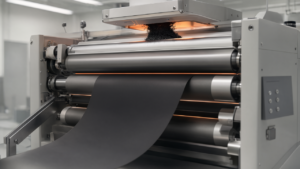
The development of composite electrode materials combining carbon and high-modulus additives represents a vital direction for establishing silicon anodes as a mainstream material for next-generation batteries. Future research will focus on further optimizing these strategies and scaling up manufacturing processes. Effectively resolving the volume strain issue will not only significantly extend the driving range of EVs and improve fast-charging capabilities but also contribute to enhancing overall battery safety and lifespan. This will accelerate the commercialization of high-performance all-solid-state batteries, potentially making a substantial contribution to achieving a sustainable energy society.
Source: https://pubs.rsc.org/ee/article/19/8/2420-2491/1236482
Get our weekly technology intelligence — free
Receive an infographic that lets you judge at a glance whether each field’s analysis report is worth reading.
Subscribe Free — Weekly Tech Intelligence
By subscribing, you’ll receive Troy-Technical’s weekly technology intelligence newsletter.
- Your email and selected fields are used only to deliver the newsletter.
- We never share your information with third parties.
- You can unsubscribe anytime via the link in each email.
See our Privacy Policy for details.
Takes about a minute · Unsubscribe anytime