Key Findings
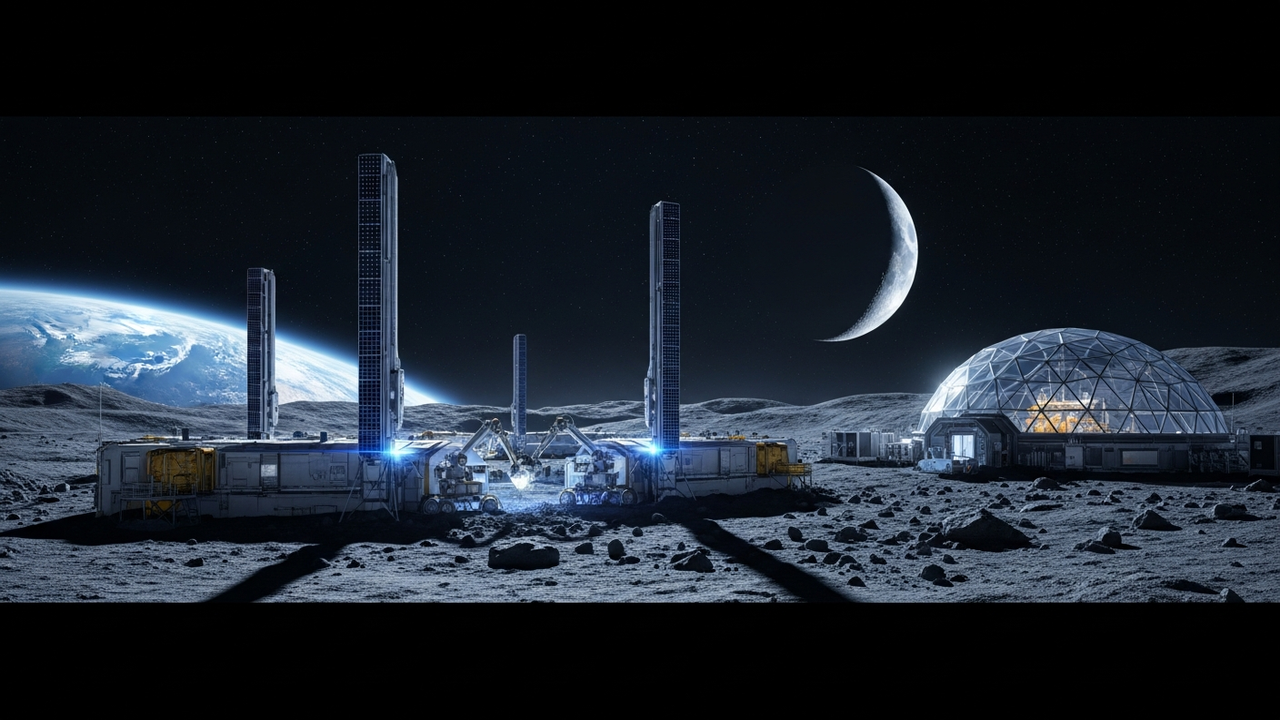
NASA has published a draft Broad Agency Announcement (BAA) under NextSTEP-3 Appendix A, signaling an open call for proposals to accelerate the technological readiness of critical systems essential for lunar and cislunar (Moon-orbiting space) architectures. This significant solicitation focuses on addressing pivotal technology gaps including vertical solar array systems, In-Situ Resource Utilization (ISRU) oxygen generation systems, Stirling Radioisotope Generators (RTGs), and in-space manufacturing. This initiative is a cornerstone for propelling NASA’s lunar base objectives and actively fosters private sector innovation toward establishing a sustainable human presence on the Moon.
Technical Details
The key technological areas targeted for proposals under NextSTEP-3 Appendix A include:
- Vertical Solar Array Systems: On the lunar surface, especially at polar regions, traditional horizontal solar arrays suffer from reduced efficiency due to low sun angles and extended shadowing. Vertical solar arrays are designed to capture sunlight more effectively across various solar elevations and angles, providing more consistent power generation. This design is particularly advantageous for long-duration power supply in lunar polar regions.
- In-Situ Resource Utilization (ISRU) Oxygen Generation Systems: Technologies for extracting water and oxygen from lunar regolith or ice are vital for astronaut life support, propellant production, and industrial activities on the Moon. This solicitation seeks high-efficiency, reliable oxygen generation systems that can significantly reduce the cost of transporting consumables from Earth.
- Stirling Radioisotope Generators (RTGs): The lunar night can last for nearly two Earth weeks, plunging temperatures to extreme lows. RTGs provide a reliable power source by converting heat from radioactive isotope decay into electricity, ensuring continuous operation even in shadowed areas or during lunar night. Stirling-based RTGs are more efficient than traditional thermoelectric RTGs, providing more power from a given amount of radioisotope fuel.
- In-Space Manufacturing: Capabilities for fabricating, repairing, and assembling components and structures in space. This technology overcomes the limitations of launching pre-fabricated parts from Earth, enabling the construction of larger structures and increasing mission flexibility. This includes 3D printing, automated welding, and robotic assembly.
These technologies are paramount for establishing a sustainable lunar exploration infrastructure, aligning with Phase 1 of the Artemis ‘Moon to Mars’ strategy.
Background & Context
NASA’s Artemis program aims to return humans to the Moon and establish a sustained presence for long-term exploration and eventual missions to Mars. This ambitious endeavor critically relies on advanced technologies that can withstand the harsh lunar environment and operate with increasing self-sufficiency. The Next Space Technologies for Exploration Partnerships (NextSTEP) program provides a framework for NASA to collaborate with commercial industry and academic institutions on these vital technology developments. Appendix A’s targeted solicitations aim to clearly define development priorities, thus expediting technological maturation. This public-private partnership model is crucial for accelerating innovation, creating new commercial opportunities, and maintaining American leadership in space.
Strategic Significance & Outlook
Proposals under NextSTEP-3 Appendix A are expected to drive breakthroughs in core lunar infrastructure technologies, including power, life support, and construction. Advancements in vertical solar arrays, ISRU systems, high-performance RTGs, and in-space manufacturing will extend human stay times on the Moon, expand opportunities for scientific discovery, and provide critical testbeds for future crewed missions to Mars. This initiative is poised to further accelerate the growth of the space economy and significantly increase the likelihood of the Moon becoming a central hub for human activity in the solar system, fostering both scientific progress and commercial enterprise beyond Earth.
Source: https://www.nasa.gov/directorates/stmd/nextstep-3-a-lunar-enabling-technology/
Get our weekly technology intelligence — free
Receive an infographic that lets you judge at a glance whether each field’s analysis report is worth reading.
Subscribe Free — Weekly Tech Intelligence
By subscribing, you’ll receive Troy-Technical’s weekly technology intelligence newsletter.
- Your email and selected fields are used only to deliver the newsletter.
- We never share your information with third parties.
- You can unsubscribe anytime via the link in each email.
See our Privacy Policy for details.
Takes about a minute · Unsubscribe anytime




Comments