Key Findings
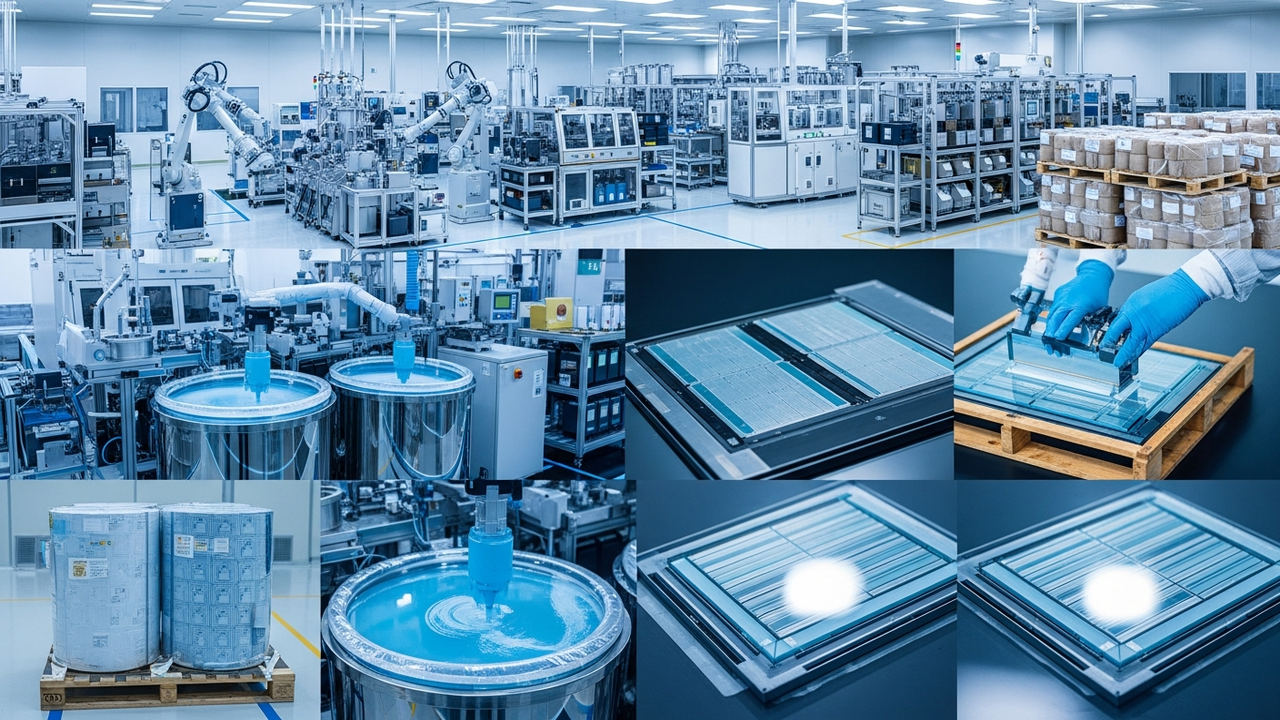
Leading Japanese consumer goods manufacturers, Kao and Ajinomoto, are reportedly significantly strengthening their semiconductor material production systems to meet the rapidly increasing demand for AI chips. Ajinomoto is expanding its production capacity for ABF (Ajinomoto Build-up Film), a critical substrate insulating material essential for almost all high-performance processors, thereby stabilizing its supply. Meanwhile, Kao is increasing the supply of high-purity cleaning agents, which are indispensable in semiconductor manufacturing processes. This strategic move clearly demonstrates the technically crucial role Japanese companies play in the global semiconductor supply chain during the AI era.
Technical / Clinical Details
AI chips, particularly advanced processors like GPUs and high-performance CPUs, require denser wiring and superior heat dissipation compared to conventional chips. Ajinomoto’s ABF is used as an insulating layer in multi-layer semiconductor packages, enabling fine wiring and suppressing thermal expansion, making it adopted in almost all high-performance processors. To meet the surging demand for AI chips, the company is significantly expanding its ABF supply capacity through production line expansions and the construction of new factories. Furthermore, Kao’s high-purity cleaning agents are essential for removing minute impurities and particles during the semiconductor manufacturing process. As chip performance and miniaturization advance, the importance of the cleaning process increases. Kao is leveraging its unique chemical technologies to develop more precise and environmentally friendly cleaning agents and to strengthen its supply system. These materials directly impact the reliability, performance, and production yield of AI chips, making their stable supply crucial for the stable operation of the entire semiconductor industry.
Background & Context
In recent years, the explosive proliferation of generative AI has led to a global surge in demand for high-performance semiconductor chips specialized for AI training and inference. Consequently, the supply chain for materials and equipment necessary for semiconductor manufacturing is facing significant pressure. Japan boasts world-class technology and market share in semiconductor manufacturing equipment, high-functional materials, and components, serving as a cornerstone of the global supply chain, often referred to as the ‘unsung hero’ of the semiconductor industry. The fact that consumer goods manufacturers like Kao and Ajinomoto, which might seem distantly related to semiconductors, have become indispensable players in the semiconductor material market by leveraging their chemical expertise, demonstrates the unique structure and strengths of Japanese industry. This increased production capacity is also critically important from the perspective of Japan’s economic security, contributing to the stabilization of the international semiconductor supply chain.
Strategic Significance & Outlook
The increased production of semiconductor materials by Kao and Ajinomoto will support the stable supply of AI chips, thereby enabling further evolution and proliferation of AI technology. Moving forward, both companies are expected to develop even more innovative material solutions in line with trends such as higher performance, lower power consumption, and miniaturization of AI chips. Furthermore, the Japanese government is also advocating for a robust semiconductor supply chain as a national strategy, and the efforts of these companies are crucial for Japan’s semiconductor industry to once again exert global leadership in the AI era. This movement is expected to contribute not only to Japan’s economic growth but also to further enhance Japan’s presence in global technological competition.
Source: #
Get our weekly technology intelligence — free
Receive an infographic that lets you judge at a glance whether each field’s analysis report is worth reading.
Subscribe Free — Weekly Tech Intelligence
By subscribing, you’ll receive Troy-Technical’s weekly technology intelligence newsletter.
- Your email and selected fields are used only to deliver the newsletter.
- We never share your information with third parties.
- You can unsubscribe anytime via the link in each email.
See our Privacy Policy for details.
Takes about a minute · Unsubscribe anytime







Comments