Key Findings
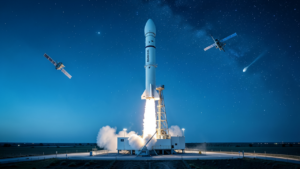
In the burgeoning artificial intelligence (AI) competition in space, SpaceX has adopted an innovative approach for its AI1 satellite design. Rather than relying on traditional, costly radiation-hardened processors, the company is betting on commercial off-the-shelf (COTS) accelerators, with their radiation tolerance ensured through software-level fault tolerance. This represents a significant technological gamble with the potential to dramatically alter the economics and scalability of in-orbit computing.
Technical Details
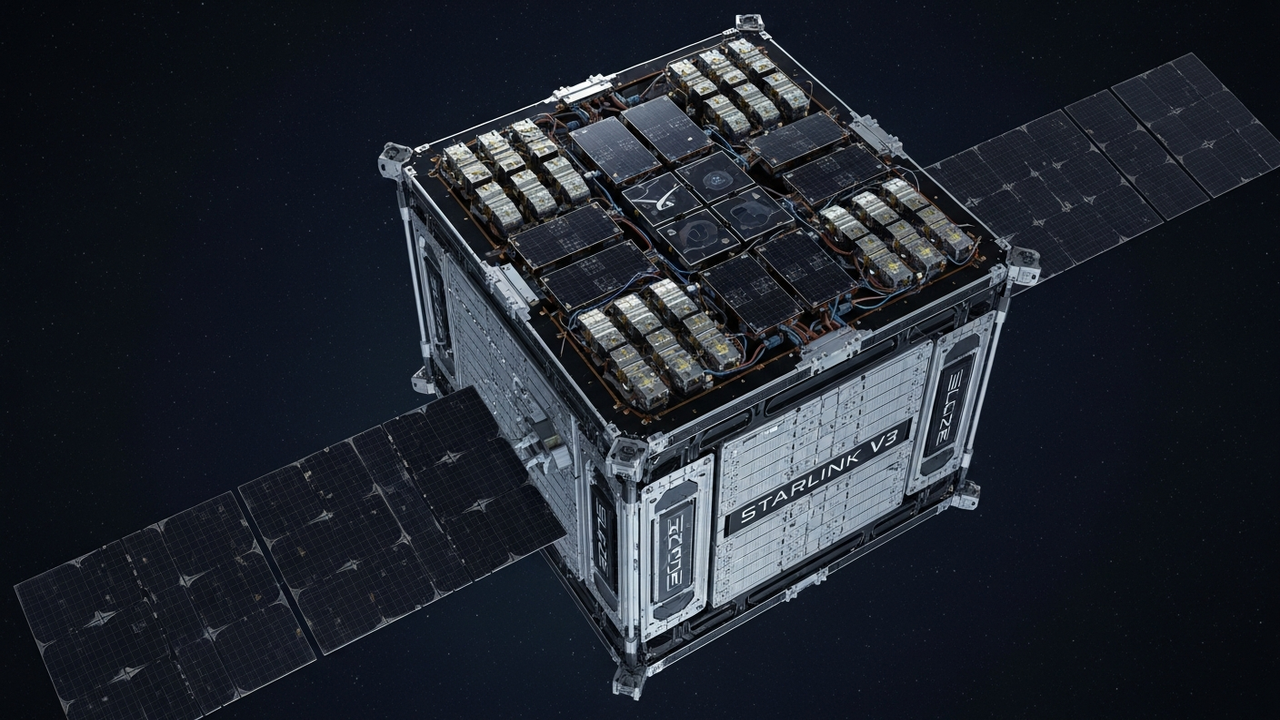
SpaceX’s AI1 satellites are designed to reuse bus technology and components from its Starlink V3 satellites, including solar cells, inter-satellite laser links, and general commercial parts. Historically, space missions have mandated specialized, radiation-hardened chips—designed and manufactured through bespoke processes—to prevent malfunctions and failures of electronic components in the harsh radiation environment of space. However, these chips suffer from high development costs and often lag behind the performance of cutting-edge terrestrial counterparts. SpaceX’s strategy involves using high-performance commercial accelerators, compensating for their inherent radiation vulnerability with software-based redundancy, Error Correcting Codes (ECC), watchdog resets, and other fault tolerance mechanisms. This approach allows software to manage transient soft errors caused by radiation, thereby ensuring the overall reliability and operational continuity of the system.
Background & Industry Context
The application of AI in the space industry is diverse, encompassing real-time analysis of Earth observation data, autonomous operation of satellite constellations, space robotics, and decision support for deep-space exploration. These applications demand high computational power and data processing capabilities. Yet, the cost and performance constraints of radiation-hardened chips have historically hindered the widespread adoption of space AI. SpaceX’s strategy mirrors terrestrial IT infrastructure: deploying affordable, high-performance COTS components at scale and ensuring reliability through software. This has the potential to drastically reduce the cost of computational resources in space, enabling a broader range of AI applications to be executed in orbit. This could represent a paradigm shift in the evolution of space AI infrastructure.
Strategic Significance & Outlook
The success of SpaceX’s AI1 satellite design could profoundly impact mainstream space AI hardware design. If this software-centric approach proves effective for long-duration orbital operations, other space companies and agencies may adopt similar strategies. This would lower the cost and improve the accessibility of AI computing in space, opening new frontiers in space data utilization and satellite autonomy. In the long term, it is conceivable that large-scale AI processing capabilities, akin to orbital data centers, could be built in space, forming a ‘space AI ecosystem’ that integrates with terrestrial AI infrastructure.
Source: https://thesequence.substack.com/p/the-sequence-opinion-888-everything
Get our weekly technology intelligence — free
Receive an infographic that lets you judge at a glance whether each field’s analysis report is worth reading.
Subscribe Free — Weekly Tech Intelligence
By subscribing, you’ll receive Troy-Technical’s weekly technology intelligence newsletter.
- Your email and selected fields are used only to deliver the newsletter.
- We never share your information with third parties.
- You can unsubscribe anytime via the link in each email.
See our Privacy Policy for details.
Takes about a minute · Unsubscribe anytime




Comments