Key Findings
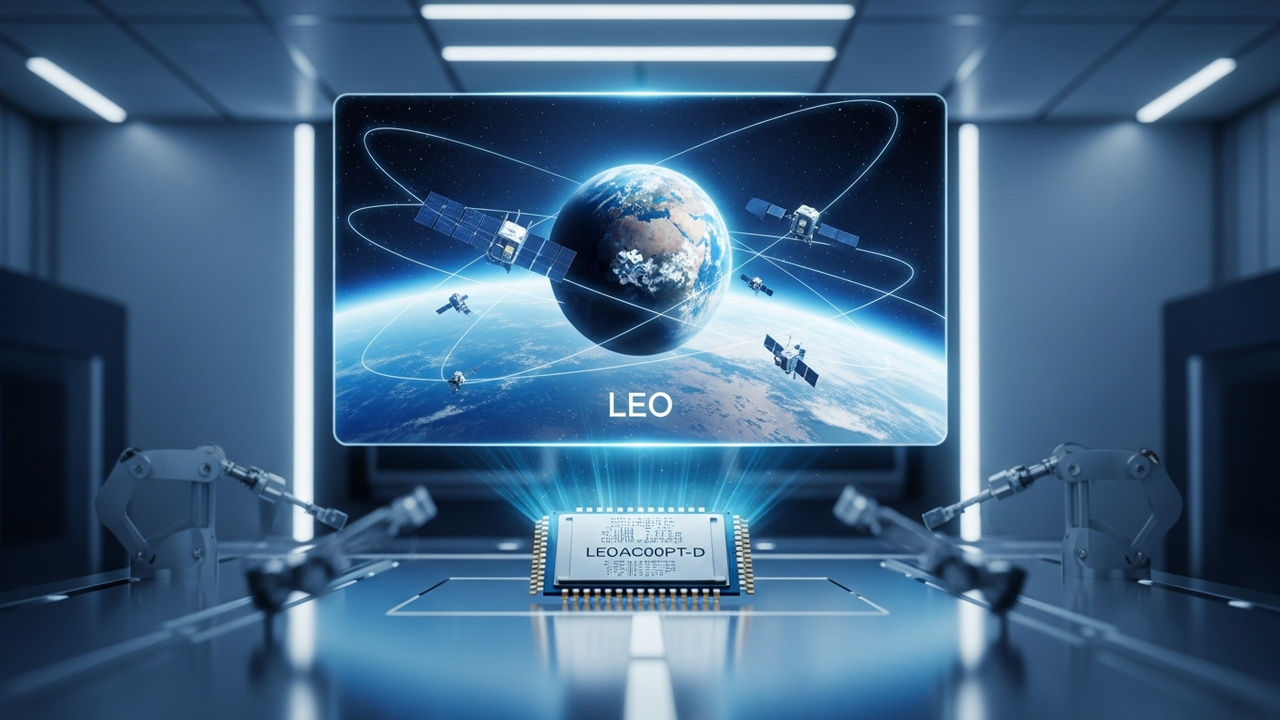
STMicroelectronics has unveiled ‘LEOAC00PT-D,’ an innovative radiation-hardened logic chip specifically engineered for Low Earth Orbit (LEO) space applications. This 4-channel, 2-input NAND gate chip boasts a high Total Ionizing Dose (TID) tolerance of 50 krad(Si) and, critically, guarantees Single Event Latch-up-free (SEL-free) performance. This significantly enhances the reliability and long-term operational stability of electronic systems in LEO satellites.
Technical Details
The LEOAC00PT-D incorporates specialized manufacturing processes and design techniques to cope with the harsh radiation environment of space. The 50 krad(Si) TID tolerance indicates the chip’s ability to resist functional degradation from cumulative radiation exposure, ensuring its longevity in extended LEO missions. Of particular importance is its SEL-free characteristic. SEL is a catastrophic short-circuit phenomenon induced by high-energy particle strikes on semiconductor devices, potentially leading to device destruction or mission failure. By completely eliminating the risk of SEL, the LEOAC00PT-D offers unparalleled reliability for mission-critical systems. Additionally, low outgassing properties are a crucial requirement in space, as outgassed materials from electronic components can contaminate optical instruments and degrade system performance. The LEOAC00PT-D meets all these requirements, contributing to the construction of high-performance and robust electronic systems for next-generation LEO satellites.
Background & Industry Context
In recent years, the space industry has been undergoing a significant transformation driven by the rapid expansion of LEO satellite constellations like Starlink. LEO satellites operate in closer proximity to Earth, enabling lower communication latency and providing global broadband services and Earth observation data. However, the LEO environment, particularly when passing through parts of the Van Allen belts, still exposes satellites to considerable radiation. Therefore, electronic components aboard LEO satellites demand both high performance and robust radiation tolerance. Dedicated radiation-hardened chips like the LEOAC00PT-D are indispensable for addressing these challenges, extending satellite operational lifespans, and enabling more stable service provision.
Strategic Significance & Outlook
The introduction of the LEOAC00PT-D marks a significant step for STMicroelectronics in strengthening its leadership in the space-grade semiconductor market. This chip is expected to be adopted in a wide range of applications within LEO constellations, including data processing, control systems, and communication modules. In the future, such radiation-hardened logic chips are likely to be integrated into more complex processors and memories, contributing to advancements in in-orbit AI processing and autonomous operational capabilities. STMicroelectronics is expected to continue developing diverse radiation-hardened products in line with the growth of the LEO satellite market, enhancing the reliability and performance of space infrastructure. This will serve as foundational technology supporting the further development of the space economy.
Source: http://www.mjdic.com/news-read-id-6430.html
Get our weekly technology intelligence — free
Receive an infographic that lets you judge at a glance whether each field’s analysis report is worth reading.
Subscribe Free — Weekly Tech Intelligence
By subscribing, you’ll receive Troy-Technical’s weekly technology intelligence newsletter.
- Your email and selected fields are used only to deliver the newsletter.
- We never share your information with third parties.
- You can unsubscribe anytime via the link in each email.
See our Privacy Policy for details.
Takes about a minute · Unsubscribe anytime





Comments