Key Findings
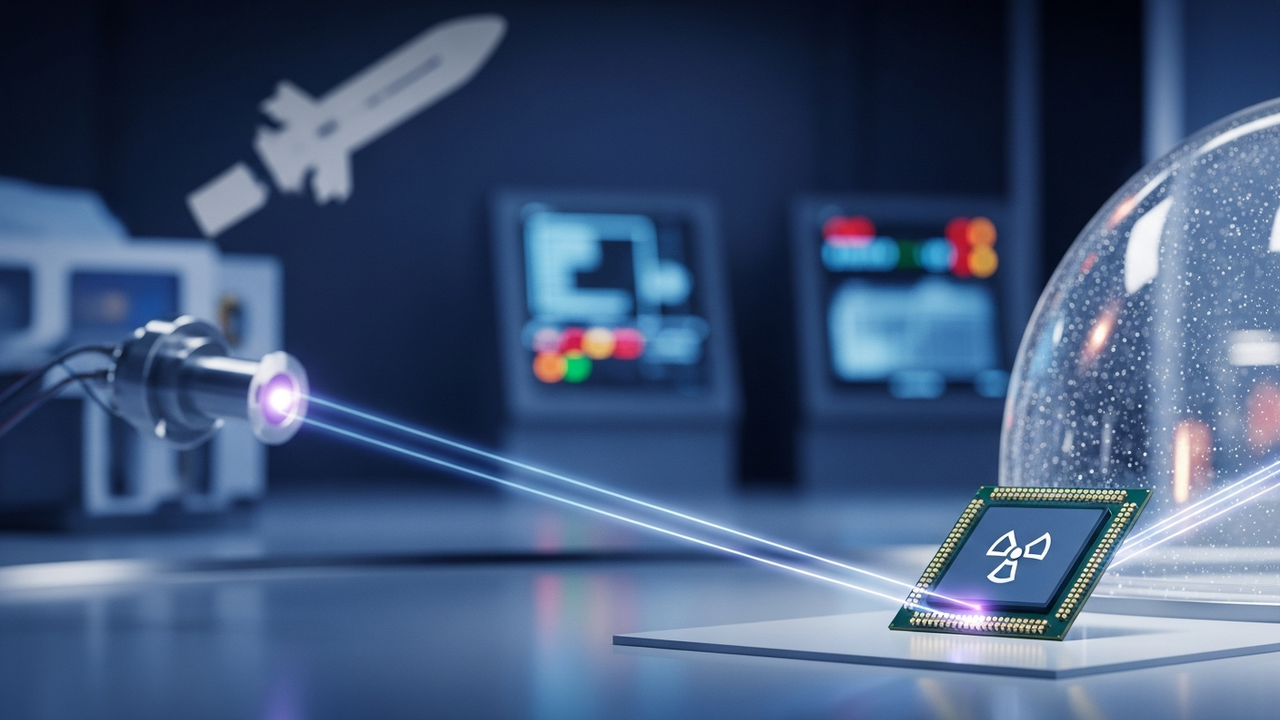
BAE Systems’ high-performance, radiation-hardened computing chip, ‘Endura,’ has successfully cleared the stringent radiation testing required for classified satellite programs and missile defense applications. This critical milestone addresses a long-standing bottleneck for high-value government space payloads that demand reliable onboard computing capabilities in the unforgiving environment of space.
Technical Details
The Endura chip is specifically engineered to withstand space-specific radiation effects, namely Total Ionizing Dose (TID) and Single Event Effects (SEE). These effects can cause malfunctions, data corruption, and even permanent damage to spacecraft electronics. The Endura’s design integrates specialized semiconductor process technologies with circuit-level redundancy and error correction mechanisms, ensuring data integrity and system operational continuity even in high-radiation intensity regions like Medium Earth Orbit (MEO) and Geostationary Orbit (GEO). Its successful qualification objectively validates that this chip can deliver reliable performance in long-duration missions and mission-critical defense applications.
Background & Industry Context
The importance of space assets in modern military and intelligence gathering continues to grow, driving increased demand for highly functional and robust space-grade electronics. Missile defense satellites, in particular, require advanced onboard data processing capabilities to monitor vast areas and quickly track and identify threats. These satellites often operate in higher orbits with more severe radiation exposure, making radiation-hardened processors a decisive factor in their performance and reliability. Achieving technological breakthroughs in this domain by leading defense contractors like BAE Systems is crucial for maintaining the space-domain superiority within U.S. national security strategy.
Strategic Significance & Outlook
The successful radiation testing of the Endura chip significantly enhances the market competitiveness of BAE Systems’ radiation-hardened computing solutions. This will likely accelerate its adoption in sensitive government programs and missile defense systems, contributing to the construction of next-generation space defense infrastructure. In the future, this technology is expected to serve as a foundation for deploying more complex AI processing capabilities in orbit, fostering advancements in space-based intelligence, surveillance, and reconnaissance (ISR) and autonomous space systems. This marks a vital step towards establishing and maintaining technological leadership in the space domain.
Source: https://keeptrack.space/space-brief/space-brief-2026-07-07
Get our weekly technology intelligence — free
Receive an infographic that lets you judge at a glance whether each field’s analysis report is worth reading.
Subscribe Free — Weekly Tech Intelligence
By subscribing, you’ll receive Troy-Technical’s weekly technology intelligence newsletter.
- Your email and selected fields are used only to deliver the newsletter.
- We never share your information with third parties.
- You can unsubscribe anytime via the link in each email.
See our Privacy Policy for details.
Takes about a minute · Unsubscribe anytime









Comments