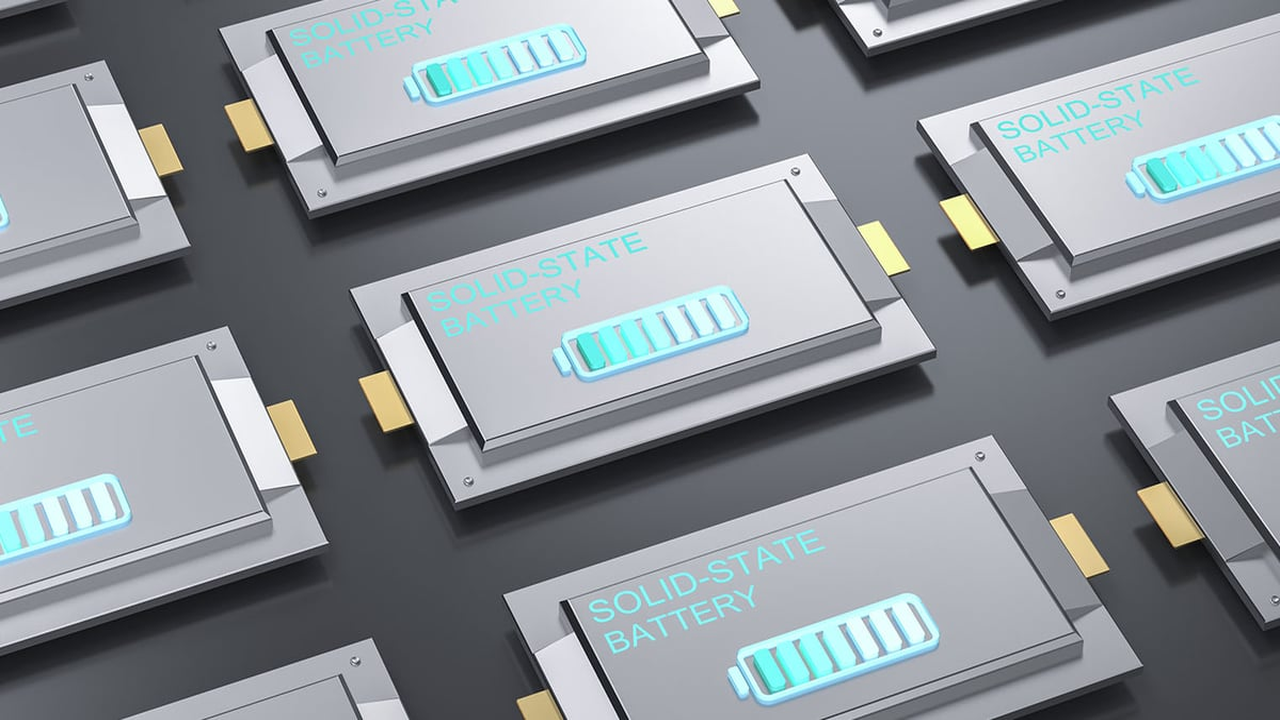
This article provides an overview of a technical analysis report on the current status and future outlook of lithium all-solid-state battery technology as of 2026.
Report Overview
This technical analysis comprehensively evaluates the ‘promise versus reality’ of lithium all-solid-state batteries (ASSBs) in 2026, focusing on their technical challenges and the path to commercialization. While ASSBs theoretically offer high energy density and superior safety, the report indicates that significant technical and manufacturing hurdles remain, suggesting that large-scale mass commercialization may be delayed until the early 2030s. The report details the remaining challenges and future directions from the perspectives of materials science, interfacial engineering, and manufacturing processes.
Key Findings
Despite their numerous advantages, the report highlights that several critical challenges persist for the widespread adoption of all-solid-state batteries as of 2026:
- Manufacturing Complexity: There is a significant gap between laboratory-scale success and large-scale mass production, making it difficult to establish and optimize manufacturing processes.
- Commercialization Timeline: Mass commercialization is currently projected to be delayed until the early 2030s. This represents a challenge against the mature supply chain and cost advantages of existing liquid-electrolyte lithium-ion batteries.
- Technical Hurdles: To achieve true all-solid-state batteries, the following issues must be resolved:
- Mechanical Challenges: Maintaining physical contact between solid materials and accommodating volume changes during charge-discharge cycles.
- Interfacial Challenges: Reducing interfacial resistance between electrodes and solid electrolytes and ensuring stability.
- Manufacturing Challenges: Efficiently manufacturing complex multi-layered structures with high yields.
- Sulfide Glass Electrolyte Issues: While sulfide glass electrolytes offer high ionic conductivity, maintaining their performance requires extremely low dew points (below -70°C), and they exhibit poor chemical stability against lithium metal.
- Manufacturing Process Innovation: The report emphasizes that innovative production technologies, such as ‘roll-to-roll (R2R) manufacturing,’ which have not yet been widely implemented in the current battery industry, are indispensable for the cost-effective production of all-solid-state batteries.
The analysis concludes that these challenges are still actively being researched and developed, and that integration of manufacturing processes, beyond just material discovery, is key.
About the Publisher
Battery Technology Online is an online media and information platform dedicated to battery technology and related industries. It provides the latest news, technical articles, analyses, and expert opinions on battery materials, design, manufacturing, applications, and market trends. The site serves as a reliable information source for a broad readership involved in the battery sector, including engineers, researchers, and business leaders.








Comments