Key Findings
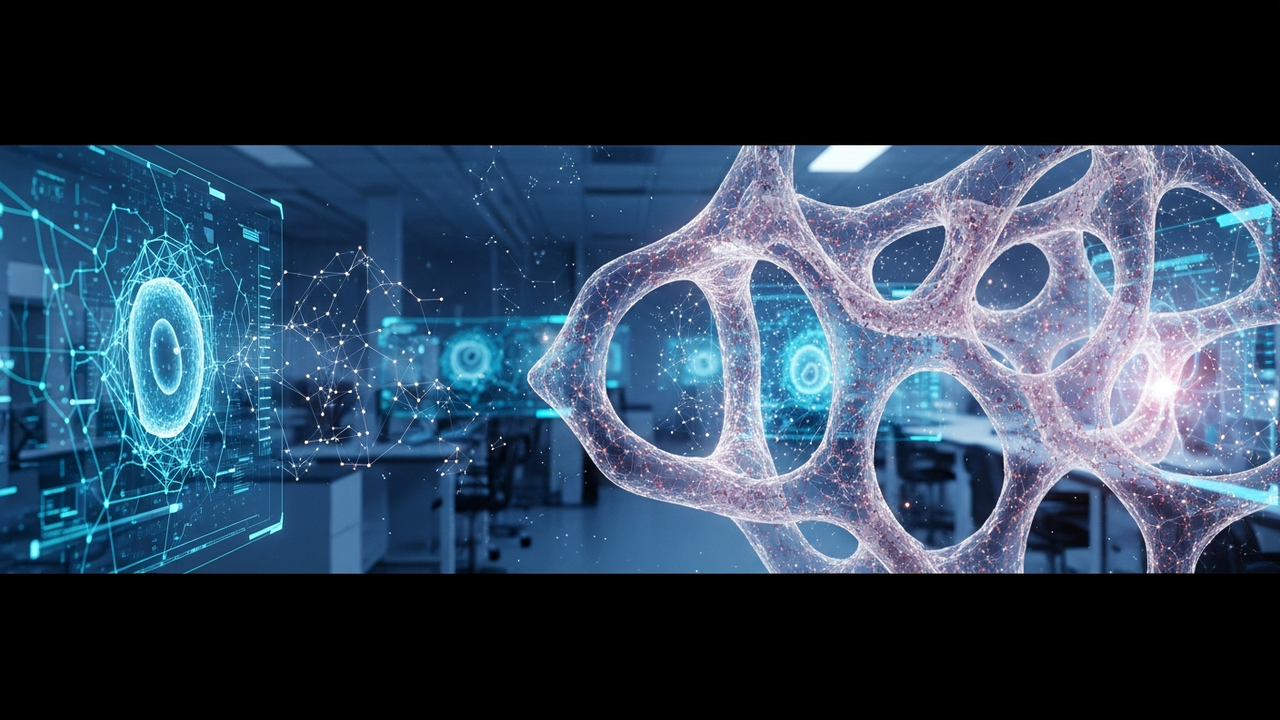
Researchers at the European Molecular Biology Laboratory (EMBL) have published groundbreaking findings in the prestigious scientific journals Nature Physics and Nature Materials, illustrating how the complex interaction between cell behavior and the geometric properties of tissues contributes to the formation of biological order. This research sheds light on one of the most fundamental organizational principles of life.
Research Details and Discovery Mechanism
- Interaction of Cells and Physical Boundaries: The study elucidated how cells perceive their physical environment, particularly intercellular boundaries and tissue shapes, and accordingly regulate their behaviors (e.g., proliferation, migration, differentiation). This suggests that cells do not merely follow genetic programs but also dynamically respond to physical cues.
- Emergence of Biological Order: A primary objective of this research was to understand how cell populations self-organize into ordered patterns and structures (e.g., specific organ shapes or functional tissues) during early embryonic development. The research team identified mechanisms by which cells coordinate their collective behavior through physical constraints and interactions with neighboring cells, forming order at larger scales.
- Potential for Tissue Engineering: This discovery has significant implications for the field of tissue engineering, which aims to construct artificial tissues and organs in vitro. By precisely manipulating the physical environment of cells, new strategies could be developed to more efficiently generate functional tissues with desired structures.
- Relevance to Space Biology: In space environments, particularly under microgravity, the geometric properties of cells and tissues are known to behave differently than on Earth. The mechanisms of cell-physical boundary interaction elucidated in this study could deepen the understanding of biological processes in space environments and provide foundational insights for future artificial organ culture and life support system design in space habitats.
Background & Industry Context
One of the long-standing challenges in cell biology and developmental biology is the question of “how life forms order.” While genetic information is a crucial determinant of cell identity, how cells interact with each other and respond to their physical environment significantly influences the final structure and function of tissues and organs. EMBL’s research offers a new perspective in this field and represents a significant advancement in understanding life phenomena.
Future Outlook
The findings of this research are expected to not only deepen knowledge in basic biology but also have significant impacts on applied fields such as regenerative medicine, drug discovery, and space biology. A better understanding of cell-physical environment interactions could elucidate disease mechanisms and lead to the development of more effective therapeutic strategies. Furthermore, it will contribute to the design of more advanced life support systems and medical technologies to support long-duration human presence in space. This is essential research for expanding the frontiers of life science.
Source: https://www.embl.org/news/science-technology/cells-boundaries-and-the-emergence-of-biological-order/
Get our weekly technology intelligence — free
Receive an infographic that lets you judge at a glance whether each field’s analysis report is worth reading.
Subscribe Free — Weekly Tech Intelligence
By subscribing, you’ll receive Troy-Technical’s weekly technology intelligence newsletter.
- Your email and selected fields are used only to deliver the newsletter.
- We never share your information with third parties.
- You can unsubscribe anytime via the link in each email.
See our Privacy Policy for details.
Takes about a minute · Unsubscribe anytime







Comments