Key Findings
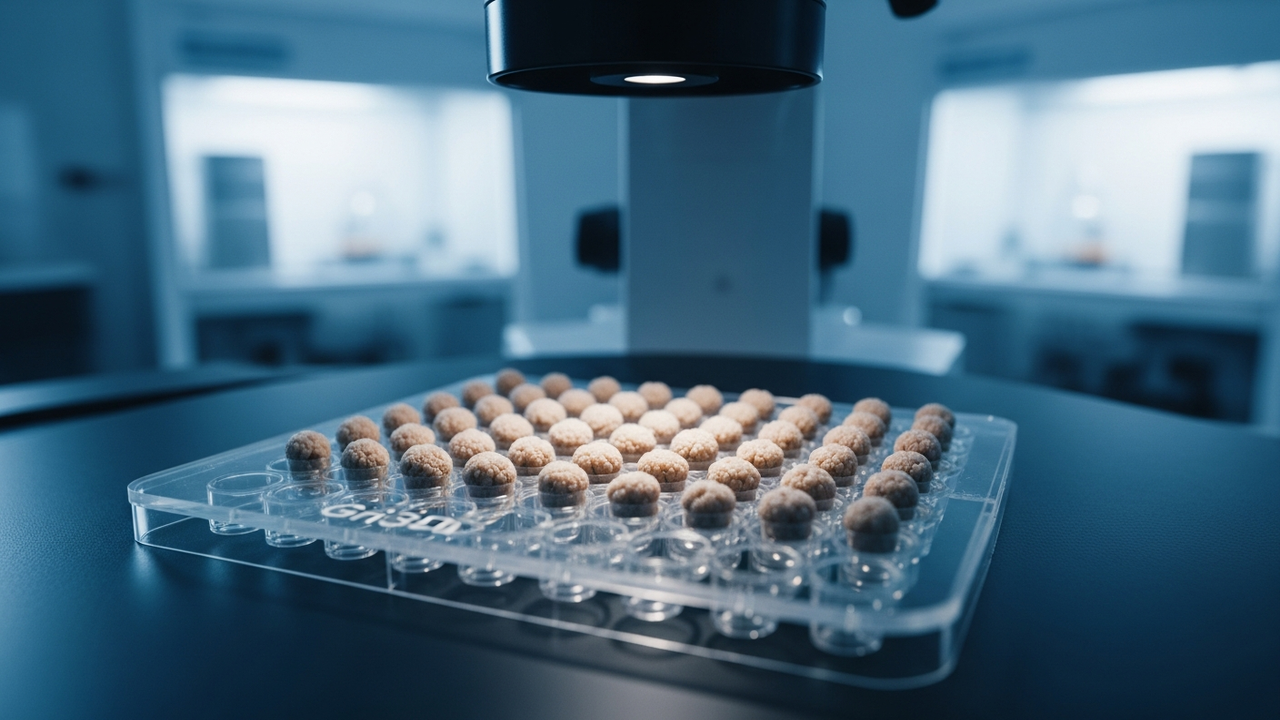
Select Science’s featured article introduces the Gri3D® Hydrogel Microcavity Plates, a breakthrough in organoid culture technology. This innovation delivers unprecedented levels of reproducibility and scalability, addressing long-standing challenges in the field and promising to accelerate drug discovery and personalized medicine.
Technical / Clinical Details
The Gri3D® system employs polyethylene glycol (PEG)-based hydrogel microcavities, which facilitate the spontaneous formation of organoids with highly uniform sizes. This addresses a critical limitation of traditional organoid culture methods, where variability in size and morphology often hampered experimental consistency. By providing a standardized culture environment, the new plates enable more reliable data generation for drug screening, toxicology testing, and disease modeling. Its high applicability to high-throughput screening (HTS) allows for the efficient evaluation of hundreds to thousands of drug candidates simultaneously, significantly streamlining the drug discovery process. The uniformity achieved with Gri3D® plates ensures that experimental results are more robust and comparable across different studies and laboratories.
Background & Context
Organoids, often referred to as ‘mini-organs,’ are 3D cell culture models that partially mimic the structure and function of in vivo organs. They hold immense promise in drug discovery, disease mechanism research, and personalized medicine. However, their culture traditionally requires advanced technical expertise, and ensuring scalability and reproducibility has been a significant hurdle. The introduction of technologies like Gri3D® is a crucial step for organoid research to transition from laboratory-scale endeavors to more industrialized applications. The pharmaceutical industry is increasingly seeking more physiologically relevant models as alternatives to animal testing, and uniform, reliable organoids are instrumental in meeting this demand.
Strategic Significance & Outlook
The Gri3D® Hydrogel Microcavity Plates are expected to accelerate the standardization and automation of organoid research, thereby greatly enhancing the efficiency of drug discovery pipelines. This will enable researchers to identify promising drug candidates more rapidly and bring innovative therapies to patients sooner. Looking ahead, further advancements in this technology, including compatibility with a wider variety of organoid types, are anticipated to boost research and development in regenerative and precision medicine. Such advancements could lead to shorter development times for new therapies and potential reductions in healthcare costs, making advanced medical solutions more accessible globally.
Get our weekly technology intelligence — free
Receive an infographic that lets you judge at a glance whether each field’s analysis report is worth reading.
Subscribe Free — Weekly Tech Intelligence
By subscribing, you’ll receive Troy-Technical’s weekly technology intelligence newsletter.
- Your email and selected fields are used only to deliver the newsletter.
- We never share your information with third parties.
- You can unsubscribe anytime via the link in each email.
See our Privacy Policy for details.
Takes about a minute · Unsubscribe anytime





Comments