Key Findings
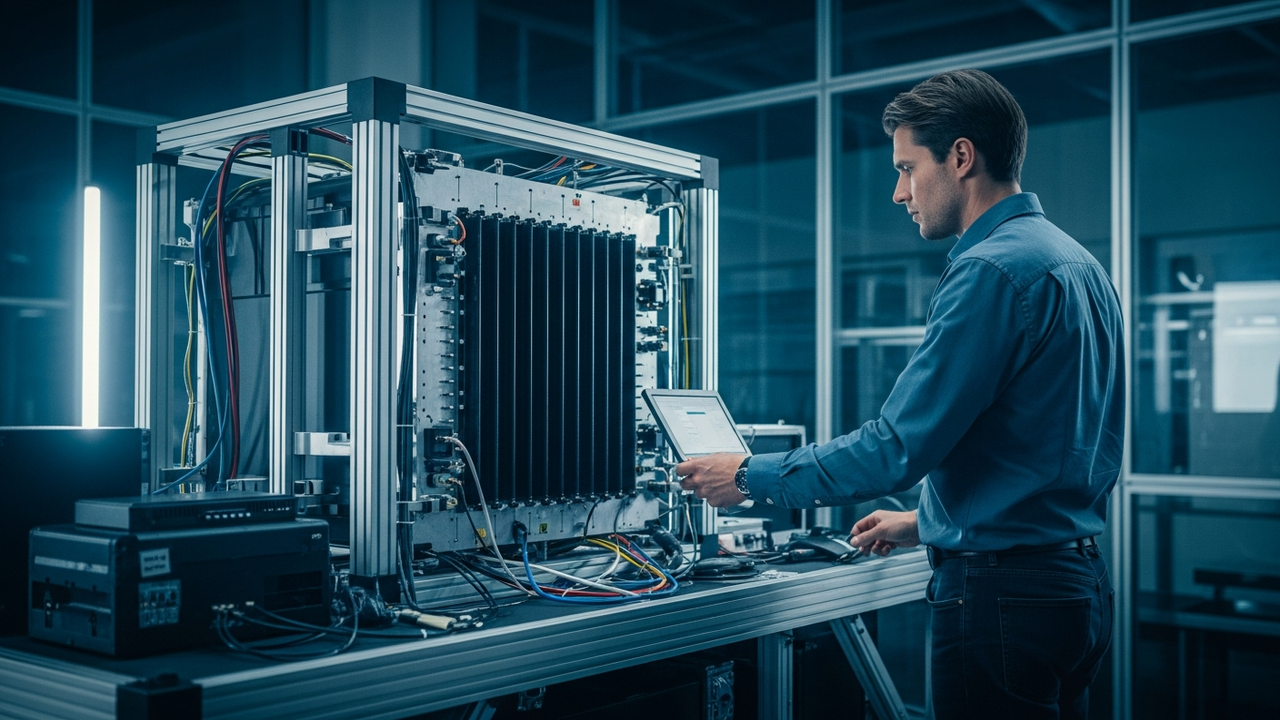
The Technical University of Berlin (TU Berlin), in collaboration with its partners, is spearheading the development of ‘SpaceBox,’ a novel lithium-sulfur (Li-S) battery system designed to dramatically improve energy storage for satellites. This next-generation battery is projected to achieve an energy density exceeding 300 Wh/kg, effectively doubling the performance of current lithium-ion counterparts. This advancement holds profound implications for reducing satellite mass and, consequently, launch costs, thereby expanding the design possibilities for future space missions.
Technical Details
Lithium-sulfur batteries are a promising candidate for next-generation energy storage due to their high theoretical energy density, which significantly surpasses that of lithium-ion technology. Sulfur, being abundant and cost-effective, makes Li-S batteries an attractive option. However, their application in space necessitates overcoming challenges related to long cycle life, resilience to extreme temperature fluctuations, and radiation tolerance. The SpaceBox project addresses these hurdles through the integration of innovative electrolyte, electrode materials, and packaging solutions. The goal is to develop a lightweight, efficient, and highly reliable power system that can withstand the harsh conditions of the space environment, ensuring sustained performance for critical missions.
Background & Industry Context
Satellites currently rely predominantly on lithium-ion batteries for power generation and storage, but these systems present inherent limitations in energy density. Given that satellite launch expenses are directly proportional to mass, minimizing battery weight has always been a critical engineering objective. High-energy-density batteries like SpaceBox are poised to enable larger payloads, extended mission durations, and enhanced capabilities for a wide range of space vehicles, including Earth observation, communication satellites, and deep-space probes. This technological leap promises to bolster both the economic viability and technical flexibility of satellite development and operation, fundamentally altering the calculus for space missions.
Future Outlook
The SpaceBox project is currently in an active development phase, with prototype testing underway. A crucial next step involves in-orbit demonstration, which will be instrumental in validating the technology’s readiness for widespread adoption. Should this lithium-sulfur battery technology prove successful, it stands to revolutionize the broader space industry, paving the way for more capable and cost-effective missions. In an era of burgeoning small satellite constellations, such a breakthrough in energy storage could be a decisive factor in competitive differentiation and market leadership, unlocking new paradigms for orbital operations.
Source: https://modernmechanics24.com/post/tu-berlin-spacebox-satellite-batteries/
Get our weekly technology intelligence — free
Receive an infographic that lets you judge at a glance whether each field’s analysis report is worth reading.
Subscribe Free — Weekly Tech Intelligence
By subscribing, you’ll receive Troy-Technical’s weekly technology intelligence newsletter.
- Your email and selected fields are used only to deliver the newsletter.
- We never share your information with third parties.
- You can unsubscribe anytime via the link in each email.
See our Privacy Policy for details.
Takes about a minute · Unsubscribe anytime





Comments