Key Findings
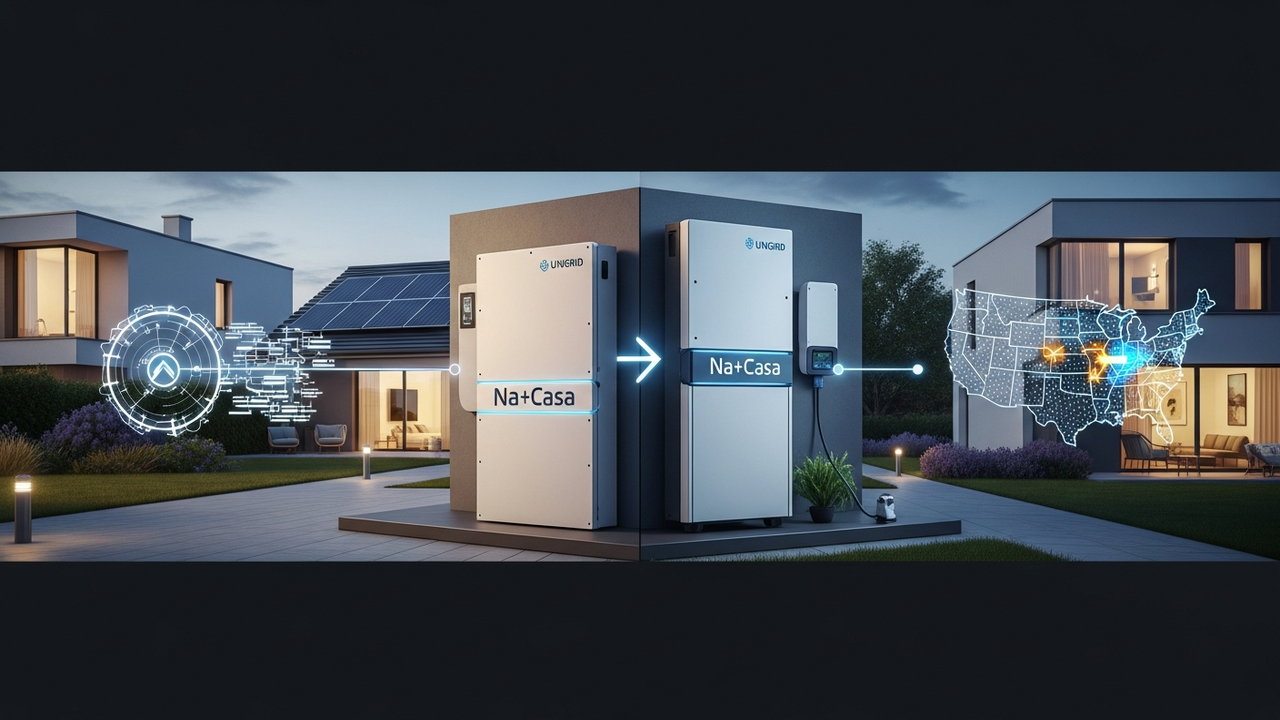
Unigrid, a California-based sodium-ion battery developer, has announced the launch of its first residential energy storage system, “Na+Casa,” with initial deployments already completed in Europe. This marks a pivotal moment for sodium-ion technology, bringing a safer and more sustainable alternative to lithium-ion batteries into the home energy market.
Technical Details
The Na+Casa system is built around Unigrid’s proprietary sodium chromium oxide (NaCrO₂) cathode technology, which is central to its enhanced performance and safety profile. The system is a 9.25 kWh wall-mounted unit, designed to operate reliably across a wide range of temperatures. It boasts an impressive lifespan of 10,000 cycles, significantly outperforming many conventional residential lithium-ion storage solutions. Sodium-ion batteries are inherently safer than their lithium-ion counterparts, with a lower risk of thermal runaway and fire, making them particularly attractive for household applications. This inherent safety, combined with robust performance metrics, positions Na+Casa as a compelling option for homeowners seeking reliable energy independence.
Background & Context
The energy storage market is experiencing rapid growth, driven by the increasing adoption of renewable energy sources and a growing demand for residential self-consumption. However, this expansion is tempered by concerns over lithium supply constraints, price volatility, and safety issues associated with current lithium-ion technologies. Sodium-ion batteries offer a promising solution to these challenges, utilizing abundant and inexpensive sodium as their primary material. Unigrid’s introduction of Na+Casa represents a pioneering effort to commercialize sodium-ion technology for practical residential use, aiming to reduce supply chain dependencies and pave the way for a more resilient and sustainable energy infrastructure.
Strategic Significance & Outlook
Following its European debut, Unigrid plans to launch Na+Casa in the U.S. market by the end of 2026. The company aims to achieve an annual battery cell production capacity of 1 GWh in 2026, which will be crucial for scaling the availability of its Na+Casa systems. This ambitious production target is expected to accelerate the adoption of sodium-ion battery technology and reshape the competitive landscape of the residential energy storage market. The widespread availability of more affordable and safer storage solutions will enable households globally to further integrate renewable energy, contributing significantly to energy independence and a carbon-free future.
Get our weekly technology intelligence — free
Receive an infographic that lets you judge at a glance whether each field’s analysis report is worth reading.
Subscribe Free — Weekly Tech Intelligence
By subscribing, you’ll receive Troy-Technical’s weekly technology intelligence newsletter.
- Your email and selected fields are used only to deliver the newsletter.
- We never share your information with third parties.
- You can unsubscribe anytime via the link in each email.
See our Privacy Policy for details.
Takes about a minute · Unsubscribe anytime





Comments