Key Findings
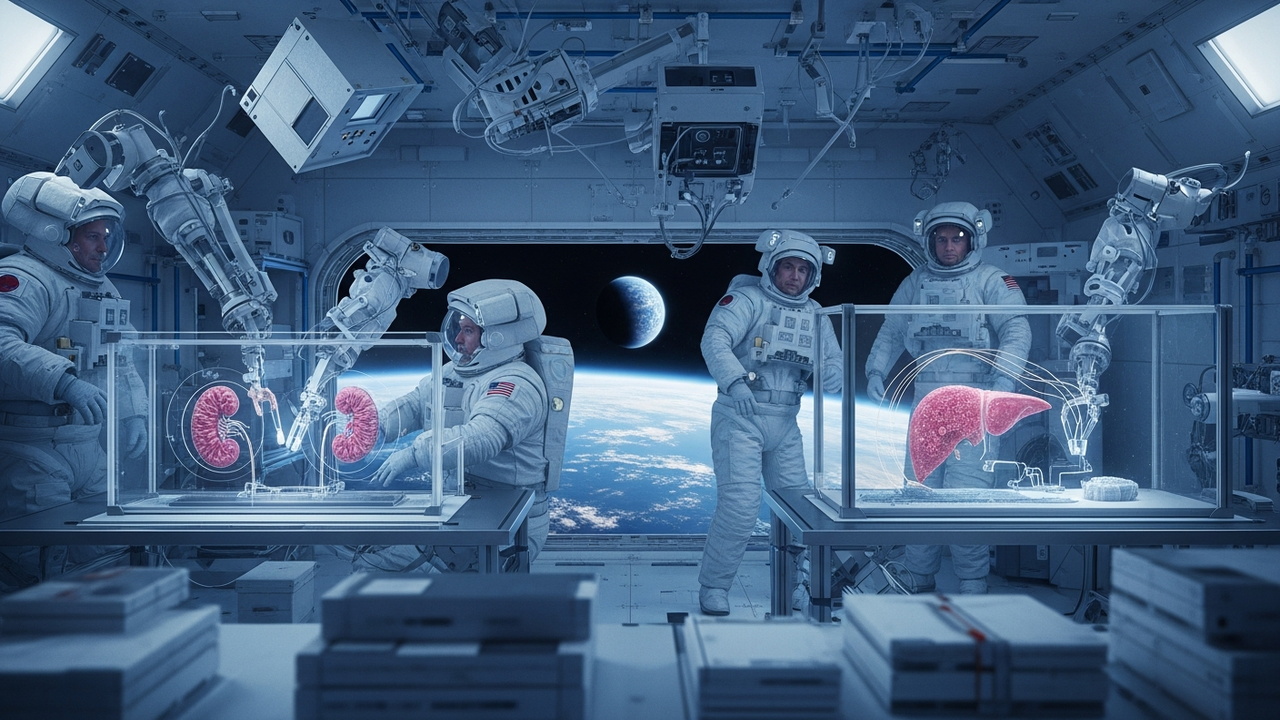
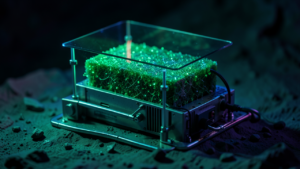
Auxilium Biotechnologies has announced a groundbreaking achievement: the world’s first successful bioprinting of kidney and liver tissues aboard the International Space Station (ISS) using its AMP-1 orbital 3D bioprinter. This landmark success harnesses the unique advantages of microgravity to enable the creation of highly functional tissues that are challenging or impossible to produce with comparable quality on Earth. The mission successfully manufactured four different tissue types—kidney, liver, cartilage, and neural repair implants—on a single autonomous platform during a single spaceflight, clearly demonstrating the versatility and scalability of orbital biomanufacturing capabilities.
Technical / Clinical Details
The bioprinting mission utilized cell cocktails and bio-inks designed by the Wake Forest Institute for Regenerative Medicine, processed through Auxilium Biotechnologies’ AMP-1 bioprinter. In microgravity, cells tend to aggregate more readily and form uniform, complex three-dimensional structures without the gravitational forces that cause settling or require extensive scaffolding on Earth. This environment facilitates the production of purer, denser, and more functionally integrated tissues and organoids that are difficult to replicate in terrestrial conditions. Samples, returned to Earth via a SpaceX Dragon capsule in June 2026, are currently undergoing detailed analysis. These space-produced tissues are anticipated to be applied in disease modeling for drug discovery, toxicology screening platforms, and eventually as transplantable tissues for regenerative medicine.
Background & Context
The field of regenerative medicine faces significant challenges, including a severe shortage of donor organs for transplantation and limitations in traditional drug development processes, particularly with animal models. Space-based biomanufacturing has emerged as an innovative solution to these hurdles. On Earth, gravity can hinder the uniform production of complex tissues, requiring support structures and leading to cellular sedimentation. In contrast, the microgravity environment allows cells to float freely and self-assemble more naturally, potentially forming superior, more lifelike tissue architectures. The growing interest from major pharmaceutical companies like Merck, which is exploring protein crystallization in microgravity for drug reformulation, underscores the commercial potential of leveraging space for biomedical advancements. Auxilium Biotechnologies’ success is a pivotal step in commercializing this promising new frontier.
Strategic Significance & Outlook
This achievement holds the potential to profoundly transform the future of regenerative medicine and pharmaceutical development. The ability to produce organ-like tissues in orbit offers unprecedented opportunities for creating novel disease models for rare and complex conditions, enhancing the accuracy of drug screening, and advancing personalized medicine. In the long term, space-based manufacturing facilities could evolve into commercial hubs for the large-scale production of medical products that are unfeasible to manufacture on Earth. Auxilium Biotechnologies is actively pursuing partnerships with developers of next-generation commercial space stations, such as Vast and Starlab, aiming to further expand the space biomanufacturing ecosystem and solidify its role in the orbital economy.
Get our weekly technology intelligence — free
Receive an infographic that lets you judge at a glance whether each field’s analysis report is worth reading.
Subscribe Free — Weekly Tech Intelligence
By subscribing, you’ll receive Troy-Technical’s weekly technology intelligence newsletter.
- Your email and selected fields are used only to deliver the newsletter.
- We never share your information with third parties.
- You can unsubscribe anytime via the link in each email.
See our Privacy Policy for details.
Takes about a minute · Unsubscribe anytime




Comments