Background
Renewed international interest in the Moon has surged since the Apollo era, with various nations and agencies actively pursuing human missions and the establishment of permanent bases. Within this global trend, ESA seeks to leverage unique European technological expertise to play a strategic role in lunar exploration. Specifically, high-precision landing capabilities are critical for maximizing scientific returns and unlocking the potential for commercial lunar resource utilization in future lunar exploration. This development plan will also stimulate innovation and job creation within European space industries.
Key Findings
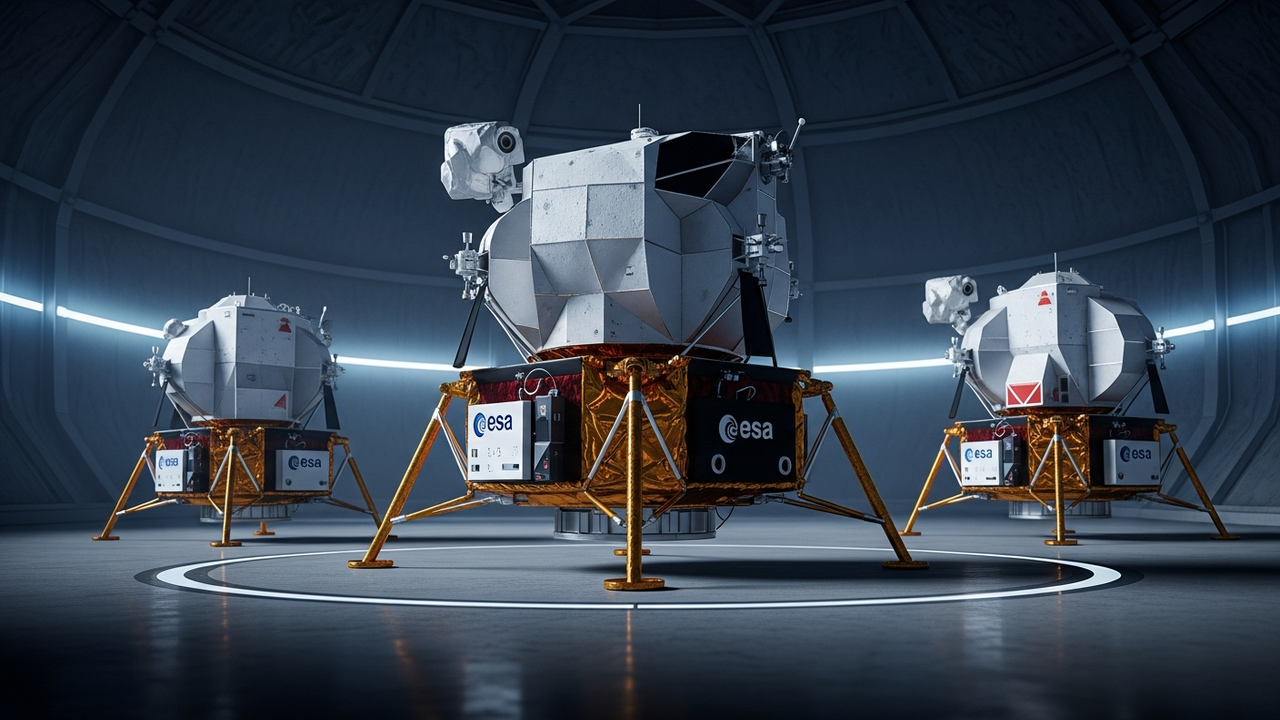
The European Space Agency (ESA) has revealed its development roadmap for advanced lunar lander technology, engineered to meet the diverse needs of future lunar landing missions. This plan focuses on pinpoint high-precision landing systems, highly efficient power solutions for extended missions, and modular design for diverse scientific and commercial payloads. This initiative represents a pivotal step toward simultaneously advancing scientific exploration and in-situ resource utilization (ISRU), thereby strengthening Europe’s contributions to international lunar exploration programs like Artemis.
Technical Details
The development plan details the following key technological components for the lunar lander:
- High-Precision Landing System: Incorporating state-of-the-art Terrain Relative Navigation (TRN), LiDAR sensors, and an advanced propulsion control system to enable soft landings with meter-level accuracy to designated landing sites. This will facilitate access to specific scientifically intriguing craters or precise regolith layers.
- High-Efficiency Power Supply: Leveraging large deployable solar arrays combined with next-generation solid-state batteries or Radioisotope Heater Units (RHU) engineered to endure extreme lunar night temperatures. This system ensures power for missions lasting 14 days or longer, spanning lunar night cycles.
- Payload Integration Flexibility: Utilizing standardized interfaces and a modular design to readily accommodate and deploy a variety of scientific instruments, rovers, or In-Situ Resource Utilization (ISRU) experimental equipment. The lander will support a payload mass of up to 200 kg.
- Extreme Environment Resilience: Material selection and structural design are optimized for the rigorous lunar environment, including temperature extremes from -170°C to over 120°C, intense cosmic radiation, and abrasive lunar dust (regolith).
Strategic Significance & Outlook
This lunar lander technology development plan will proceed with detailed design and prototype development in the coming years, targeting a first full-scale lunar landing mission by the mid-2030s. This technology could serve not only ESA’s independent lunar exploration missions but also support payload delivery for the Artemis program and resupply operations for the Lunar Gateway. Through this advanced lunar lander technology, ESA aims to solidify the Moon’s role as ‘humanity’s next frontier’ and contribute significantly to its sustainable exploration and utilization.
Source: #
Get our weekly technology intelligence — free
Receive an infographic that lets you judge at a glance whether each field’s analysis report is worth reading.
Subscribe Free — Weekly Tech Intelligence
By subscribing, you’ll receive Troy-Technical’s weekly technology intelligence newsletter.
- Your email and selected fields are used only to deliver the newsletter.
- We never share your information with third parties.
- You can unsubscribe anytime via the link in each email.
See our Privacy Policy for details.
Takes about a minute · Unsubscribe anytime




Comments