Key Findings
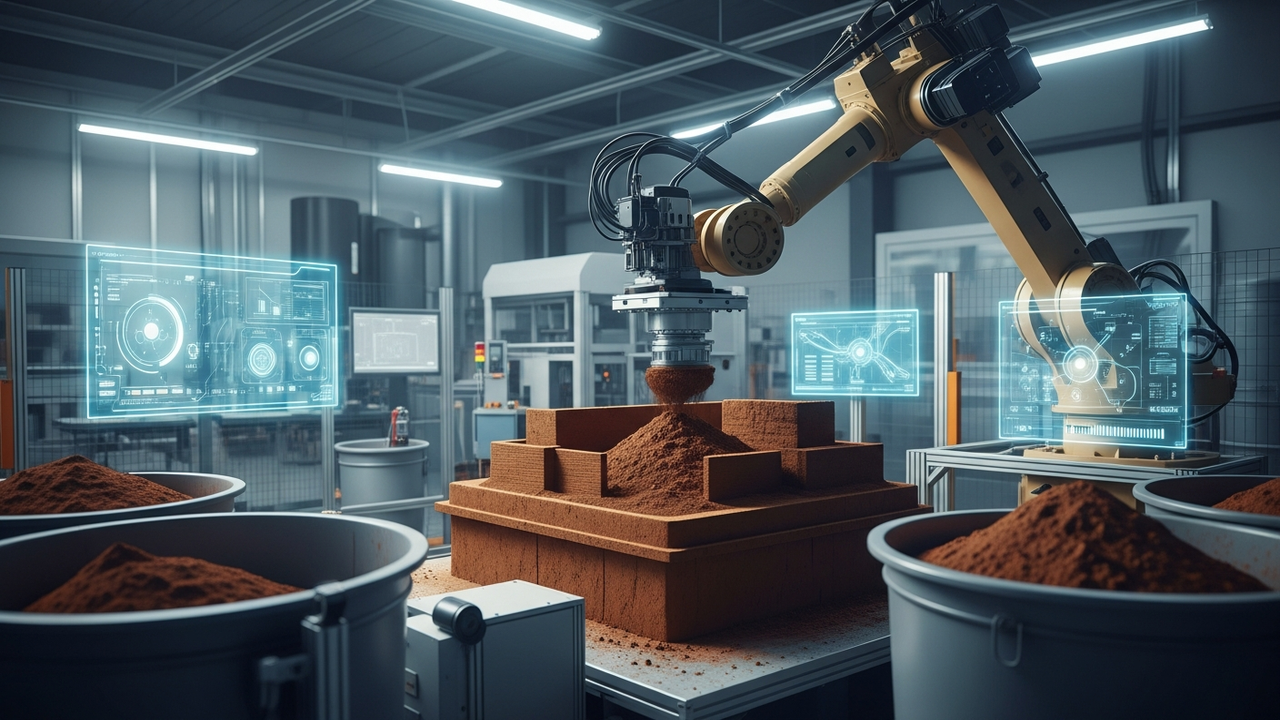
A German deep tech construction startup has developed a groundbreaking 3D printing technology poised to enable sustainable and circular construction practices. This innovative system integrates locally sourced earth-based materials, advanced robotic additive manufacturing, and AI-supported design optimization. The primary objective is to significantly reduce material waste and dramatically improve resource efficiency compared to conventional construction methods, thereby enabling environmentally friendly building processes.
Technical / Clinical Details
The company’s construction technology begins with collecting local soil, processing it with specific admixtures, and then directly fabricating structures using a 3D printer mounted on a robotic arm. Artificial intelligence analyzes design parameters in real-time to optimize structural strength, thermal insulation, and material consumption, proposing optimal building geometries and material placement. This process nearly eliminates on-site waste, a stark contrast to traditional block or concrete construction, and reduces transportation distances for materials, consequently lowering CO2 emissions. Furthermore, the high reusability of the materials contributes to a reduced environmental footprint throughout the building’s entire lifecycle.
Background & Context
The construction industry is a major contributor to global greenhouse gas emissions and resource consumption, making a transition towards sustainability an urgent imperative. Earth as a primary building material has a long history due to its abundance and minimal processing requirements, but adapting it to modern construction standards and complex designs has been challenging. This German startup’s technology bridges this gap by merging traditional wisdom with state-of-the-art robotics and AI, offering high-quality, eco-friendly building solutions. This represents a potential game-changer for the construction sector.
Strategic Significance & Outlook
Currently, the company is actively seeking research collaborations, commercial agreements with technical support, and investment partners to further validate its technology, implement large-scale pilot projects, and accelerate market penetration. Widespread adoption of this technology promises multifaceted benefits, including reduced construction costs, shortened project timelines, and significant contributions to global environmental sustainability. The potential for rapid and sustainable housing construction in developing countries and disaster-stricken regions is also a key consideration, underscoring its profound social impact.
Get our weekly technology intelligence — free
Receive an infographic that lets you judge at a glance whether each field’s analysis report is worth reading.
Subscribe Free — Weekly Tech Intelligence
By subscribing, you’ll receive Troy-Technical’s weekly technology intelligence newsletter.
- Your email and selected fields are used only to deliver the newsletter.
- We never share your information with third parties.
- You can unsubscribe anytime via the link in each email.
See our Privacy Policy for details.
Takes about a minute · Unsubscribe anytime









Comments