
Key Findings
Greene Tweed has successfully achieved a dramatic reduction in prototype development lead times for eVTOL (electric vertical take-off and landing) aircraft and broader aerospace applications by employing its advanced discontinuous long-fiber thermoplastic, “Xycomp DLF.” This innovative material not only enables up to a 60% weight reduction compared to conventional metal components but also significantly enhances aircraft development efficiency by allowing for rapid prototype tooling. This marks a new paradigm shift in material selection and manufacturing processes within the aerospace industry.
Technical Details
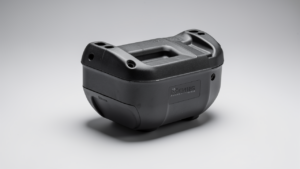
Xycomp DLF is a composite material where reinforcing fibers are uniformly dispersed in a discontinuous state within a high-performance thermoplastic polymer matrix. Unlike traditional continuous fiber composites, it allows for rapid processing methods such as injection molding and compression molding, enabling the efficient manufacture of complex-shaped parts. Its technical advantages are summarized as follows:
- Up to 60% Weight Reduction: Improving aircraft fuel efficiency and extending range heavily depend on lightweighting. Xycomp DLF achieves substantial weight savings compared to conventional aluminum or titanium alloys by combining low-density thermoplastic resins with fibers, all while maintaining high strength. This directly contributes to reducing aircraft operational costs and environmental impact.
- Rapid Prototype Tooling: Traditional metal component prototyping required time-consuming and costly processes like machining and welding. Being a thermoplastic, Xycomp DLF allows for short molding cycles, enabling rapid mold fabrication and part manufacturing. This accelerates design iterations and shortens the overall development period.
- High Design Freedom: The ability to create complex monolithic parts through injection molding reduces part count and assembly labor. This is expected to improve system reliability and further reduce manufacturing costs.
- Partnership with GE Aerospace: Greene Tweed is collaborating with GE Aerospace’s GE Unison division to innovate the manufacturing approach for aircraft engine brackets. Engine brackets are critical components exposed to high temperatures and loads, and the adoption of Xycomp DLF demonstrates its reliability and performance in such demanding environments.
Background & Industry Context
The aerospace industry is experiencing a period of rapid technological innovation and market expansion, driven by eVTOLs, next-generation passenger aircraft, and spacecraft. These new platforms demand simultaneous advancements in ultralightweighting, high reliability, and accelerated development cycles. Conventional metal materials are increasingly struggling to meet these requirements, making the shift to high-performance composite materials inevitable. Thermoplastic composites, in particular, are favored over thermoset composites for their excellent mechanical properties, weldability, re-processability, and recyclability, offering superior sustainability credentials.
Strategic Significance & Outlook
The introduction of advanced thermoplastic composites like Xycomp DLF has the potential to fundamentally transform aircraft design, manufacturing, and maintenance practices. The acceleration of prototype development will shorten the time-to-market for new aircraft and quicken the pace of technological innovation. This technology is expected to further intensify the trend of lightweighting and efficiency in the aerospace industry, becoming an indispensable element in enhancing the performance and sustainability of future aircraft. For investors, it represents an entry point into a growing advanced composites market, and for engineers, it provides new tools to enable more sophisticated design and manufacturing processes.
Get our weekly technology intelligence — free
Receive an infographic that lets you judge at a glance whether each field’s analysis report is worth reading.
Subscribe Free — Weekly Tech Intelligence
By subscribing, you’ll receive Troy-Technical’s weekly technology intelligence newsletter.
- Your email and selected fields are used only to deliver the newsletter.
- We never share your information with third parties.
- You can unsubscribe anytime via the link in each email.
See our Privacy Policy for details.
Takes about a minute · Unsubscribe anytime







Comments