Key Findings
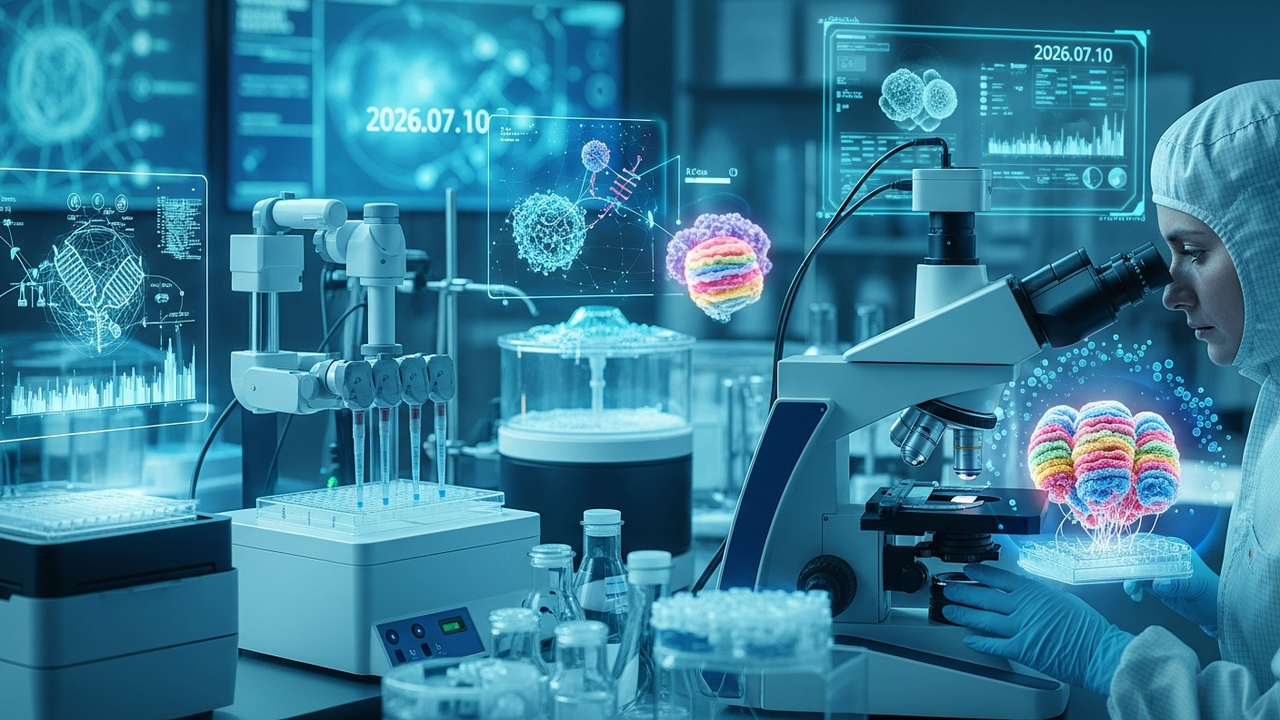
A review article published on July 10, 2026, comprehensively outlines the latest developments and applications in human organoid technology, pointing out its unparalleled ability to study human biological processes and diseases in vitro. Organoids are emphasized for their value as three-dimensional (3D) models that enable deeper understanding of disease mechanisms and the development of personalized therapeutic strategies.
Technical / Clinical Details
This review details the advancements in human organoid generation techniques, with a particular focus on:
- Diversification of Stem Cell Sources: Progress in generating organoids not only from induced pluripotent stem cells (iPSCs) but also from various adult tissue-derived stem cells, allowing for modeling a broader range of tissue types.
- Increased Complexity: Development of technologies to create organoids with more physiologically relevant structures and functions, including vascular networks, neural connections, and immune cell integration. This is crucial for organoids to more faithfully mimic the in vivo environment.
- Disease Modeling and Drug Discovery: Patient-derived organoids with specific genetic mutations are being utilized as powerful tools to study the pathogenesis of genetic diseases and cancer. Their importance is growing as effective in vitro models for drug screening and toxicity assessment, serving as alternatives to animal testing.
- Challenges and Advances in Clinical Application: The article discusses recent approaches to tackle challenges such as organoid standardization, quality control, scalability, and stability in long-term culture. Overcoming these hurdles could eventually position organoids as a source for cell therapy or even transplantable tissues.
Background & Context
Traditional 2D cell cultures and animal models often fall short in adequately capturing the complex physiological functions and diverse pathologies of humans. Organoid technology offers a groundbreaking platform that overcomes these limitations, allowing for the study of human tissues in a more in vivo-like environment. The rapid development of this technology is closely linked to the concept of personalized medicine, expected to accelerate the development of patient-specific therapies. The pharmaceutical industry and biotechnology companies are increasing their investments in organoid technology, aiming to streamline drug discovery pipelines and improve success rates.
Strategic Significance & Outlook
This review article suggests that human organoids will continue to play a central role in elucidating disease mechanisms, identifying new therapeutic targets, and developing personalized treatment strategies. In the future, the development of more sophisticated multi-organoid systems and their integration with bioprinting technology are anticipated to reproduce more complex physiological interactions, ultimately leading to applications as transplantable artificial organs. Organoid technology holds the potential to fundamentally transform the paradigm of life science research and medical practice, driving innovation across the biomedical landscape.
Source: #
Get our weekly technology intelligence — free
Receive an infographic that lets you judge at a glance whether each field’s analysis report is worth reading.
Subscribe Free — Weekly Tech Intelligence
By subscribing, you’ll receive Troy-Technical’s weekly technology intelligence newsletter.
- Your email and selected fields are used only to deliver the newsletter.
- We never share your information with third parties.
- You can unsubscribe anytime via the link in each email.
See our Privacy Policy for details.
Takes about a minute · Unsubscribe anytime






Comments