Key Findings
A new material, specifically developed for reusable rocket nozzles, has been reported to exhibit exceptionally superior resistance to high-temperature gases and significantly improved thermal cycle fatigue properties compared to conventional materials. This innovative material holds the potential to extend nozzle lifespan by up to 30% and enhance heat resistance by 100°C, thereby dramatically improving the overall durability and reusability of rocket engines. This represents a crucial technological breakthrough, indispensable for further reducing launch costs and enabling more frequent and sustainable access to space.
Technical Details
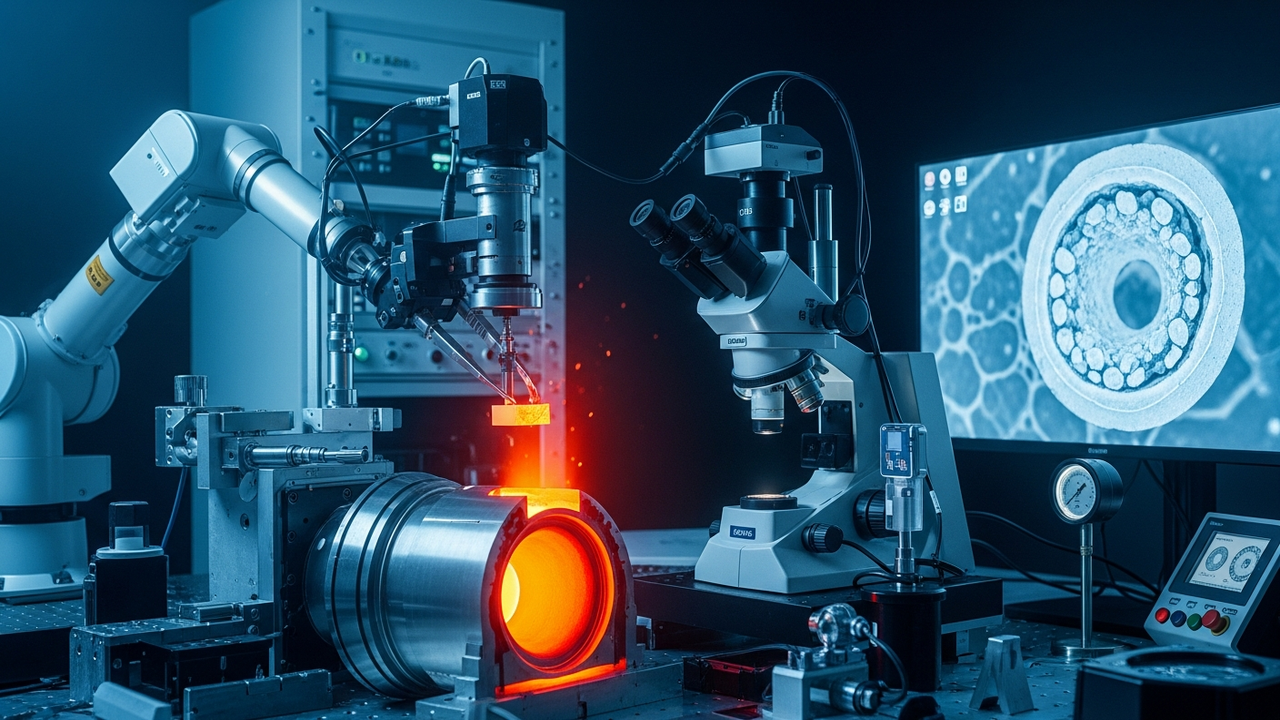
The developed new material adopts a hybrid structure combining ceramic composites and heat-resistant alloys, focusing particularly on performance in the throat and expansion sections of rocket nozzles, which are exposed to extreme heat flux and chemical reactivity. The material’s internal structure optimally composites a ceramic phase with low thermal conductivity and a metallic phase with high strength and toughness, efficiently dispersing and radiating thermal loads from high-temperature gases. Tests involved exposure to thousands of thermal cycles (rapid heating and cooling) using a plasma jet furnace simulating combustion gas flow at approximately 2500°C. While conventional graphite and niobium-alloy based nozzle materials showed surface erosion and crack propagation, the new material demonstrated minimal surface degradation and maintained structural integrity. Notably, optimized thermal expansion coefficient matching significantly reduced thermal stress between different material layers, improving resistance to thermal cycle fatigue.
Background & Context
The proliferation of reusable rockets is profoundly changing the economics of the space industry, but the rocket engine, particularly the nozzle, remains one of the major bottlenecks for reusability. Combustion gases reach several thousand degrees Celsius, and re-entry thermal loads add further stress, demanding exceptionally high heat resistance, thermal shock resistance, and fatigue resistance from nozzle materials. Traditional nozzle materials have struggled to fully meet these demands, requiring frequent inspection, repair, or replacement after multiple flights, partially offsetting the benefits of reusability. This new material directly addresses these challenges, becoming key to significantly reducing rocket operational costs and maintenance time.
Strategic Significance & Outlook
This new material is expected to be applied to the engine nozzles of next-generation reusable rockets, such as SpaceX’s Starship and Blue Origin’s New Glenn. Improved nozzle durability will enhance overall rocket reliability, enable faster launch cycles, and ultimately further drive down the cost of access to space. Future efforts will focus on scaling up the material’s manufacturing process, conducting long-duration hot-fire tests with actual engines, and obtaining qualification as a space-grade product. The commercialization of this technology has the potential to elevate the performance and economics of reusable rockets to the next level, opening a new era of space transportation.
Source: #
Get our weekly technology intelligence — free
Receive an infographic that lets you judge at a glance whether each field’s analysis report is worth reading.
Subscribe Free — Weekly Tech Intelligence
By subscribing, you’ll receive Troy-Technical’s weekly technology intelligence newsletter.
- Your email and selected fields are used only to deliver the newsletter.
- We never share your information with third parties.
- You can unsubscribe anytime via the link in each email.
See our Privacy Policy for details.
Takes about a minute · Unsubscribe anytime







Comments