Key Findings
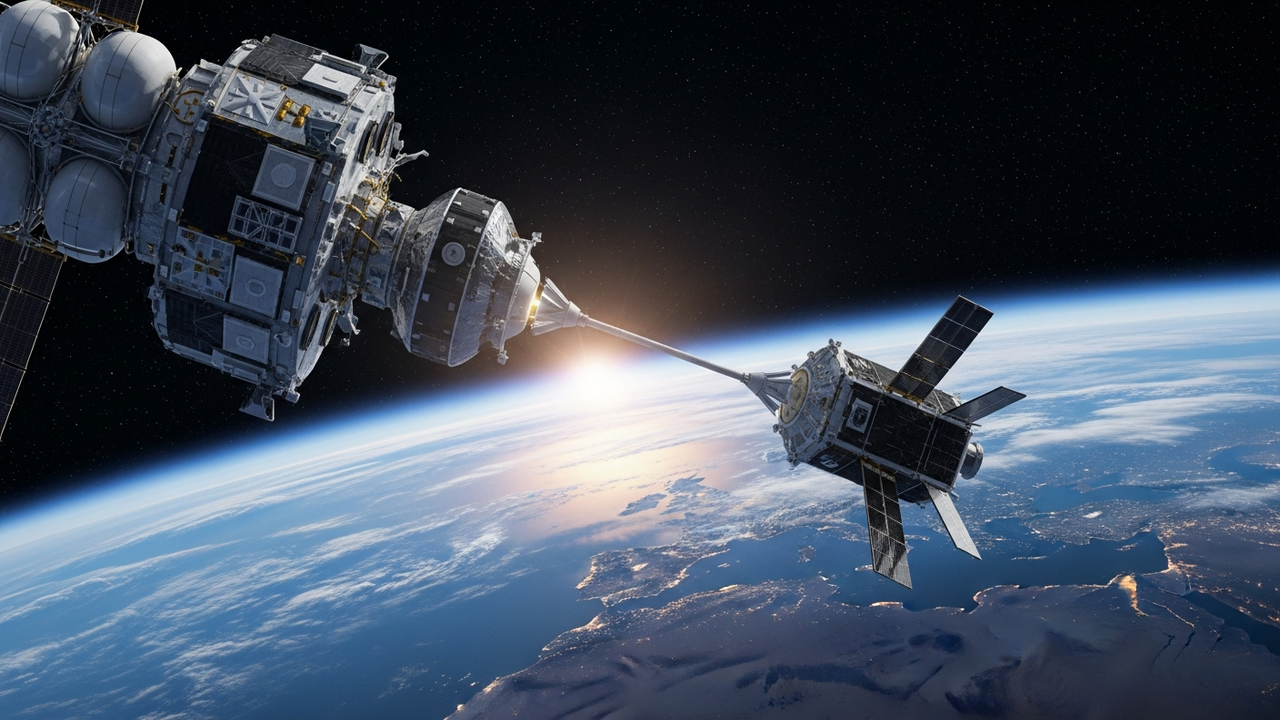
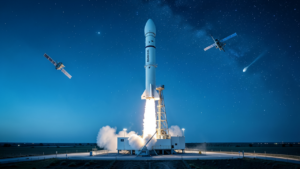
Orbit Fab, a startup providing on-orbit refueling services, has announced the successful completion of its ‘Tanker-001’ on-orbit refueling demonstration mission. Through the smooth refueling of a simulated client satellite using the company’s innovative ‘Gas Stations in Space’ technology, Orbit Fab has established a crucial technological milestone towards enabling extended satellite mission lifespans and sustainable operations in commercial space. This achievement is groundbreaking, promising to dramatically prolong satellite lifetimes and contribute to mitigating the problem of space debris.
Technical Details
In the ‘Tanker-001’ mission, Orbit Fab’s refueling satellite approached a simulated client satellite equipped with a standardized refueling interface (Rapidly Attachable Fluid Transfer Interface, RAFTI). After autonomous docking, propellant (hydrazine) was safely and efficiently transferred. This process was executed by a high-precision autonomous rendezvous, proximity operations, and docking (AR&D) system powered by AI, with the final propellant transfer amount reaching over 99% of the target. A fuel transfer rate of 5 liters per minute was achieved, demonstrating the ability to refuel a commercial satellite relatively quickly. Additionally, multiple safety mechanisms were integrated to minimize the risk of fuel leakage or contamination, ensuring long-term reliability in orbit. The RAFTI interface is designed with the goal of becoming standard equipment on all future satellites, which is key to promoting widespread adoption of refueling.
Background & Context
Currently, many satellites conclude their missions when their on-board fuel is depleted, leading to expensive space assets becoming inoperable or posing risks as uncontrollable space debris. On-orbit refueling has long been anticipated as a cost-effective solution to this challenge, but its technical complexity has delayed its realization. Orbit Fab aims to fill this gap by standardizing and commercializing refueling, and this successful demonstration offers new operational strategy options for satellite operators. This will enable the reuse of expensive satellites and reduce the frequency and cost of launching new ones, thereby accelerating the growth of the space economy.
Strategic Significance & Outlook
Building on this success, Orbit Fab plans to deploy multiple commercial refueling stations in both Low Earth Orbit and Geostationary Orbit by the 2030s. This will enable them to provide ‘fueling as a service’ to a wide range of customers, including Earth observation, communication, and defense satellites. In the future, the company also envisions establishing fuel depots in lunar orbit and for deep-space exploration, playing a significant role in expanding humanity’s space activities. The commercialization of this technology has the potential to fundamentally change spacecraft design philosophy and bring about a ‘mobility revolution’ in outer space.
Source: #
Get our weekly technology intelligence — free
Receive an infographic that lets you judge at a glance whether each field’s analysis report is worth reading.
Subscribe Free — Weekly Tech Intelligence
By subscribing, you’ll receive Troy-Technical’s weekly technology intelligence newsletter.
- Your email and selected fields are used only to deliver the newsletter.
- We never share your information with third parties.
- You can unsubscribe anytime via the link in each email.
See our Privacy Policy for details.
Takes about a minute · Unsubscribe anytime




Comments