Key Findings
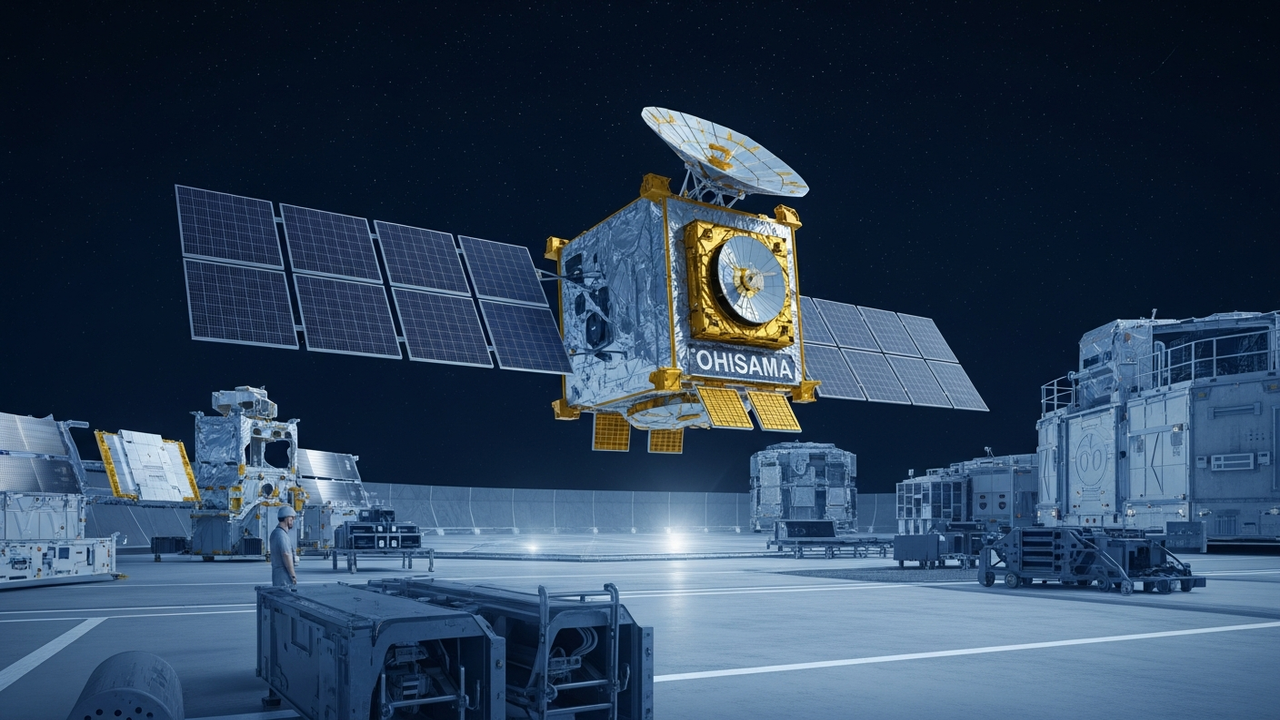
Japan Space Systems (J-spacesystems) is poised to launch its groundbreaking experimental Space-Based Solar Power (SBSP) satellite, ‘OHISAMA,’ within the current year. The primary objective of this mission is to demonstrate the technology for collecting solar energy in space and transmitting it to Earth as microwave energy, thereby exploring the potential for future clean energy supply.
Technical & Project Details
The OHISAMA satellite will be equipped with a relatively compact 1.4 square meter solar panel. After efficiently converting sunlight into electrical energy, the satellite’s on-board microwave transmission system will beam this energy towards a designated receiving station on Earth. This technology demonstration is of paramount importance for evaluating the feasibility of space-based solar power.
Should the OHISAMA technical validation prove successful, its achievements will pave the way for the future construction of large-scale SBSPS (Space-Based Solar Power Systems) in geostationary orbit. The ultimate goal is to deploy vast solar arrays, approximately 2.5 square kilometers in size, to supply 1 gigawatt (1 GW) of stable, clean electricity to Tokyo’s power grid. 1 GW of power represents a substantial supply capacity, equivalent to a single nuclear power plant, and constitutes roughly 1% of Japan’s current total power generation. Space-based solar power holds a unique potential among renewable energy sources, as it can deliver stable electricity 24/7, unhindered by terrestrial weather or day-night cycles.
Background & Industry Context
Space-based solar power has been studied for many years in various countries, including Japan, as one of the ultimate solutions to sustainable global energy challenges. However, significant hurdles have persisted, such as the construction of massive structures in orbit, safe and efficient long-distance microwave transmission, and the establishment of economic viability. Japan has been a leading nation in SBSP research for decades, and the OHISAMA mission demonstrates its accumulated technological expertise and strong commitment to practical implementation.
Strategic Significance & Outlook
The success of the OHISAMA mission will significantly advance the commercial viability of space-based solar power technology. This will not only contribute to climate change mitigation and enhanced energy security but also generate significant ripple effects across space infrastructure development and related industries (e.g., space transportation, robotics, advanced materials). While substantial technical challenges remain, this mission is expected to be a crucial first step towards making the science fiction concept of beaming power from space to Earth a tangible reality.
Source: #
Get our weekly technology intelligence — free
Receive an infographic that lets you judge at a glance whether each field’s analysis report is worth reading.
Subscribe Free — Weekly Tech Intelligence
By subscribing, you’ll receive Troy-Technical’s weekly technology intelligence newsletter.
- Your email and selected fields are used only to deliver the newsletter.
- We never share your information with third parties.
- You can unsubscribe anytime via the link in each email.
See our Privacy Policy for details.
Takes about a minute · Unsubscribe anytime








Comments