Background
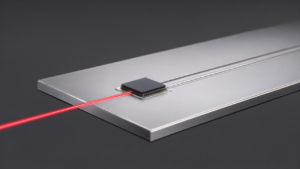
The accelerating pace of technological advancements in AI, cloud computing, and 5G/6G is driving an unprecedented demand for data transfer speeds and bandwidth. Conventional electrical interconnects are rapidly approaching their physical limitations, manifesting in critical challenges such as escalating power consumption and heat dissipation. Optical chips, leveraging light-speed information transmission and inherently low-loss characteristics, are emerging as a pivotal solution to these impending bottlenecks. The strategic emphasis by leading foundries on Silicon Photonics (SiPh) technology standardization and high-volume manufacturing signals that optical chips are poised to become a significant new growth engine for the semiconductor industry. Specifically, GlobalFoundries’ assertion of leadership as the world’s largest pure-play SiPh foundry underscores a critical milestone in the industrialization of this transformative sector.
Key Findings
The analysis by 36kr underscores a pivotal moment for the optical chip industry, characterized by the concurrent evolution of distinct material solutions and the foundational role of leading foundries.
Diverse Material Solutions Drive Market Segmentation:
The industry is advancing along several critical technological paths, each catering to specific application needs:
- Silicon Photonics (SiPh): Leveraging its high compatibility with established CMOS manufacturing, SiPh offers unparalleled mass production scalability and cost-efficiency. It is becoming indispensable for high-volume applications such as data center interconnects, AI accelerators, and various sensor technologies. GlobalFoundries, bolstered by its 2025 acquisition of Advanced Micro Foundry (AMF), is cementing its position as the world’s largest pure-play silicon photonics foundry, providing crucial standardized Process Design Kits (PDKs) and Multi-Project Wafer (MPW) services that significantly lower design barriers.
- Indium Phosphide (InP): This platform excels in monolithic integration of active optical components, including high-performance lasers and modulators. Its unique capabilities make InP essential for demanding, long-distance, high-speed, and particularly coherent optical communication systems.
- Thin-Film Lithium Niobate (TFLN): Distinguished by its superior high-speed modulation capabilities and remarkably low optical losses, TFLN is emerging as a highly promising candidate for next-generation ultra-high-speed optical transceivers and advanced optical switching devices.
Foundries as Catalysts for Industrialization:
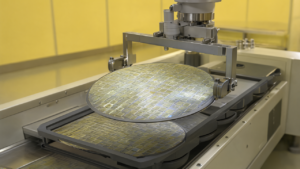
These advanced material technologies are rapidly maturing on industrial-scale 8-inch and 12-inch wafer production lines, ensuring robust supply capabilities for high-performance optical chips. Major foundries—GlobalFoundries, TSMC, UMC, and Tower Semiconductor—are proactively standardizing and accelerating the delivery of comprehensive SiPh ecosystems to their global clientele. This strategic focus on foundry services, including accessible PDKs and MPW options, is democratizing optical chip design and significantly shortening development cycles, fostering innovation across the sector.
Strategic Outlook and Future Challenges:
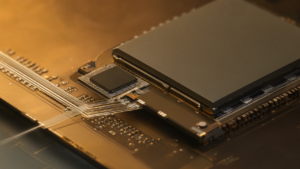
The optical chip industry is poised for sustained, rapid expansion, with AI applications serving as a primary catalyst for the accelerated evolution and broader adoption of SiPh technology. Concurrently, InP and TFLN are projected to maintain their critical roles within their specialized market niches. Looking ahead, optimizing the seamless integration of these diverse material solutions and achieving robust hybrid integration with existing electronic chips represent significant technical hurdles. The keen interest from prominent Chinese media like 36kr underscores optical chips’ status as a critical frontier in the global race for next-generation information technology. The interplay of technical competition and collaborative efforts on a global scale will undoubtedly define the trajectory of this transformative industry.
Source: https://eu.36kr.com/en/p/3927348484585859
Get our weekly technology intelligence — free
Receive an infographic that lets you judge at a glance whether each field’s analysis report is worth reading.
Subscribe Free — Weekly Tech Intelligence
By subscribing, you’ll receive Troy-Technical’s weekly technology intelligence newsletter.
- Your email and selected fields are used only to deliver the newsletter.
- We never share your information with third parties.
- You can unsubscribe anytime via the link in each email.
See our Privacy Policy for details.
Takes about a minute · Unsubscribe anytime