Key Findings
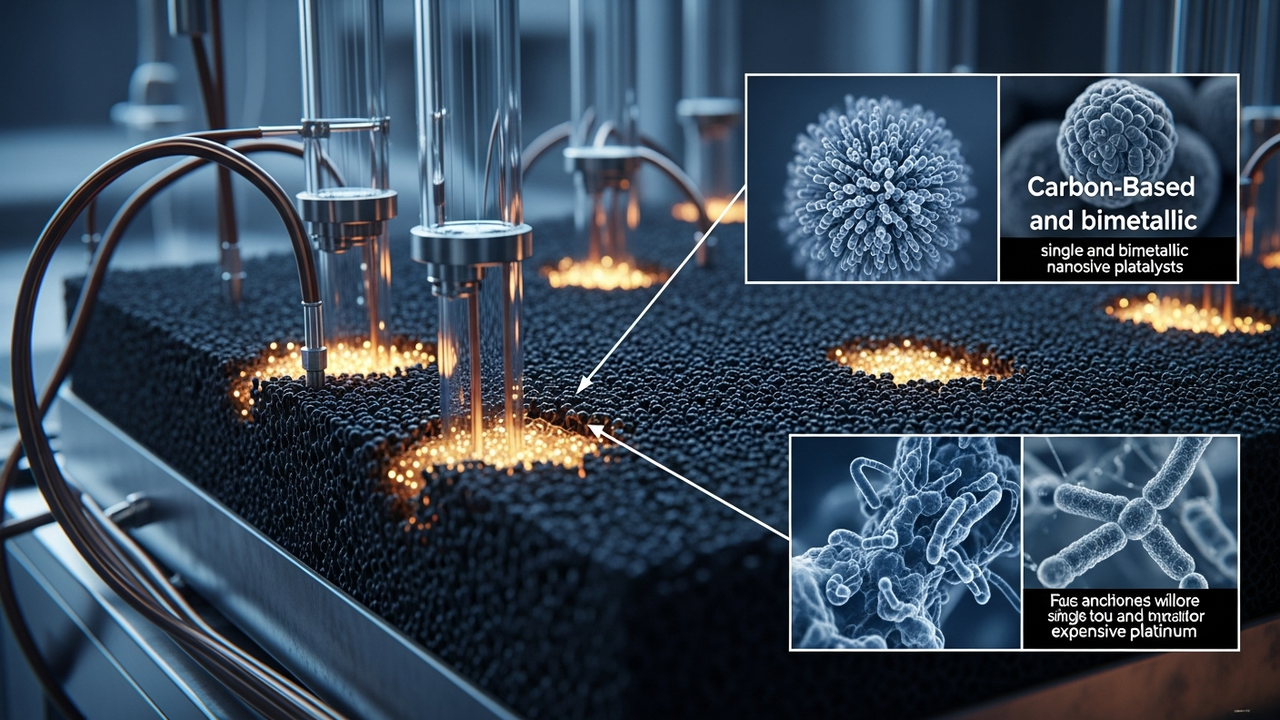
As the transition to sustainable energy gains momentum, microbial electrolysis cells (MECs) for hydrogen production from wastewater and organic waste are emerging as a promising avenue. Recent advancements highlight the comprehensive analysis and demonstrated efficacy of low-cost, durable carbon-based mono- and bimetallic nanocatalysts as alternatives to expensive platinum catalysts for this application.
Technical Details
MECs operate by utilizing electrons generated during microbial degradation of organic matter to produce hydrogen. Historically, efficient hydrogen evolution reactions (HER) in MECs have necessitated costly platinum catalysts. This review emphasizes the potential of carbon-based mono- and bimetallic nanocatalysts to perform comparably to, or even surpass, platinum. These catalysts combine high electrical conductivity, tunable surface chemistry, and an enhanced ability to facilitate interactions between microbes and electrodes. Specifically, the combination of earth-abundant metals like nickel, iron, cobalt, and copper with carbon materials has successfully improved both catalytic activity and stability. This innovation significantly reduces the operational costs of MEC systems, paving the way for their practical implementation.
Background & Context
MEC technology offers a dual benefit: not only producing hydrogen but also integrating with wastewater treatment and bio-waste management, thus contributing to a circular economy. However, catalyst cost has been a major barrier to its commercialization. The development of carbon-based catalysts is a critical step towards overcoming this economic hurdle, making MECs a more competitive green hydrogen technology. This advancement is expected to lead to broader adoption of MECs as distributed hydrogen production systems and energy recovery solutions from waste streams.
Strategic Significance & Outlook
The progress in carbon-based catalysts is set to accelerate the practical application of MEC technology, enabling on-site hydrogen production in locations rich in organic waste, such as wastewater treatment plants and food processing facilities. This will establish sustainable hydrogen supply routes from diverse feedstocks, complementing hydrogen production from renewable energy sources, and contributing to both energy security and environmental protection. Future research will focus on long-term stability, scalability, and performance evaluation of these catalysts in real-world waste streams.
Get our weekly technology intelligence — free
Receive an infographic that lets you judge at a glance whether each field’s analysis report is worth reading.
Subscribe Free — Weekly Tech Intelligence
By subscribing, you’ll receive Troy-Technical’s weekly technology intelligence newsletter.
- Your email and selected fields are used only to deliver the newsletter.
- We never share your information with third parties.
- You can unsubscribe anytime via the link in each email.
See our Privacy Policy for details.
Takes about a minute · Unsubscribe anytime